Scientists Use Nano-Sized Cages to Trap 98% of "Forever Chemicals" in Drinking Water
Flinders University researchers built molecular cages embedded in silica that can capture even short-chain PFAS that slip through conventional filters — and the material regenerates itself.
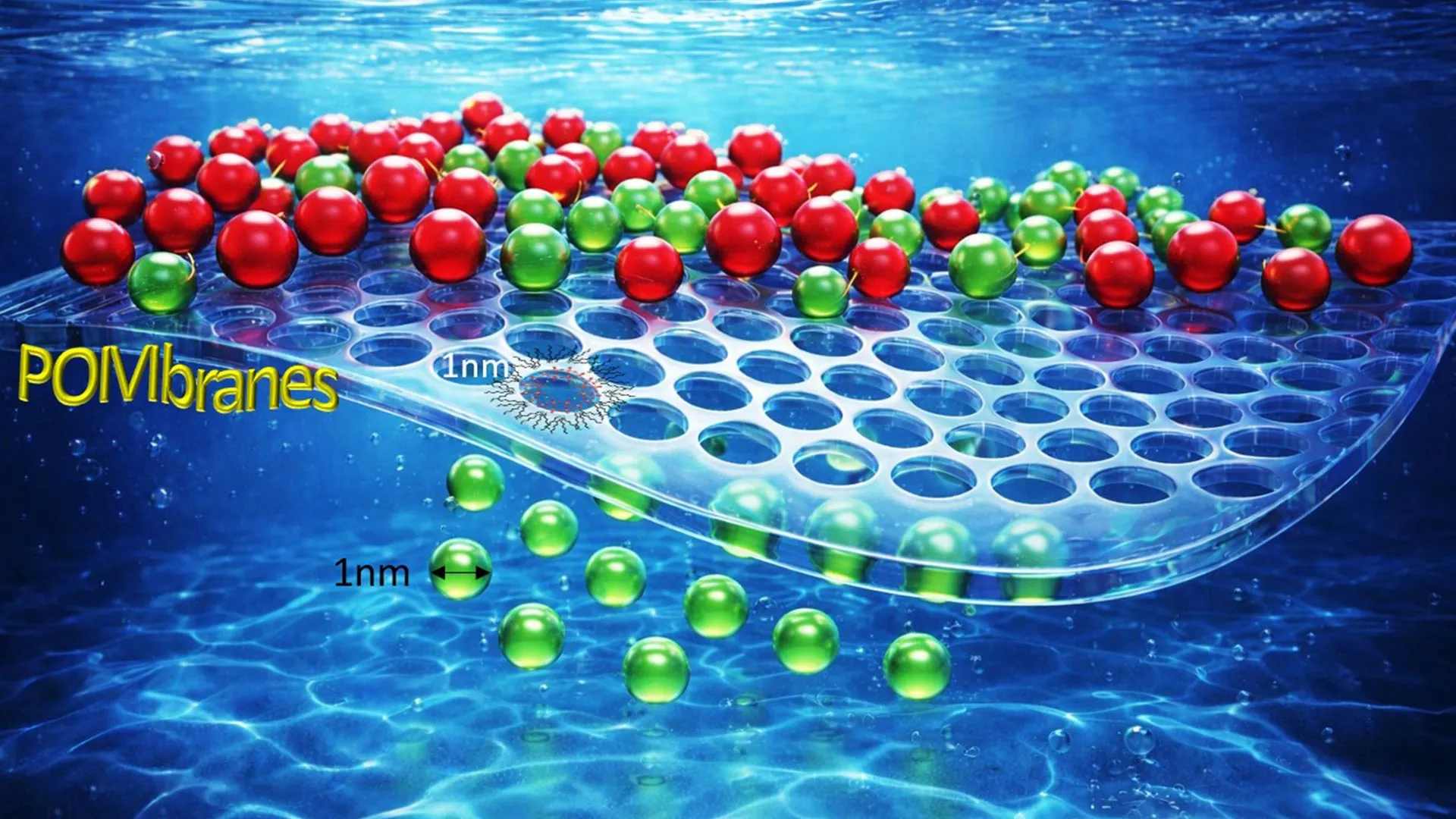
Scientists at Flinders University in Australia have developed a new water filtration technology that removes up to 98% of PFAS — the family of synthetic chemicals known as "forever chemicals" for their near-indestructibility — including the short-chain varieties that have consistently evaded existing filtration methods. The breakthrough, published April 8, 2026 in the journal Angewandte Chemie International Edition, uses nano-sized molecular cages embedded in a porous silica structure to physically trap PFAS molecules with unprecedented selectivity.
PFAS, or per- and polyfluoroalkyl substances, are a class of more than 12,000 synthetic compounds used in everything from non-stick cookware and food packaging to firefighting foam and waterproof clothing. Because the carbon-fluorine bond is among the strongest in organic chemistry, these molecules do not break down naturally in the environment and accumulate in soil, water, and living tissue. The U.S. Environmental Protection Agency estimates that PFAS contaminate drinking water sources for more than 200 million Americans. Exposure is linked to thyroid disorders, immune system disruption, certain cancers, and developmental harm in children.
The challenge in removing PFAS from water has long been particularly acute for short-chain PFAS — smaller molecules that slip through conventional activated carbon filters and granular filtration systems. The Flinders team, led by ARC Research Fellow Dr. Witold Bloch and PhD candidate Caroline Andersson, engineered molecular cages whose interior dimensions are precisely calibrated to match the geometry of short-chain PFAS molecules. When these cages are incorporated into the mesoporous silica matrix, they function as extremely selective traps. "We discovered that a nano-sized cage captures short-chain PFAS by forcing them to aggregate favourably inside its cavity," Bloch explained. "The capture of short-chain PFAS — which are more mobile in water — remains a major unresolved challenge."
In laboratory tests using model tap water with PFAS concentrations representative of real-world contamination, the new adsorbent material consistently removed up to 98% of PFAS across multiple test conditions. Critically, the material maintained its effectiveness after at least five cycles of use and regeneration, suggesting it could be economically viable at scale — a major limitation of other advanced PFAS removal technologies, which are often expensive and difficult to regenerate. The team's work adds to a growing field of PFAS remediation research. A separate team at Rice University has developed a layered double hydroxide material that can trap and chemically destroy PFAS rather than simply capturing them, offering a complementary approach.
The scale of the PFAS contamination problem has driven significant federal and state investment in remediation. The Biden administration's EPA in 2024 set maximum contaminant levels for six PFAS compounds in drinking water for the first time, a rule that remained in effect under the Trump administration despite pressure from chemical industry groups. Municipalities across the United States, particularly those near military bases where PFAS-containing firefighting foam was used for decades, face billions of dollars in cleanup costs. The Flinders University technology, if it can be scaled from laboratory synthesis to industrial filtration systems, could significantly reduce those costs while offering communities a practical solution to one of the more widespread environmental health crises of the industrial era.