Penn and CHOP Scientists Win Breakthrough Prize for Luxturna, First FDA-Approved Gene Therapy for Genetic Disease
Jean Bennett, Albert Maguire, and Katherine High accepted the million prize for work that restored sight to patients with RPE65 mutations and opened the modern era of genetic medicine.

Three scientists from the University of Pennsylvania's Perelman School of Medicine and Children's Hospital of Philadelphia received the 2026 Breakthrough Prize in Life Sciences last weekend for developing Luxturna, the first gene therapy ever approved by the U.S. Food and Drug Administration specifically to treat a disease caused by mutations in a single gene — a milestone that opened the modern era of genetic medicine and has since inspired more than 140 clinical trials for hereditary eye diseases alone.
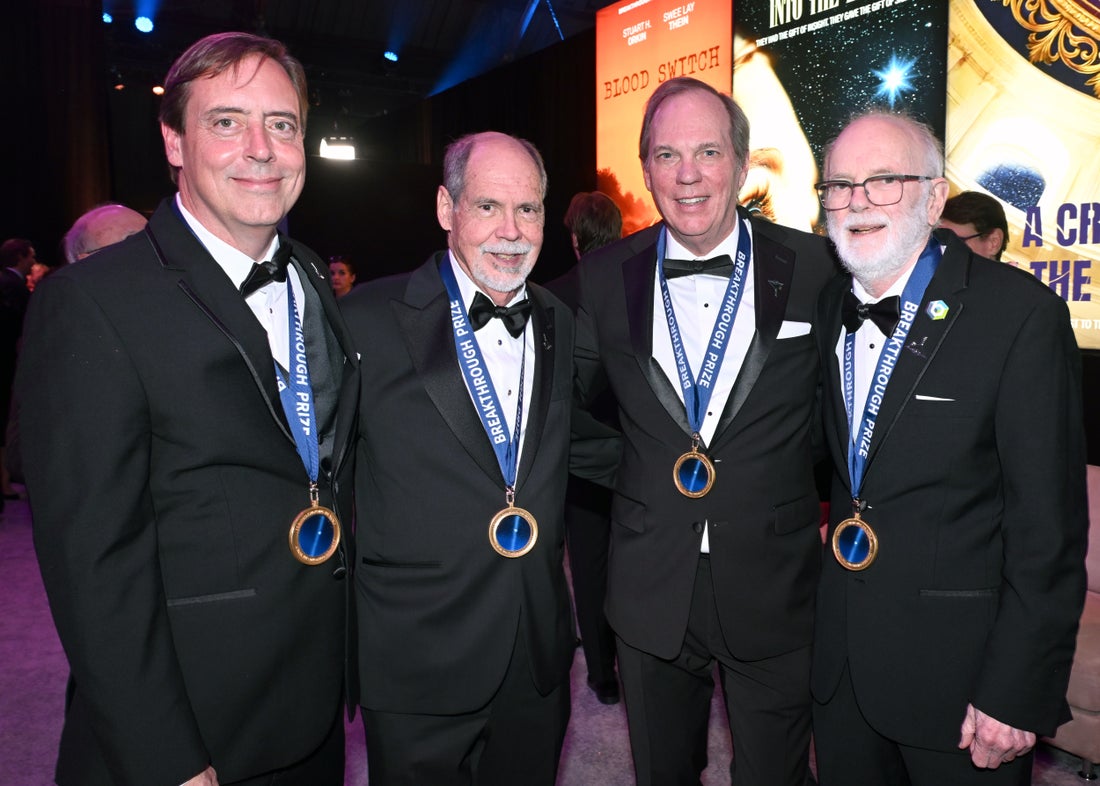
Jean Bennett, Albert Maguire, and Katherine High accepted the $3 million prize at a ceremony at the Barker Hangar in Santa Monica, California, on April 18. Their award recognized work that began in the 1990s at Penn and CHOP, when the three researchers assembled an unlikely team: Bennett brought deep expertise in the molecular biology of the eye; Maguire, an ophthalmic surgeon, developed the microsurgical technique for injecting therapeutic genetic material directly beneath the retina; and High contributed her knowledge of clinical trial design and the regulatory pathway needed to take a research finding into the drug approval process.
The disease they targeted — Leber Congenital Amaurosis, or LCA — is a group of inherited retinal disorders caused by mutations in a gene called RPE65. The gene encodes an enzyme critical to the visual cycle, the biochemical process by which photoreceptor cells in the retina convert light into electrical signals. Children born with pathogenic RPE65 mutations typically have severely impaired vision from birth and are usually fully blind by early adulthood.
The therapy works by using a modified adeno-associated virus as a molecular delivery vehicle, carrying a healthy copy of the RPE65 gene directly into the layer of cells beneath the retina where the enzyme is needed. In clinical trials, 72 percent of treated patients achieved the maximum possible improvement on a standardized low-light navigation obstacle course, and many gained the ability to read standard print and navigate in dim environments.
FDA approval came in December 2017, and Luxturna became the first directly delivered gene therapy available in the United States for a genetic disease. The approval came with an extraordinary price tag: $425,000 per eye, making it among the most expensive drugs ever approved. Spark Therapeutics and its acquirer Roche have since negotiated outcomes-based payment arrangements with several U.S. payers.
The scientific and regulatory blueprint that Bennett, Maguire, and High established has had ripple effects far beyond inherited retinal disease. Their work demonstrated that viral vector delivery could achieve durable, safe genetic correction in post-mitotic human tissue — a scientific debate that had previously divided the field. More than a dozen gene therapies have since received FDA approval.
"We spent twenty years proving that this could work," Bennett said at the Santa Monica ceremony, "and another decade watching what it did to patients and their families. That is why you do the science."
High, who left Penn to found Spark Therapeutics and later Passage Bio, noted in her acceptance remarks that the United States' biomedical funding infrastructure — particularly NIH grants that supported the basic science underpinning Luxturna — was essential to the therapy's development. Her comment carried implicit weight in the current political climate, in which several major federal biomedical research programs face proposed budget reductions.
The Breakthrough Prize in Life Sciences is funded by a consortium of Silicon Valley entrepreneurs including Yuri Milner, Sergey Brin, and Mark Zuckerberg, and carries the largest monetary award in science outside of the Nobel Prizes.