Scientists Discover Liquids Have a Breaking Point — They Fracture Like Solids Under Extreme Stress
Drexel University researchers accidentally found that viscous fluids can snap apart abruptly instead of flowing, overturning a foundational assumption of fluid mechanics and opening new questions in hydraulics and biomedical engineering.
PHILADELPHIA — Scientists at Drexel University have discovered that liquids have a "breaking point" — a critical stress threshold at which they fracture abruptly like a brittle solid rather than thinning gradually the way a liquid is supposed to. The finding, published in Physical Review Letters and conducted in collaboration with ExxonMobil Technology and Engineering Company, overturns a foundational assumption of fluid mechanics and has potential implications for industries ranging from hydraulics and 3D printing to biomedical engineering and oil drilling.
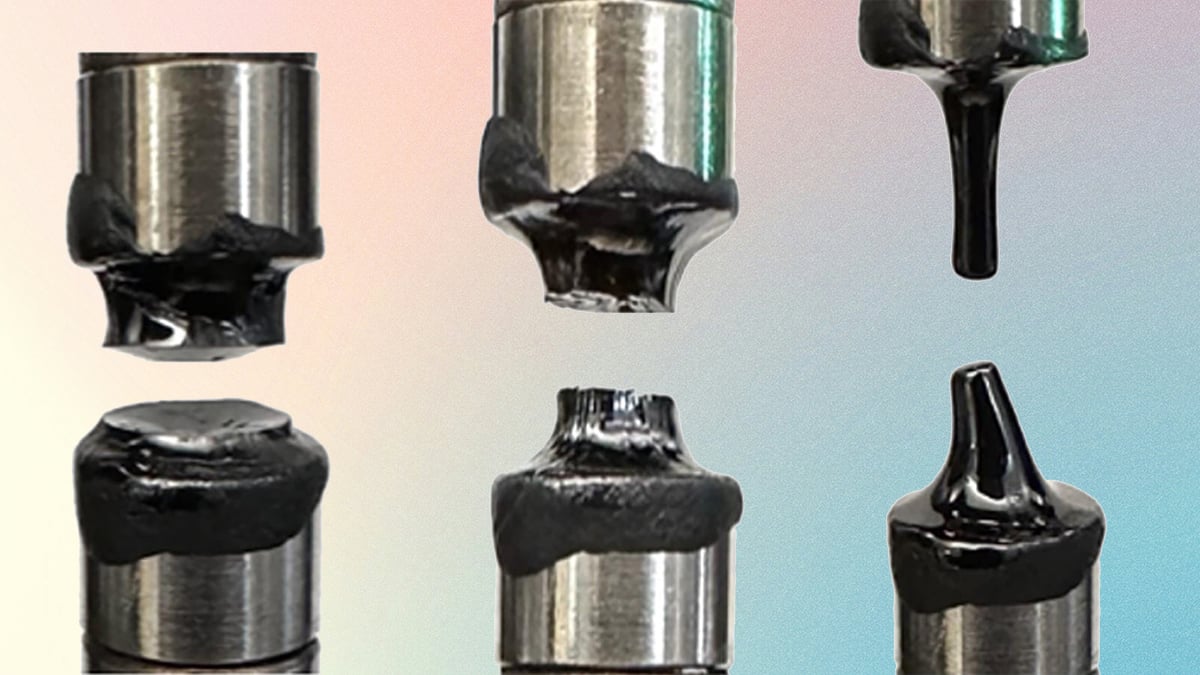
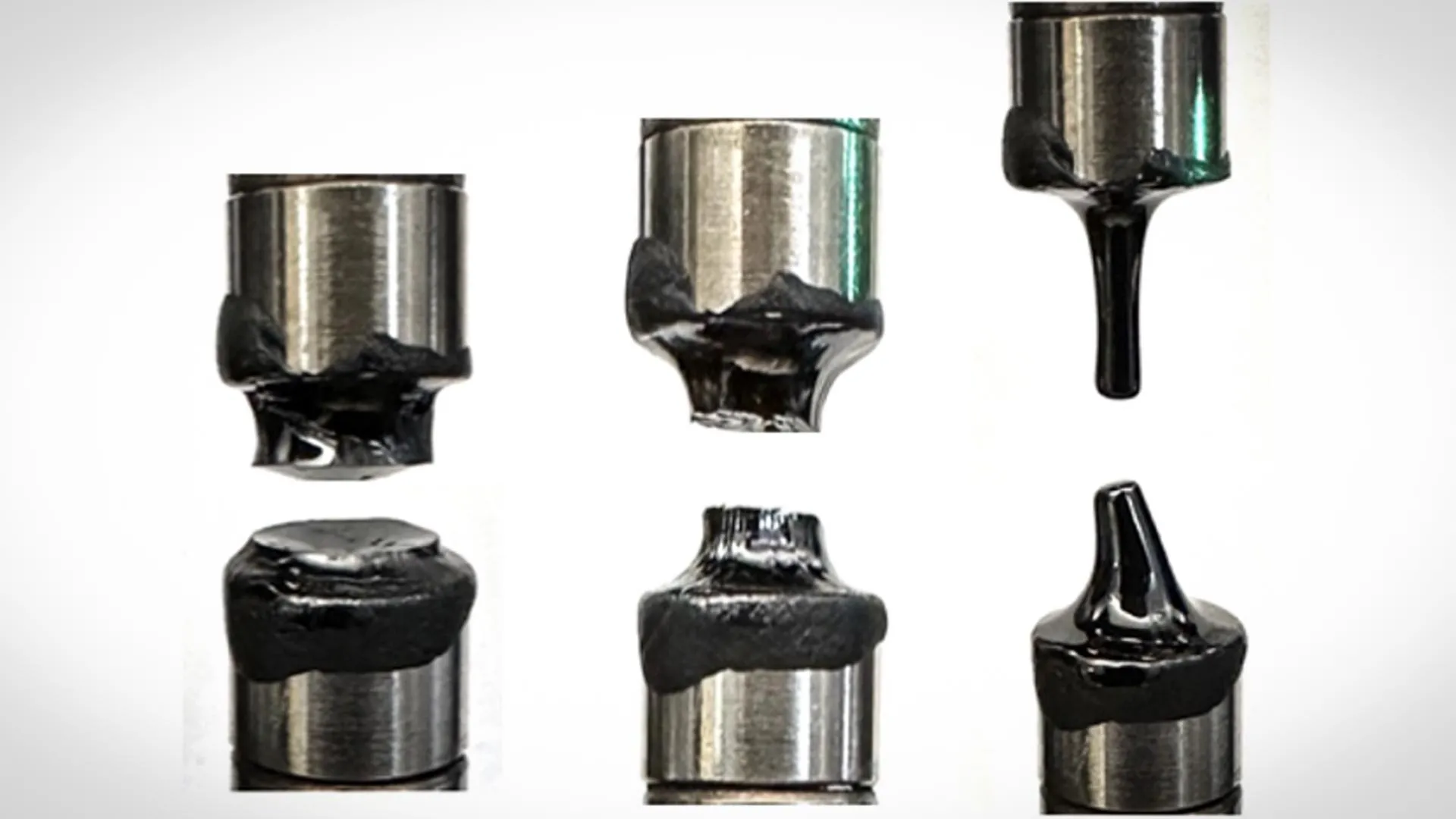
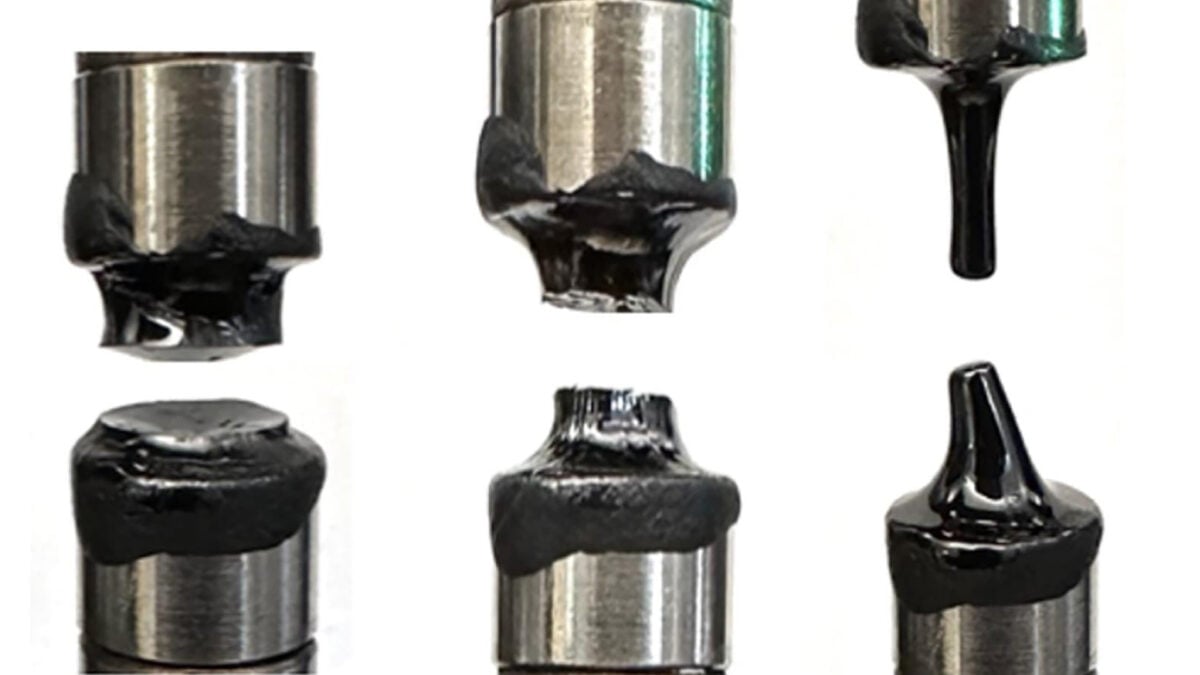
The discovery was accidental. Researchers were conducting extensional rheology experiments — tests designed to measure how much force is required to stretch a viscous liquid — when two tar-like fluids simply snapped apart. Instead of thinning into a thin filament and eventually breaking after a long period of gradual flow, the liquids reached a critical stress and fractured in the same abrupt manner as a piece of glass or a stick of dry chalk. The break was audible: an actual snap that surprised the researchers and prompted them to design a series of follow-up experiments to determine whether the result was real or an artifact of the equipment.
The critical stress point measured was approximately 2 megapascals — a pressure comparable, as the research team noted in their paper, to the tension you would feel on a fingernail if a laundry bag filled with ten bricks caught on it while falling. The value is not vanishingly small; it represents a significant stress that would only arise in specific industrial or biological contexts. But the finding is conceptually radical because it establishes that the transition from flowing to fracturing is not just a property of solids or complex polymer networks, but of simple viscous liquids as well.
Perhaps most surprising was the mechanism. Classical intuition would predict that the fracturing behavior is related to elasticity — the ability of a material to store and release energy. But the Drexel team found that the critical factor is viscosity, not elasticity. The liquids that fractured were not elastic gels or polymer melts; they were simple, structurally uncomplicated fluids. The implication is that all simple liquids may share the same fundamental breaking point, suggesting that what had been considered a qualitative difference between liquids and solids is actually a quantitative threshold that every liquid crosses under sufficient stress.
"We always assumed that the breaking behavior was tied to the elastic properties of a material," said lead researcher Professor Erica Pensini, whose group carried out the experimental work at Drexel. "Finding that viscosity alone can drive fracture changes how we think about the liquid state itself." The research opens new questions in hydraulic engineering, where understanding the conditions under which a fluid might fracture rather than flow could affect pump and pipeline design. In biomedical research, blood rheology — the study of how blood flows through vessels — may need to incorporate fracture thresholds that previous models assumed did not exist for such a fluid. The team is now working to map the fracture conditions across a wider range of liquids to determine whether the 2 megapascal threshold holds as a universal constant or varies with temperature, chemistry, and molecular weight.