Kennedy's Vaccine Agenda Hits Roadblocks, Diminishing His Clout
Health Secretary's vaccine skepticism poses challenges for Trump administration as top health jobs remain unfilled and court blocks policy changes.

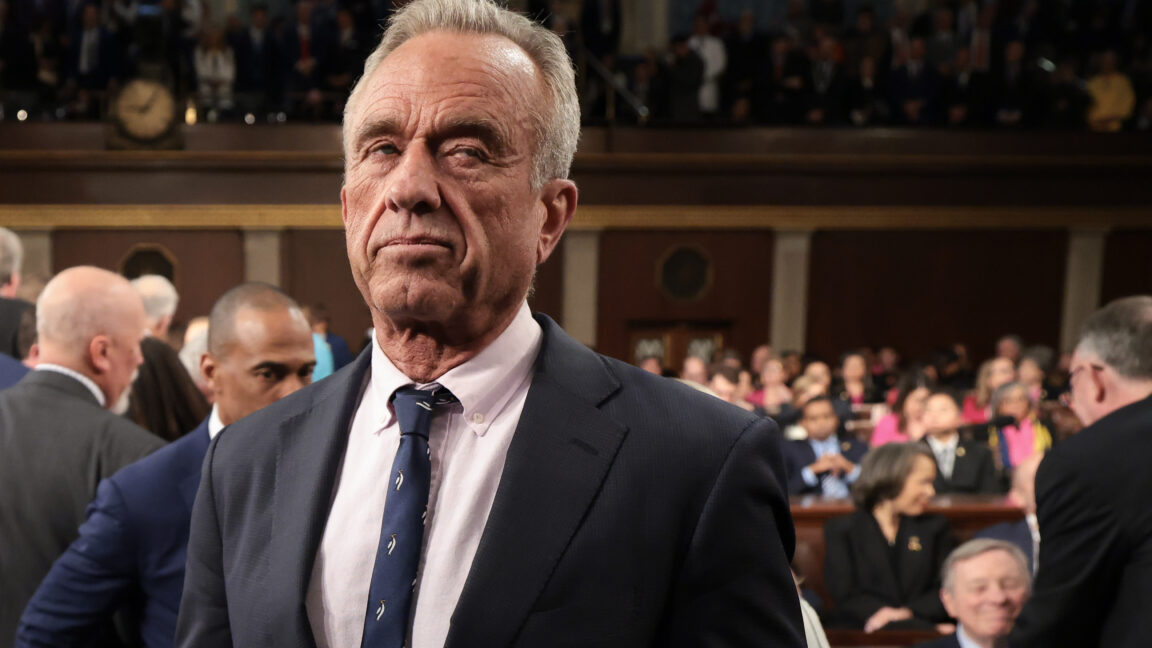
Robert F. Kennedy Jr.'s ambitious agenda to overhaul federal vaccine policy is running into significant obstacles that have diminished his influence within the Trump administration and raised questions about his ability to implement the sweeping changes he promised during the presidential campaign.
More than a year into his tenure as Secretary of Health and Human Services, Kennedy has struggled to fill key positions at agencies under his purview, seen several policy initiatives blocked by federal courts, and faced resistance from career scientists and public health officials who have quietly worked to slow the implementation of his directives.
The most significant setback came last month when a federal judge in Maryland issued a preliminary injunction blocking Kennedy's attempt to revise the childhood vaccine schedule recommended by the Centers for Disease Control and Prevention. The judge ruled that the secretary had exceeded his statutory authority by attempting to unilaterally alter recommendations that are developed through a deliberative process involving outside advisory committees. The administration has appealed the ruling, but the injunction remains in effect.
Kennedy's difficulties are compounded by a staffing crisis at HHS and its subsidiary agencies. More than a dozen senior positions at the CDC, the Food and Drug Administration, and the National Institutes of Health remain unfilled, either because nominees have withdrawn in the face of contentious confirmation processes or because qualified candidates have been reluctant to serve under a secretary known for his skepticism of mainstream public health science. The vacancies have left critical offices operating with acting leaders who lack the authority or political backing to implement major policy changes.
Within the White House, Kennedy's clout has waned as other priorities have consumed the president's attention. The Iran war, the government shutdown, and immigration enforcement have dominated the administration's bandwidth, leaving little room for the health policy battles that Kennedy had hoped to wage. Several White House officials, speaking on condition of anonymity, said Kennedy has been largely sidelined from senior policy discussions and that his access to the president has diminished considerably since the early months of the administration.
Kennedy has nonetheless notched some wins. He successfully pushed for greater transparency in the FDA's drug approval process, requiring the agency to publish more detailed data from clinical trials. He also secured increased funding for research into environmental factors in chronic disease, a longstanding priority. And his public questioning of pharmaceutical industry practices has resonated with a significant segment of the population that distrusts institutional medicine.
But his most consequential proposals remain stalled. A plan to require schools receiving federal funding to accept vaccine exemptions based on personal beliefs, rather than just medical or religious grounds, has not advanced beyond the discussion stage. A proposed executive order directing the NIH to fund studies examining potential links between vaccines and autism was shelved after the White House counsel's office raised concerns about the scientific basis and political risks.
Public health officials worry that Kennedy's rhetoric, even when not backed by policy changes, has contributed to declining vaccination rates. CDC data released this month showed that childhood vaccination rates for measles, mumps, and rubella dropped to 89 percent nationally in the 2025-2026 school year, down from 93 percent two years earlier. Several states have reported measles outbreaks linked to unvaccinated clusters.
Kennedy's allies insist that the setbacks are temporary and that his presence atop HHS represents a generational shift in how the federal government approaches public health. They point to growing public skepticism of pharmaceutical companies and regulatory agencies as evidence that Kennedy's message is breaking through, even if the policy machinery has been slow to follow.