James Webb Telescope Finds 'Impossible' Thick Atmosphere on a Lava Planet That Completes a Year in 11 Hours
TOI-561 b was expected to be a bare, airless rock baked by its star — but temperature measurements reveal it is cooler than it should be, pointing to an atmosphere that may be continuously replenished by volcanic outgassing on the 10-billion-year-old world.

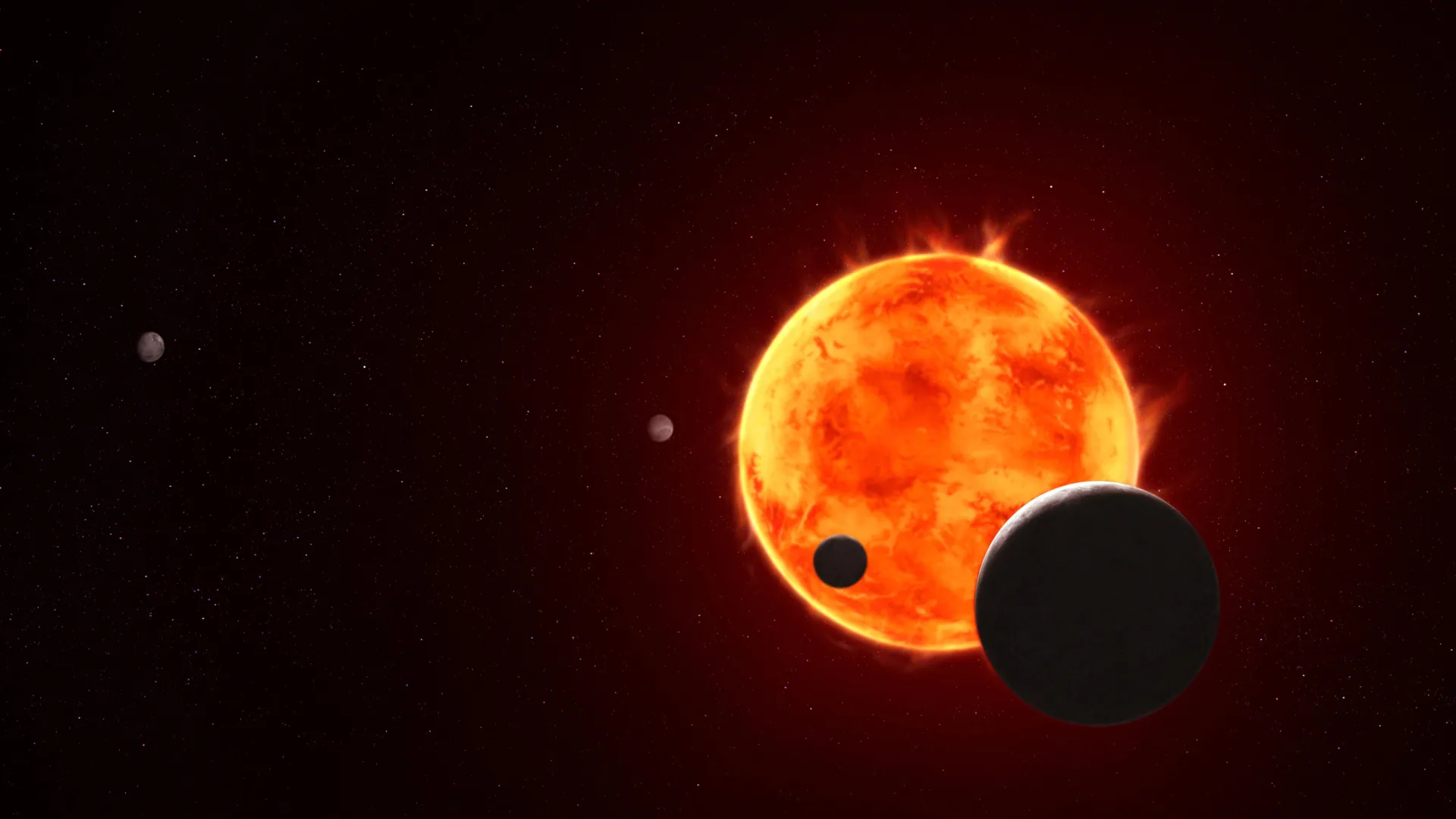
A scorching, fast-moving rocky planet that astronomers had long assumed was too hostile to hold onto any gas has surprised researchers with the strongest evidence yet for a thick, persistent atmosphere on a world beyond our solar system. NASA's James Webb Space Telescope detected signs of a substantial atmosphere around TOI-561 b, an ultra-hot super-Earth located 560 light-years from Earth that races around its parent star in under 11 hours — completing what would be an entire year in less time than a transatlantic flight.
The planet is roughly 1.4 times the size of Earth and approximately twice its mass, placing it in the category of super-Earths. At its orbital distance, TOI-561 b receives so much stellar radiation that its dayside surface temperature reaches an estimated 2,300 kelvins — hot enough to melt virtually any known rock. Previous modeling suggested that such extreme conditions would strip away any atmosphere the planet might accumulate, either blasting gas molecules into space through intense stellar winds or baking them off through intense ultraviolet radiation. The planet, it seemed, should be bone-dry and airless.
The Webb telescope's Near-Infrared Spectrograph instrument told a different story. By measuring the temperature of the planet's dayside during its transit, the researchers found it was significantly cooler than a bare-rock surface would be — approximately 3,200 degrees Fahrenheit instead of the expected 4,900. That temperature gap strongly suggests that an atmosphere is redistributing heat from the dayside to the nightside, a process that only works if there is a substantial gaseous envelope enveloping the world. One researcher described it as being "really like a wet lava ball" — a molten surface covered by a blanket of gas, possibly rich in volatiles continuously replenished by volcanic outgassing.
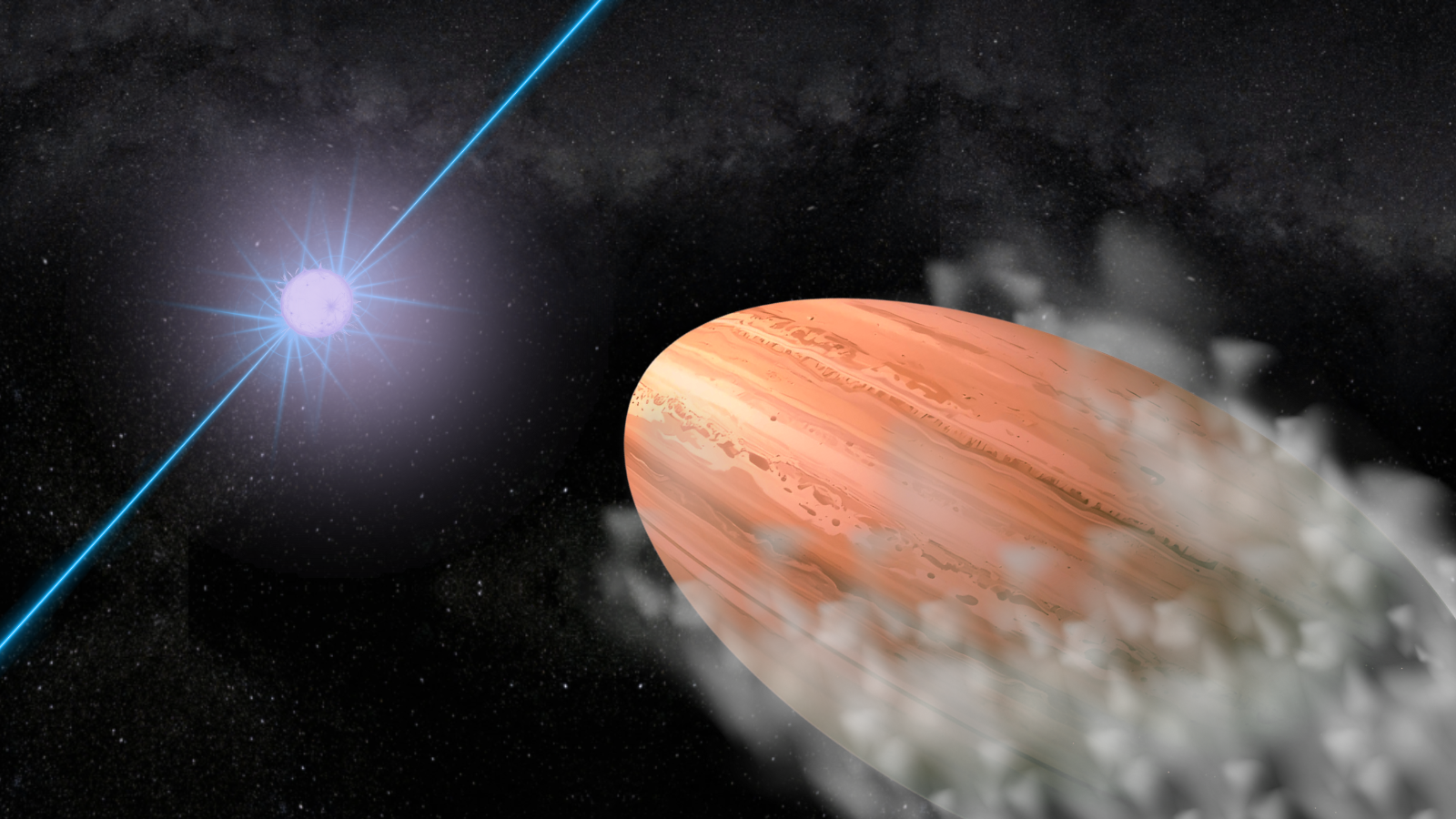
What makes the finding particularly striking is the planet's age. TOI-561 is one of the oldest stars known to host planets — roughly 10 billion years old, more than twice the age of our own sun. If TOI-561 b has managed to maintain an atmosphere for billions of years despite relentless bombardment from its parent star, it suggests that some rocky worlds have mechanisms for retaining or continuously regenerating their atmospheres that existing models do not fully capture. Volcanic activity is the leading candidate: as the planet's interior melts and churns under tidal forces from its close-in orbit, it may continuously vent gases that replenish whatever the star strips away.
The discovery has broad implications for the search for potentially habitable worlds. While TOI-561 b is far too hot to support life, the confirmation that rocky planets in extreme environments can hold atmospheres suggests that the universe may be far more generous in distributing the raw ingredients for habitability than scientists assumed. It also demonstrates Webb's growing power as an instrument for probing the atmospheres of small rocky worlds — a capability that, when trained on cooler, more distant planets in the so-called habitable zones of their stars, could one day detect the chemical fingerprints of life itself.