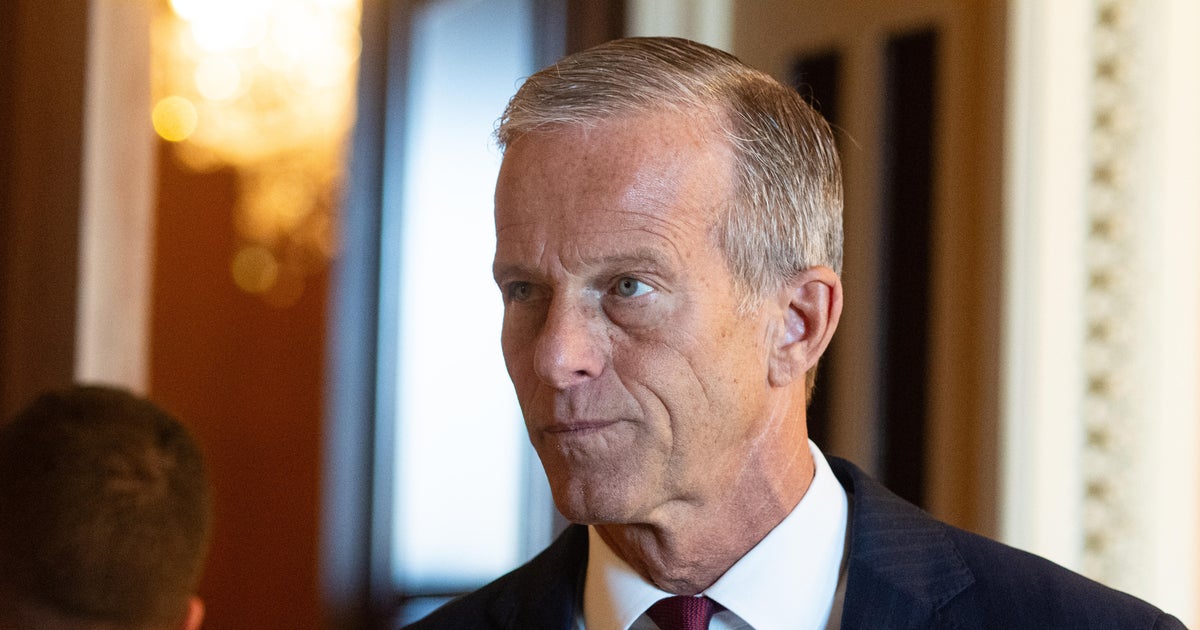
Graham Launches Push for Second Reconciliation Bill to Fund Iran War and ICE Through Party-Line Vote
The Senate Budget Committee chairman called an emergency meeting Monday to explore bundling the Pentagon's war request, ICE funding, and anti-fraud measures into a package that bypasses the 60-vote filibuster.

Senate Budget Committee Chairman Lindsey Graham convened an emergency closed-door meeting Monday with fellow Republicans to explore moving a second budget reconciliation package this year — a legislative maneuver that would attempt to bundle the Pentagon's $200 billion Iran war supplemental request with additional ICE enforcement funding and anti-fraud measures in federal benefit programs into a single party-line bill that bypasses the Senate's 60-vote filibuster threshold. The meeting, confirmed by multiple sources familiar with the discussions, represents the first formal effort to chart a path for the war funding package after several weeks in which the administration has signaled its intent but no clear legislative vehicle has emerged.
Budget reconciliation allows the Senate to pass specific categories of fiscal legislation with a simple majority of 51 votes rather than the 60 required to overcome a filibuster. Republicans used the process once already this Congress to advance the "One Big Beautiful Bill Act" in July 2025, which included sweeping tax cuts, spending reductions, and immigration enforcement measures. Using the process a second time in the same Congress is procedurally permitted but politically demanding — it requires navigating the Senate parliamentarian's strict rules about what qualifies as a budgetary provision, a process that has previously forced the removal of major policy provisions that lacked sufficient direct fiscal impact to survive the so-called "Byrd Rule" scrutiny.
Graham, the Senate's most prominent hawk on the Iran war, has staked his institutional legacy on the campaign and told colleagues after Monday's meeting that he believes a reconciliation package can be assembled. He was characteristically direct in making the case for urgency: Iran war operational costs are running ahead of estimates, precision munitions stockpiles are being depleted at rates that commanders say are unsustainable without emergency replenishment, and the political window for acting before the midterm campaign season narrows with each passing week. "This is not optional," Graham told reporters. "We have men and women in harm's way and we need to resource them properly."
The skepticism within Republican ranks is substantial and comes from divergent directions. Fiscal conservatives in the House and Senate are demanding dollar-for-dollar spending offsets before they will support any new war funding — a condition that is mathematically difficult to meet given the size of the request and politically fraught given that the most available offsets would require cutting programs with broad constituencies. Senator Susan Collins of Maine, chairwoman of the Senate Appropriations Committee, has argued publicly that a bipartisan appropriations process is both more durable and more constitutionally appropriate than a party-line reconciliation push for a military campaign that Congress has never formally authorized. Collins' position aligns with Senate Democratic leadership, which has indicated it might support a bipartisan Iran war funding bill structured differently — but not one passed through reconciliation without Democratic input.
Graham faces a numbers problem that no amount of political pressure can fully solve. With 53 Republican senators, the conference can afford only three defections to pass a reconciliation package over unified Democratic opposition. As of Monday, sources close to the negotiations identify at least five to seven Republican senators who have expressed serious reservations about the current approach, ranging from concerns about the constitutional and war powers implications of reconciliation-funded warfare to resistance to the price tag itself. The senator from South Carolina, whose earlier comment that the United States would "make a tonne of money" from Iranian oil fields after regime change drew widespread ridicule, must navigate an increasingly restive conference in a compressed timeline that grows shorter with every day the DHS shutdown continues and every week gas prices remain near $4 per gallon.