Fermilab's Ultra-Cold Dark Matter Detector Reaches Operating Temperature — The Hunt for the Universe's Missing 85% Is On
SuperCDMS SNOLAB, the world's most sensitive light dark matter detector, has completed cooldown 2,070 meters underground in Canada and will begin collecting scientific data in mid-2026, joining the global effort to finally identify what most of the universe is made of.

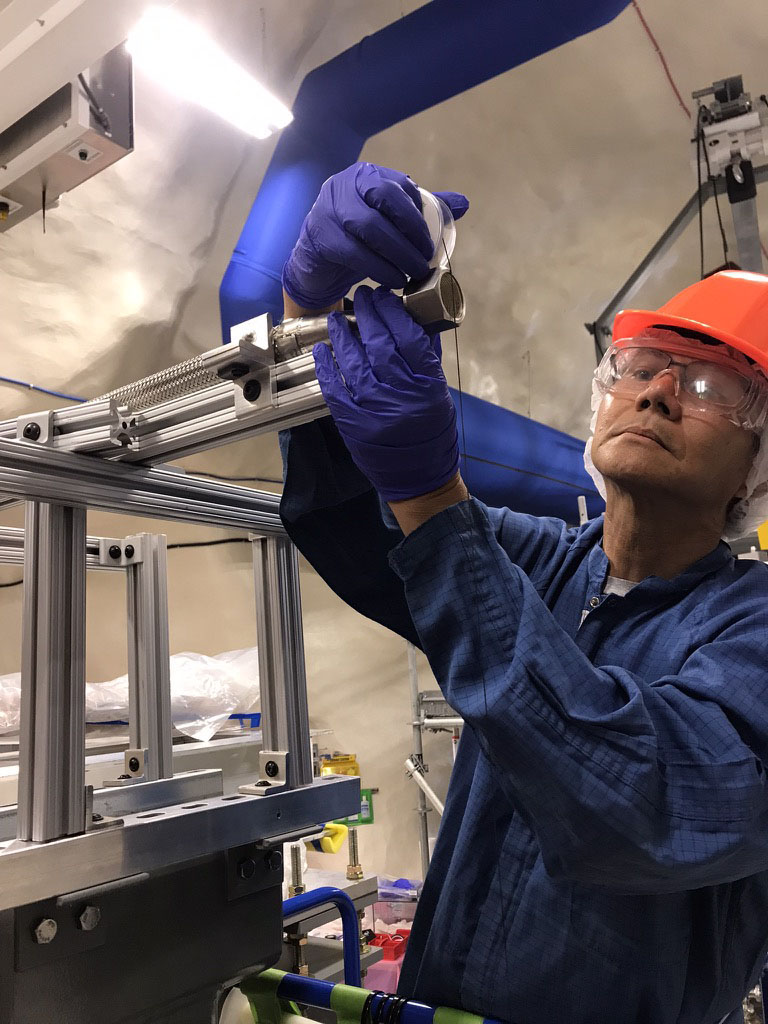
Deep beneath a Canadian nickel mine, inside one of the most radiation-shielded spaces ever constructed, a new machine has reached the coldest stable operating temperature achieved by any physics experiment outside of a laboratory test. The Super Cryogenic Dark Matter Search — SuperCDMS — has successfully completed cooldown at SNOLAB, the underground laboratory in Sudbury, Ontario, and scientists announced this week that science-quality data collection is on schedule to begin in mid-2026.
If it works as designed, SuperCDMS will be the most sensitive direct-detection dark matter experiment ever built for the particle mass range it is designed to probe. Dark matter — the invisible substance that physicists believe accounts for approximately 85 percent of all matter in the universe — has never been directly detected, despite decades of effort. It exerts gravitational pull that bends light from distant galaxies, holds galaxy clusters together, and shaped the large-scale structure of the cosmos. Yet every attempt to observe it interacting with ordinary matter in a laboratory detector has come up empty. SuperCDMS is designed to change that, targeting a class of hypothetical particles known as light dark matter, which would have a mass comparable to or lower than a proton.
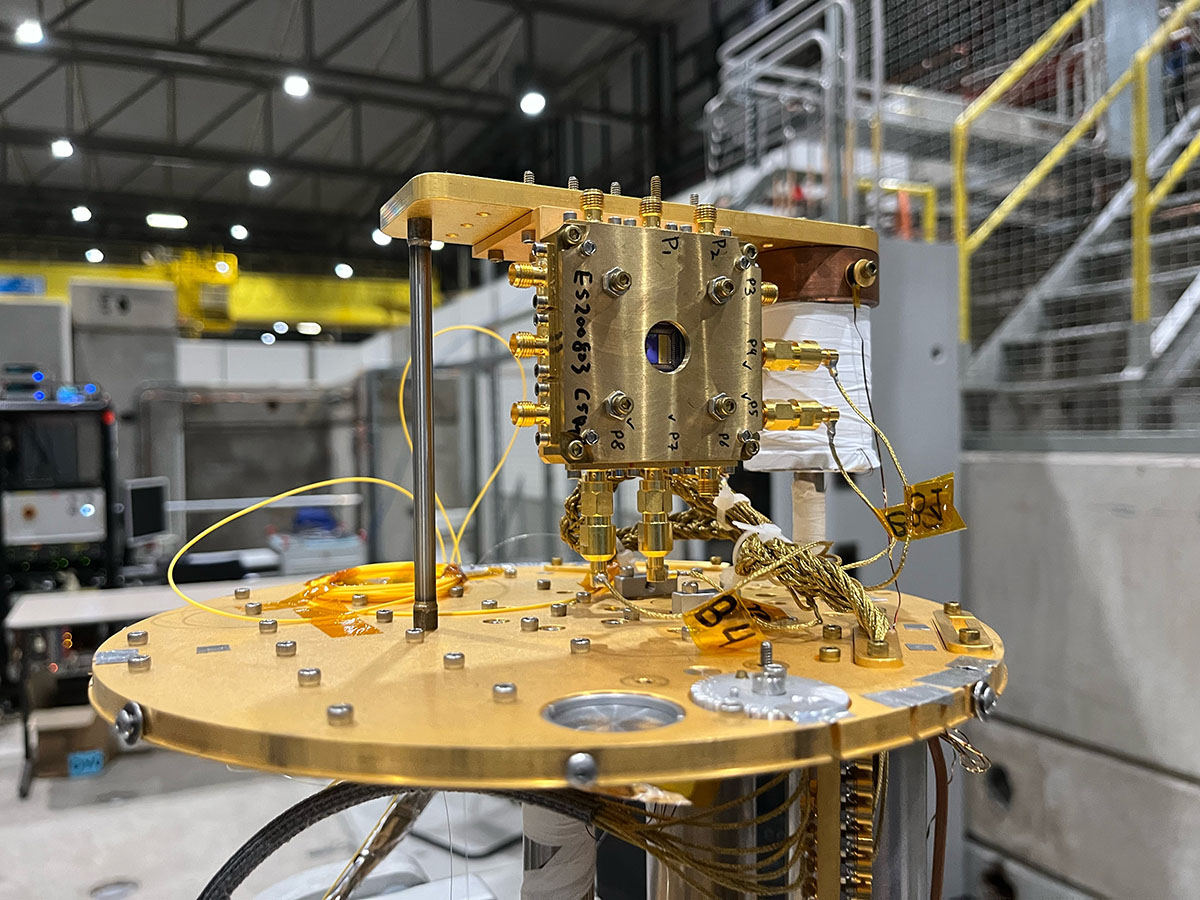
The experiment uses 10-centimeter-diameter crystals of silicon and germanium, cooled to within a fraction of a degree of absolute zero. When a dark matter particle passes through the crystal and scatters off an atomic nucleus, it deposits a tiny pulse of energy in the form of vibrations called phonons — quantum-scale sound waves. Photolithographically patterned sensors on the crystal surface detect these vibrations with extraordinary sensitivity. The challenge is distinguishing the extraordinarily rare signal of a genuine dark matter interaction from the constant background noise of cosmic rays, radioactive decay in surrounding materials, and vibrations from the Earth itself. That is why SNOLAB was chosen: 2,070 meters of rock above the laboratory reduces the cosmic ray flux to roughly one-millionth of what exists at the surface.
The collaboration, which involves more than 100 scientists from 25 institutions across the United States and Canada, is led by SLAC National Accelerator Laboratory, with critical contributions from Fermilab, which built the cryogenic refrigeration system, warm electronics package, calibration system, and seismic isolation platform. Funding comes from the U.S. Department of Energy, the National Science Foundation, and two Canadian research agencies. Fermilab scientist Lauren Hsu, who has worked on the SuperCDMS project since 2007, described the cooldown milestone as a moment years in the making. "If we're lucky enough to even see a signal, we don't expect to see more than a few events per year for our entire experiment," Hsu said — a statement that underscores both the sensitivity of the technology and the patience required in the hunt for dark matter.
SuperCDMS is one of three major second-generation dark matter direct-detection experiments now either running or entering operations globally, alongside the LUX-ZEPLIN experiment in South Dakota — which targets heavier dark matter candidates using liquid xenon — and ADMX-Gen2, which searches for a completely different class of dark matter candidate called an axion. The three experiments are designed to complement each other, covering different mass ranges and interaction types so that virtually no dark matter candidate can hide. Scientists caution that detection is not guaranteed, and a null result would itself be scientifically valuable — it would rule out entire swaths of theoretical models and push physicists toward new ideas about what the universe is actually made of.