Democrats Embrace Gerrymandering After Years of Opposition
The party seeks advantage in Virginia redistricting as leaders cite Trump's tactics as justification. The shift marks a significant change in Democratic strategy on partisan map-drawing.
Democratic leaders are actively pursuing gerrymandering opportunities in Virginia, marking a dramatic reversal from their longtime opposition to partisan redistricting practices. The party is pushing for electoral map changes that could provide them with additional congressional seats, with leadership citing President Trump's political tactics as justification for abandoning their previous principled stance against manipulating district boundaries for political gain.
The shift in Democratic thinking represents a significant strategic pivot for a party that has historically positioned itself as the defender of fair redistricting practices. For years, Democrats have criticized Republican efforts to draw congressional and legislative districts that favor their candidates, arguing that gerrymandering undermines democratic representation and dilutes voter choice. Party leaders previously supported independent redistricting commissions and court-drawn maps as alternatives to partisan gerrymandering.
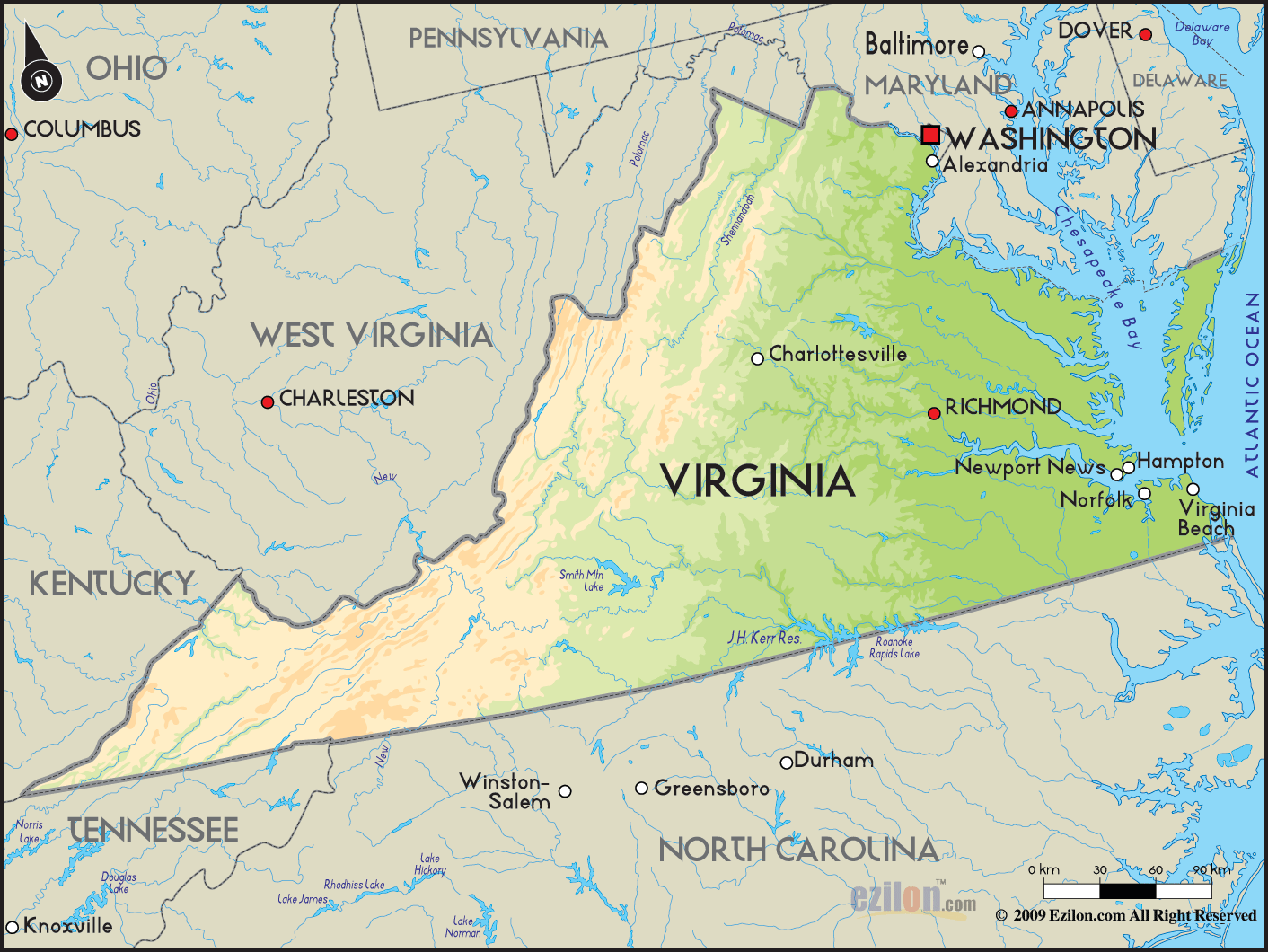
Virginia has become a key battleground for this new Democratic approach, with party officials viewing the state as an opportunity to gain congressional seats through strategic redistricting. The state's political landscape and demographic trends make it an attractive target for Democrats seeking to maximize their representation in the House of Representatives. Party strategists argue that Virginia's changing population patterns justify redrawing district lines, though critics suggest the motivations are primarily political.
Democratic leaders have explicitly connected their changed position to President Trump's influence on American politics. Party officials argue that Trump's approach to governance and his willingness to challenge traditional political norms require Democrats to adopt more aggressive tactics to remain competitive. This reasoning reflects a broader debate within the Democratic Party about whether to maintain traditional political standards or match Republican strategies in an increasingly polarized political environment.
The embrace of gerrymandering by Democrats has drawn criticism from voting rights advocates and good government groups who had viewed the party as an ally in redistricting reform efforts. Some Democratic activists worry that the party's new position undermines its credibility on voting rights issues and could lead to even more aggressive gerrymandering by both parties in future redistricting cycles. The Virginia situation will likely serve as a test case for how far Democrats are willing to go in pursuing partisan advantage through redistricting manipulation.