Curiosity Rover Stumbles on 3.5-Billion-Year-Old Martian Sandstorm Frozen in Rock — Evidence of Earth-Like Atmosphere
A team from Imperial College London found 'supercritical climbing wind ripples' in Gale Crater — structures never before seen on Mars that could only form when sustained high winds moved enormous quantities of sand.
Scientists have discovered the first definitive evidence of an ancient sandstorm on Mars — a violent tempest that swept across Gale Crater approximately 3.5 billion years ago and left behind microscopic traces in the rock that a NASA rover only stumbled upon by accident. The finding, published in the journal Geology in 2026, adds powerful evidence that Mars once hosted an atmosphere dense enough to drive the kind of ferocious weather events found today only on Earth.
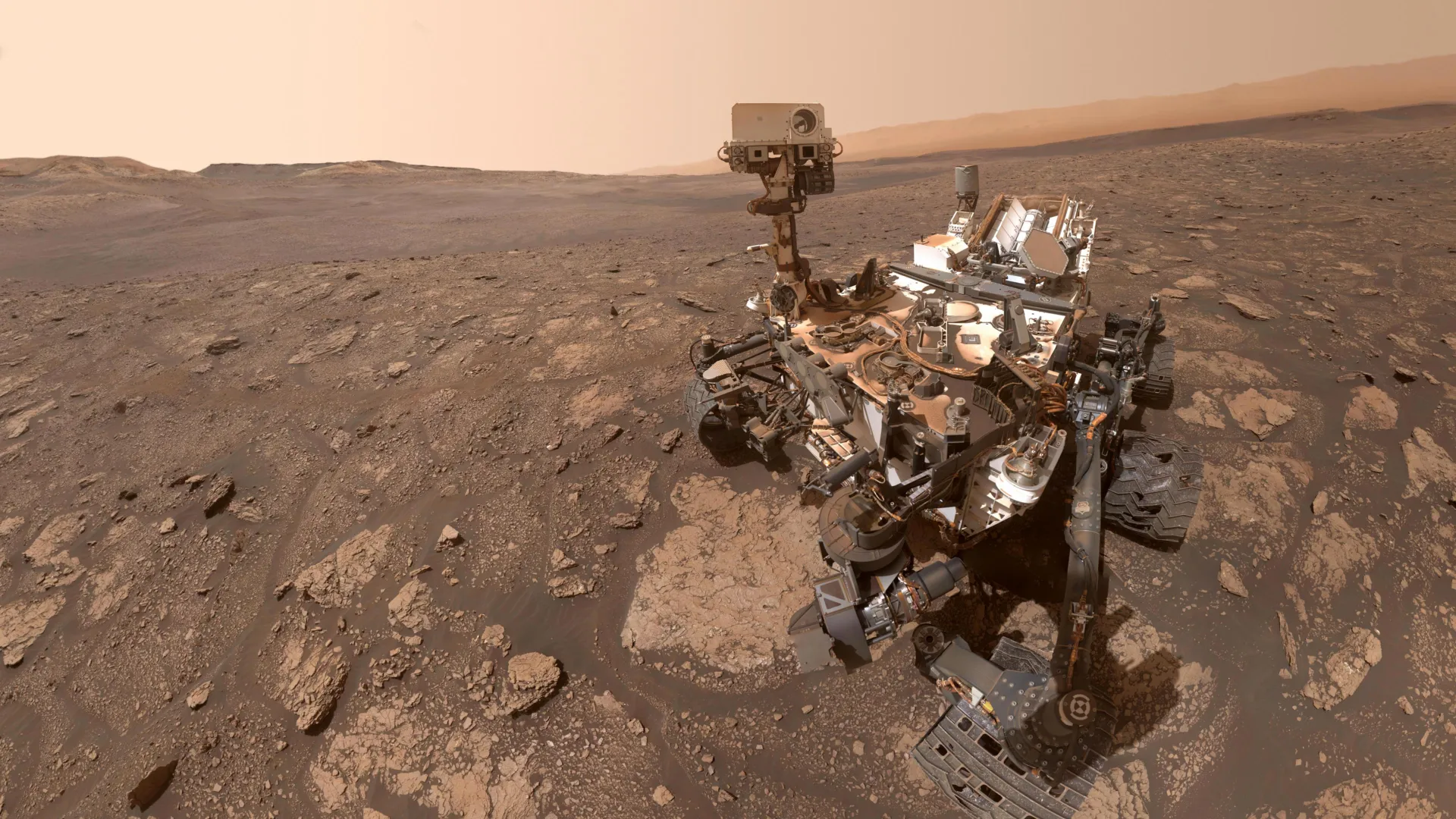
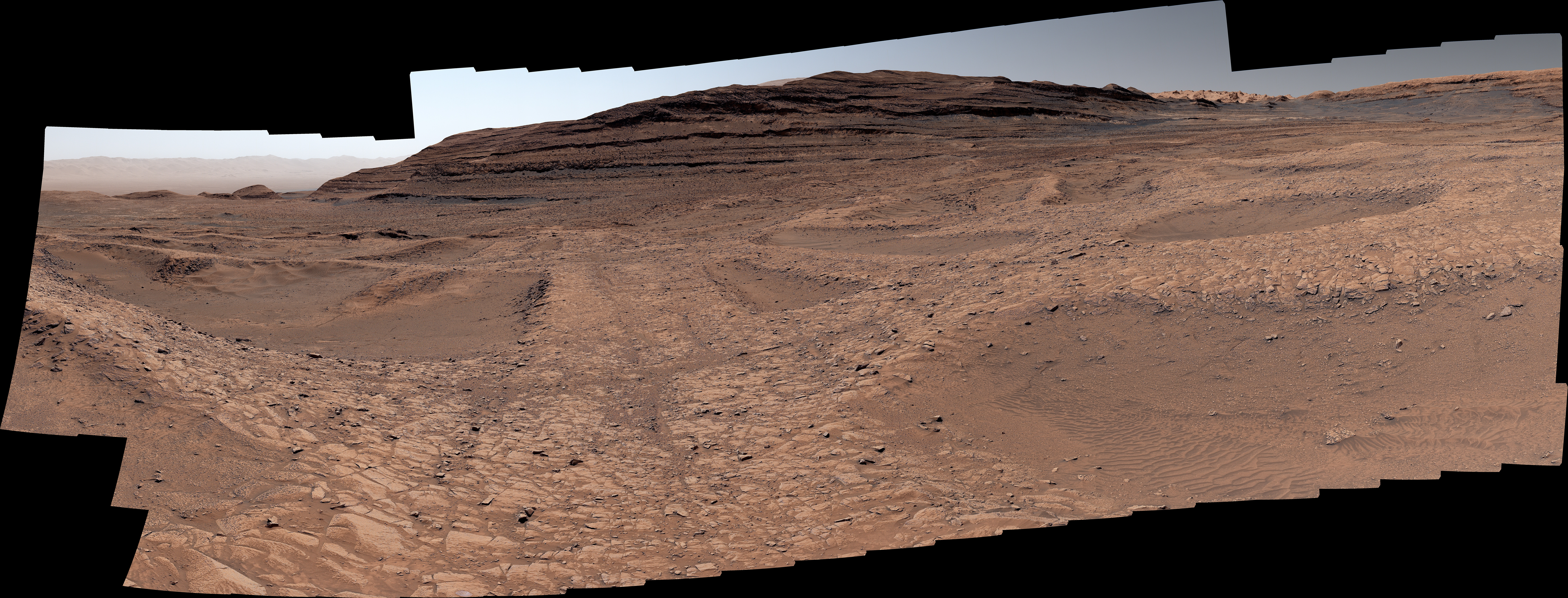
The discovery was made by a team led by Dr. Steven Banham of Imperial College London, working with co-authors Linda Kah of the University of Tennessee and Joel Davis of Imperial College London. Crucially, it was not the result of a targeted search. Banham's team was reviewing routine black-and-white panoramic images returned by NASA's Curiosity rover when they noticed unusual sedimentary features in the crater walls that didn't match any previously catalogued Martian geological formation.
"This was very serendipitous. We weren't really looking for these deposits, and then lo and behold, we drove around the corner and found them," Banham said in a statement accompanying the research publication.
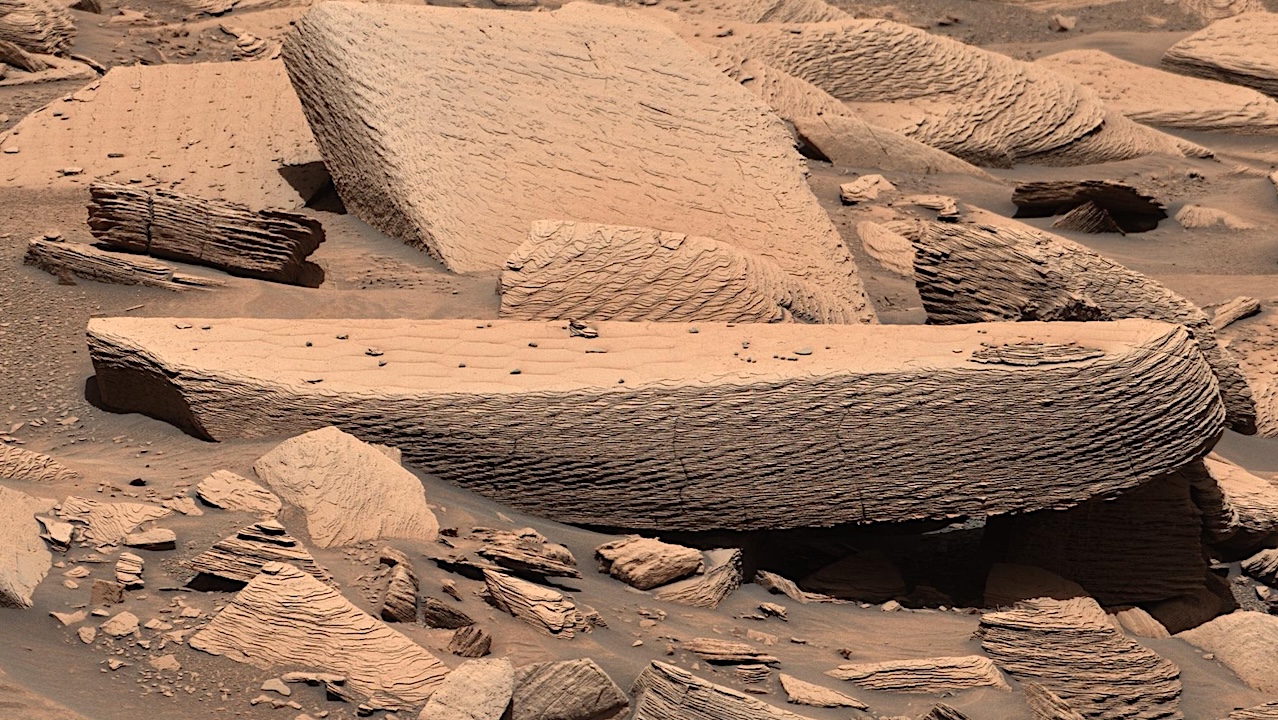
A closer look using Curiosity's high-resolution MASTCAM cameras revealed what geologists call "supercritical climbing wind ripples" — millimeter-thin, crinkled laminations in the ancient rock that form only under a specific and extreme set of conditions: sustained high winds moving enormous volumes of loose sand. The structures have been observed in only a handful of locations on Earth, typically in ancient geological formations, and had never before been identified on Mars.
The scientific implications are substantial. The existence of such features requires not just strong winds, but an atmospheric density high enough to move and transport significant quantities of loose sediment over long distances. Mars today has an atmosphere roughly 1 percent as dense as Earth's — far too thin to generate the kind of storm captured in the rock record. For these wind ripples to have formed 3.5 to 3.6 billion years ago, scientists conclude, Mars must have had a dramatically denser atmosphere, much more similar to present-day Earth's.
"It would be like one of those scenes in Dune where there's a sandstorm happening," Banham said, invoking the famous science fiction depiction of Martian-like desert storms.
Banham noted that the discovery comes alongside years of Curiosity data already showing evidence of ancient rivers, lake deposits, and standing water in Gale Crater — all pointing to a Mars that was, for a period at least, hospitable to liquid water and complex weather. What happened to that ancient atmosphere — whether it was stripped away by solar wind, frozen into the poles, or locked into the rock — remains one of the central mysteries of planetary science.
The team's next hope is to find rain impact marks in Martian rock — tiny circular impressions left when liquid water droplets strike soft sediment. Such features have been searched for since NASA's Pathfinder mission landed in 1997 and by every rover mission since, without success. Their discovery would be considered definitive proof that rain once fell on Mars.
"People have been looking for those since Pathfinder and the MER rovers, and nobody's seen them. It must have rained, as we've seen evidence of rivers and lake deposits," Banham said.
The finding fits into a growing body of evidence suggesting that early Mars, sometime between 3 and 4 billion years ago, may have been habitable — not necessarily by complex life, but potentially by microbial organisms. Whether life ever arose there remains unknown. But studies like this one, identifying ancient weather systems in the rock record, continue to build the case that the conditions for life, at minimum, once existed on the red planet.