Australian Scientists Build First Quantum Battery That Breaks All the Rules of Charging
A team from CSIRO and RMIT University completed the first full charge-store-discharge cycle of a quantum battery — and found it charges faster the larger it grows, the opposite of every conventional battery ever made.

Australian scientists have built the world's first quantum battery capable of completing a full charge, storage, and discharge cycle — and discovered something that upends a basic assumption of energy storage: the device charges faster as it gets larger, the opposite of every conventional battery ever made.
The proof-of-concept device was developed by a team led by Dr. James Quach of CSIRO, Australia's national science agency, in collaboration with researchers from RMIT University and the University of Melbourne. Their findings were published in the journal Light: Science & Applications in March 2026, with broader coverage emerging in early April. CSIRO is now actively seeking commercial development partners to advance the technology toward real-world applications.
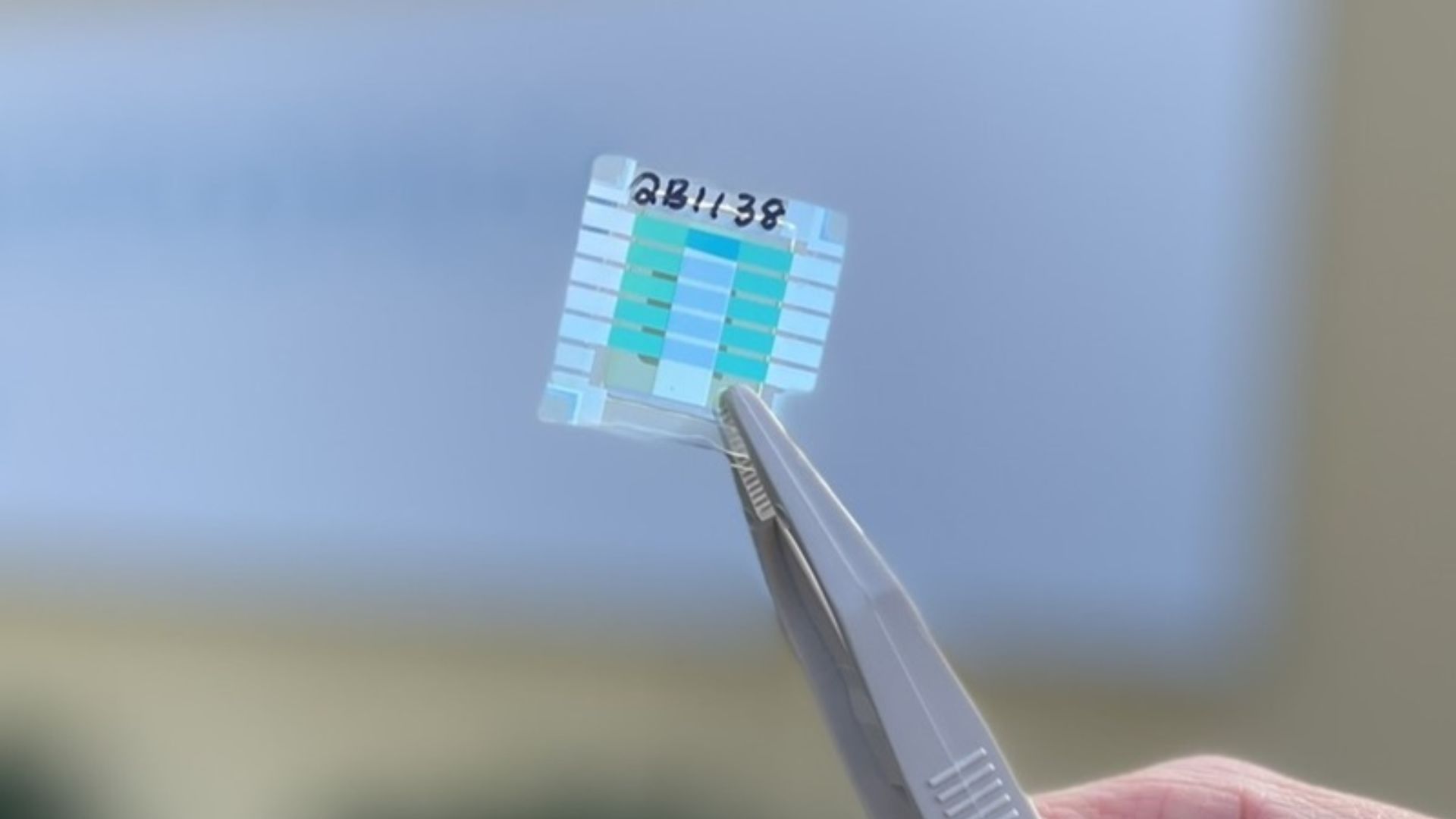
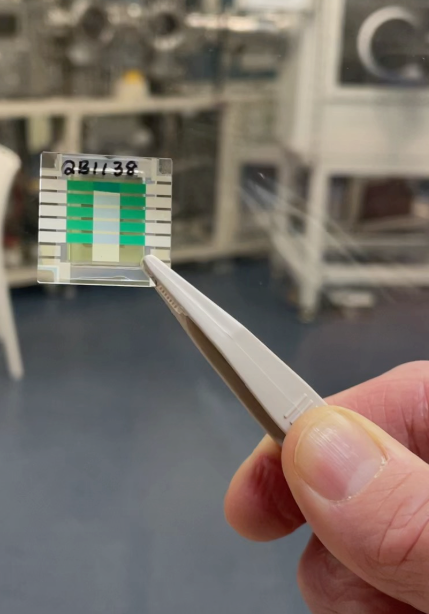
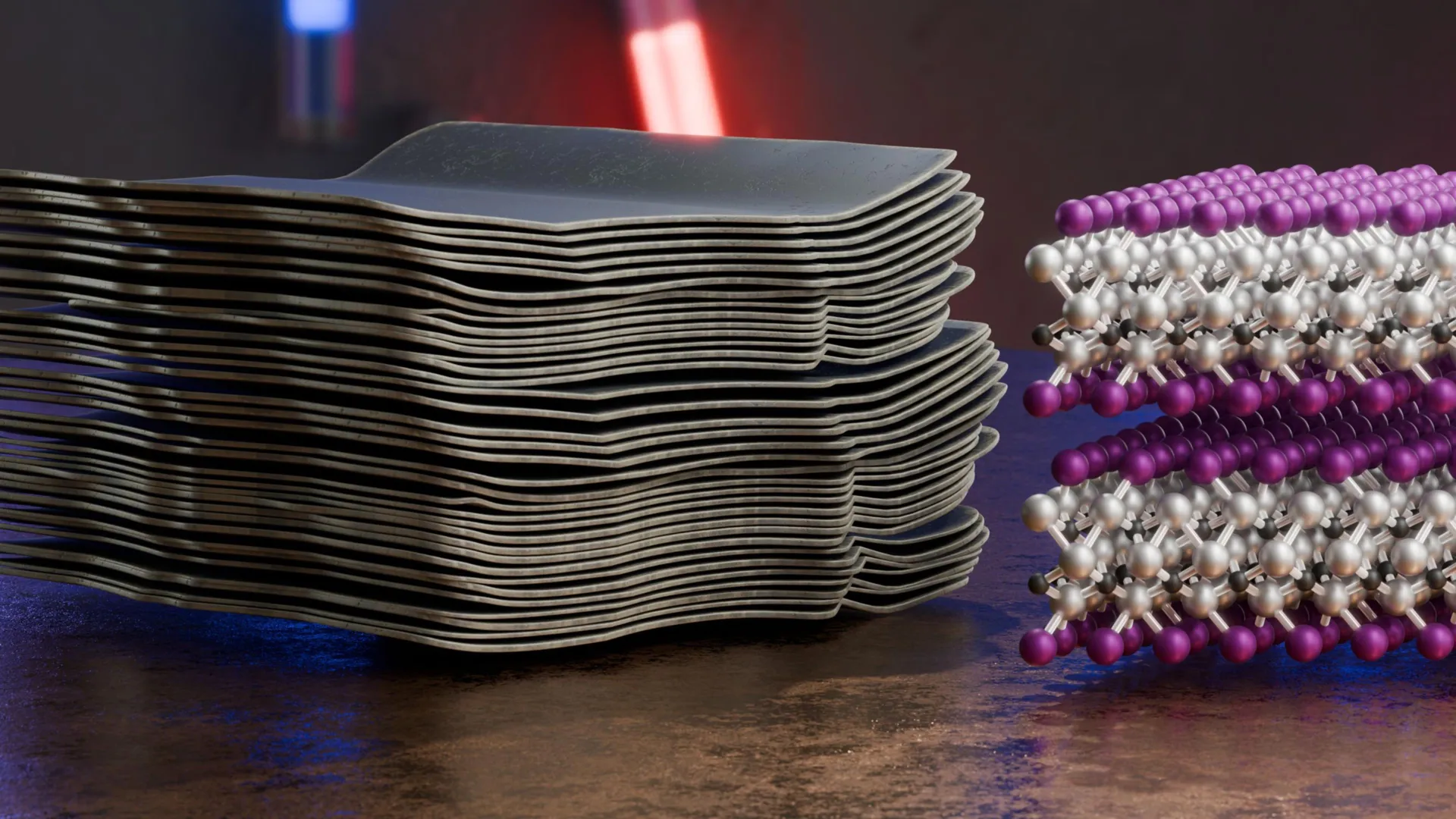
The quantum battery stores energy using the counterintuitive principles of quantum mechanics rather than electrochemistry. Where a conventional lithium-ion or lead-acid battery stores energy through chemical reactions between electrodes and electrolyte — a process that slows as the battery scales up and internal resistance increases — the quantum device exploits superposition and entanglement, properties that allow quantum systems to exist in multiple states simultaneously and to coordinate behavior across physical distance. The physical apparatus is a multi-layered organic microcavity — a tiny sandwich of organic semiconductor materials trapped between mirrors that form a resonant cavity for light. It charges wirelessly via laser.
"Our study found quantum batteries charge faster as they get larger, which is not how today's batteries work," said Daniel Tibben, an RMIT PhD candidate and co-author of the study. This behavior is a consequence of what physicists call "super absorption" — a quantum phenomenon in which an ensemble of quantum systems absorbs energy collectively, at a rate that scales favorably with the number of components rather than being limited by each component's individual charging speed. Dr. Daniel Gómez, an RMIT Professor of Chemical Physics, confirmed: "We demonstrated a device that can be charged, store that energy and then discharge it." The energy was retained for a period six orders of magnitude longer than the charging duration — meaning storage was far more enduring relative to the charging pulse than conventional physics would predict.
The current device is far from commercial viability. The total energy it stores is tiny — a few billion electron-volts, comparable to what a single grain of dust possesses in chemical energy. And energy retention lasts only nanoseconds before dissipating, a fundamental limitation that the team identifies as the primary obstacle to practical use. Extending storage time — ideally to seconds, minutes, or hours — will require either engineering materials with far longer quantum coherence times or finding ways to continuously refresh the stored energy before it decays.
Dr. Quach frames the challenge as a solvable engineering problem rather than a fundamental barrier. "We are now working to extend energy retention duration," he said. His broader vision, described in CSIRO's announcement, is "a future where we can charge electric cars much faster than fuel petrol cars" — a future that would require not just faster charging but also radically improved energy density and storage persistence. Researchers in the quantum battery field, which has existed theoretically since 2013 but lacked experimental proof of concept until now, say the CSIRO result marks the transition from theoretical curiosity to a genuine research program with a clear experimental roadmap.