Chimps Are Captivated by Crystals, Hinting at the Ancient Roots of Why Humans Collect Them
In a Spanish study, chimpanzees singled out clear crystals from ordinary stones and inspected them with rapt curiosity — a behavior researchers say may illuminate why our own species has gathered gems for hundreds of thousands of years.
Why have humans hoarded shiny crystals for at least 780,000 years, dragging them back to caves and campsites long before they had any obvious use? A new study suggests the answer may lie deep in our primate lineage — and it comes from watching chimpanzees fall under the spell of quartz.
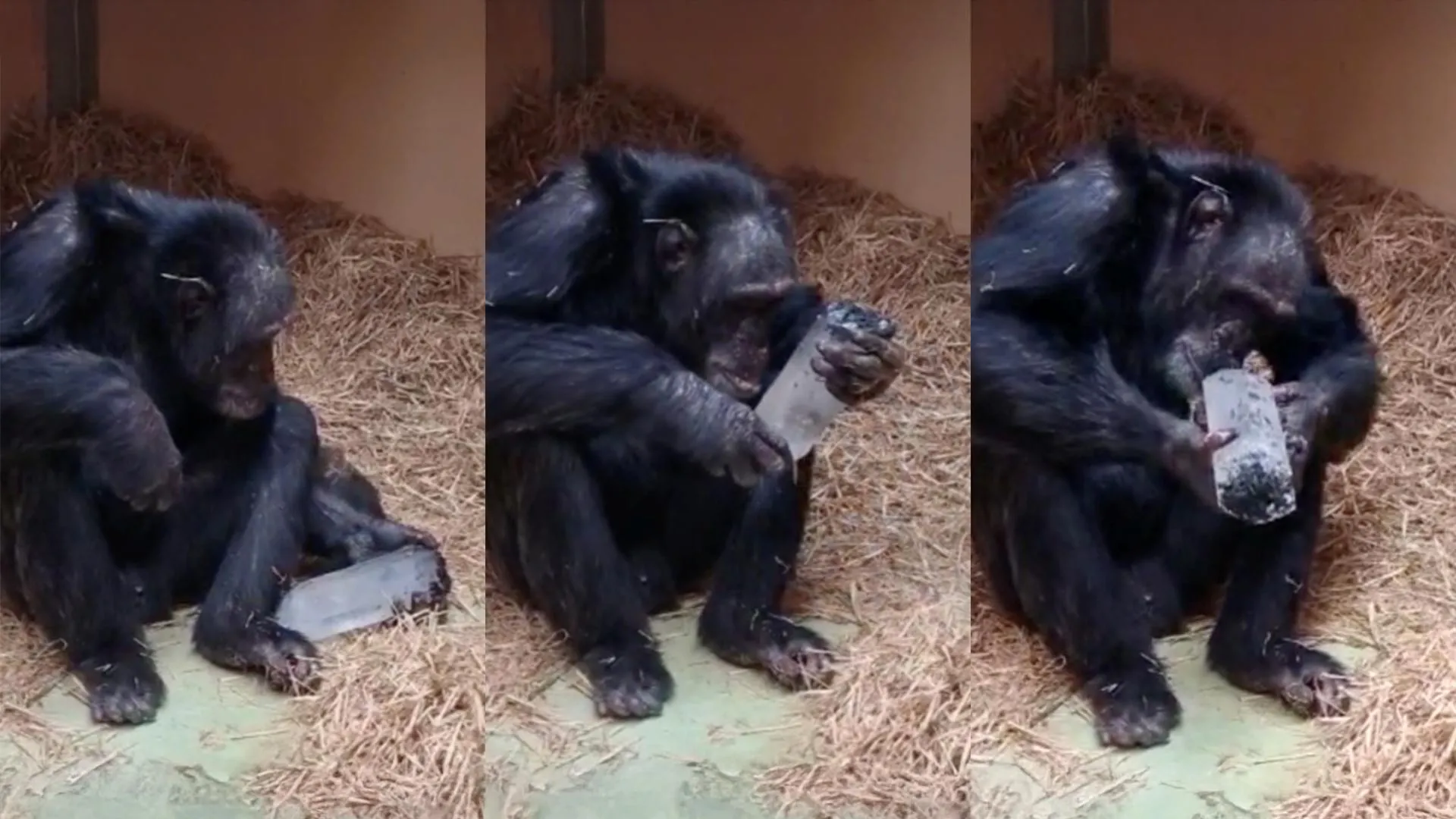
Researchers observing chimpanzees at the Rainfer Foundation in Spain found that the apes could reliably tell crystals apart from ordinary stones and were powerfully drawn to them. 'We show that enculturated chimpanzees can distinguish crystals from other stones,' the team reported, noting that the animals' fascination was 'strong and seemingly natural' rather than trained.
Given a choice of objects, the chimps repeatedly gravitated toward the transparent crystals, turning them over and holding them up as if to test how light passed through. 'The chimpanzees began to study the crystals' transparency with extreme curiosity,' the researchers wrote, describing behavior that looked less like foraging and more like aesthetic examination.
The study, published in Frontiers in Psychology and led by Professor Juan Manuel García-Ruiz of the Ikerbasque Research Center and the Donostia International Physics Center in San Sebastián, argues that crystals may hold a special grip on the primate mind because of their geometry. Their flat faces and straight edges form polyhedral shapes almost never produced by the messy, rounded processes of the natural world, making them stand out as strange and worthy of attention.
That distinctiveness, the authors suggest, could explain why early humans collected crystals long before assigning them practical or symbolic meaning — the objects simply demanded notice. If the impulse is shared with chimpanzees, our closest living relatives, it hints that the roots of the human attraction to gems predate our species entirely, reaching back into a common ancestry. 'We've had crystals in our minds,' García-Ruiz suggested, for millions of years.
The findings reframe a familiar human quirk — the drawer of pretty rocks, the museum case of gemstones — as something older and more instinctive than culture. Rather than a learned taste for luxury, the pull of a glittering crystal may be a cognitive inheritance, a curiosity about order and light that we carry alongside the apes with whom we share so much of our evolutionary history.