Astronomers Confirm Habitable-Zone Super-Earth Just 10.7 Light-Years Away
GJ 887 d orbits one of the calmest red dwarf stars known, making it only the second potentially habitable planet within ten light-years of our solar system.

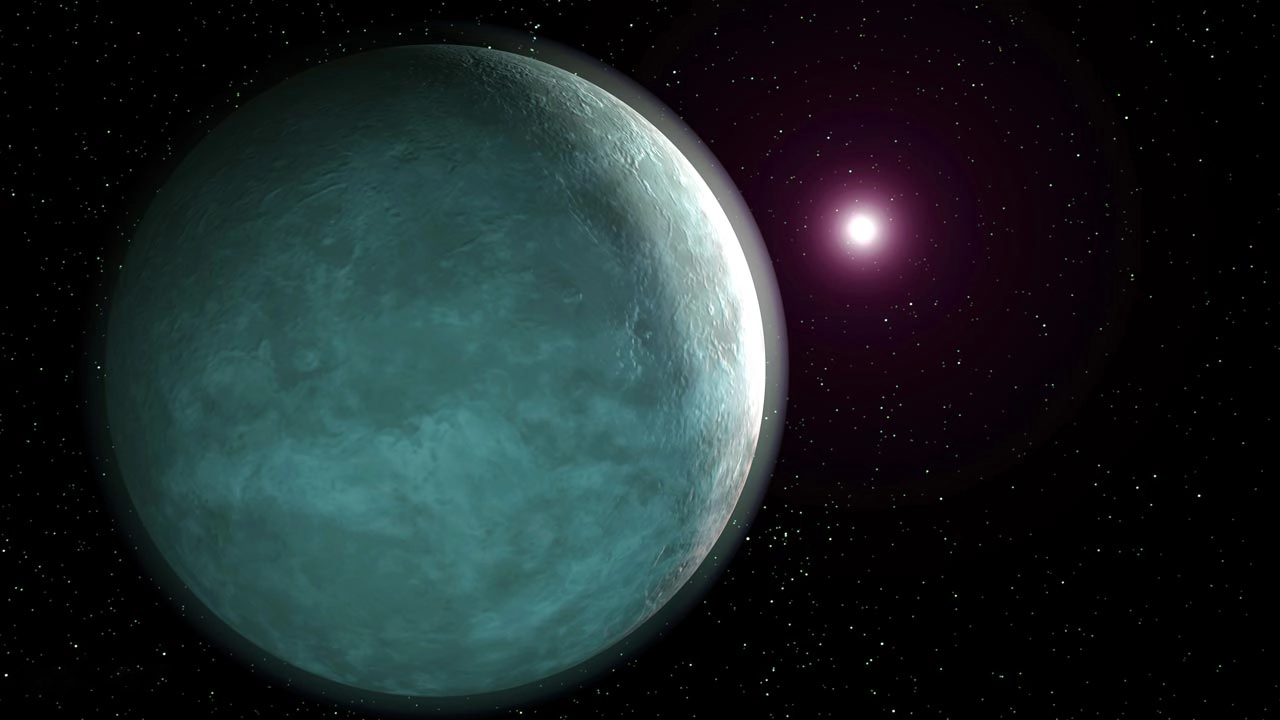
Astronomers have confirmed the existence of a potentially habitable super-Earth orbiting a nearby star just 10.7 light-years from our solar system — making it only the second known planet in a habitable zone within ten light-years of Earth, after Proxima Centauri b. The planet, designated GJ 887 d, orbits the bright red dwarf star Gliese 887 and was confirmed using high-precision radial velocity measurements from the HARPS and ESPRESSO spectrographs mounted on telescopes at European Southern Observatory facilities in Chile. The study, accepted for publication in Astronomy & Astrophysics, reveals that GJ 887 hosts at least four confirmed planets and possibly a fifth.
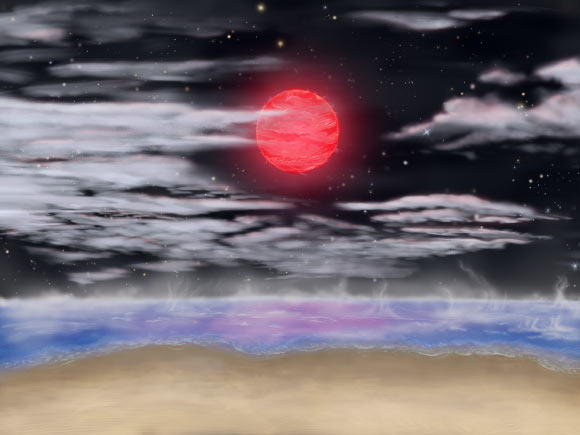
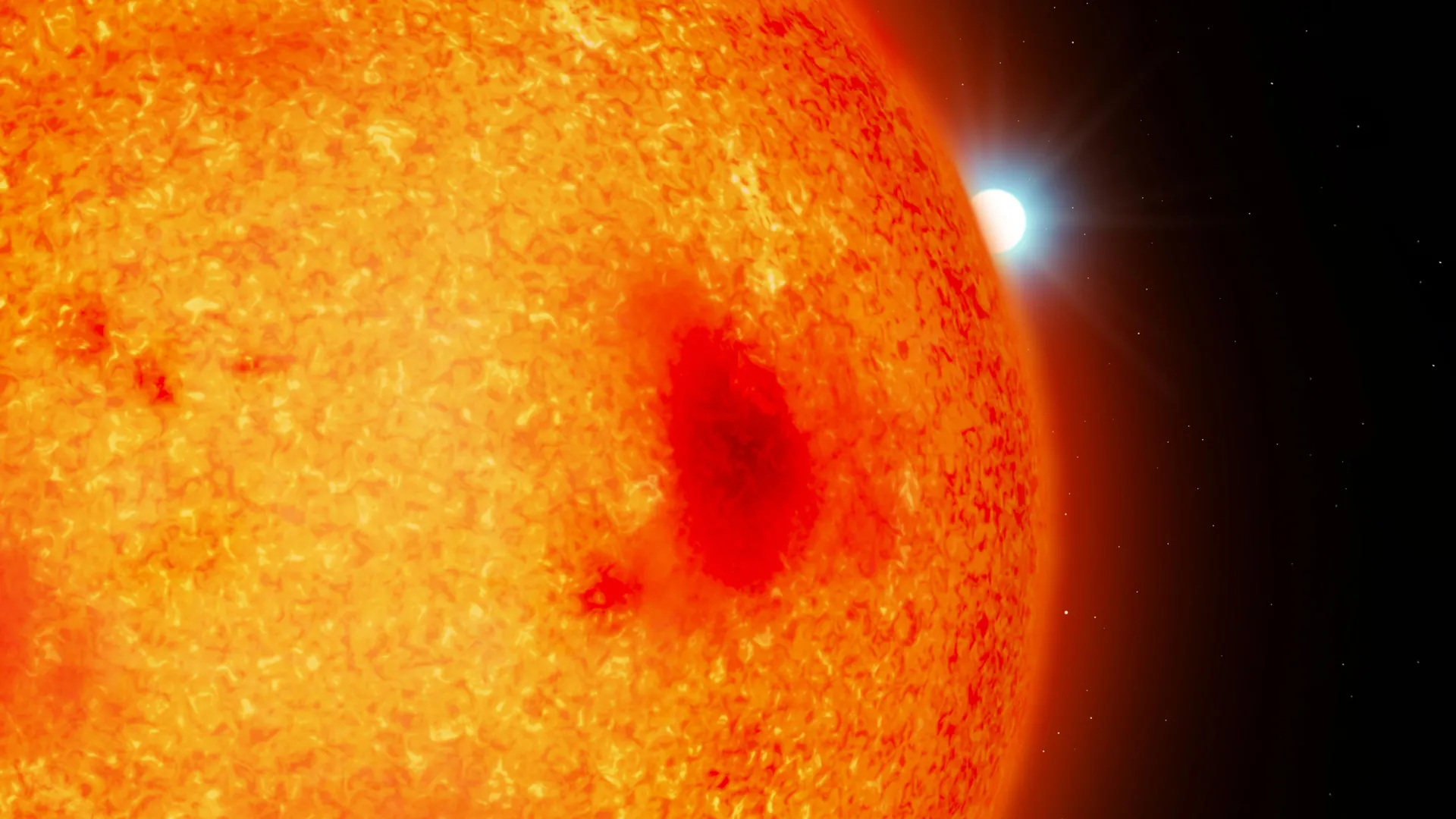
GJ 887 d has a mass approximately 6.1 times that of Earth and completes one orbit every 50.8 days at a distance of 0.212 astronomical units from its star — far closer than Earth's distance from the Sun, but well within the habitable zone for a cool red dwarf. What elevates this world above dozens of other recently discovered super-Earths is the remarkable stability of its host star. GJ 887 is one of the quietest red dwarfs known, with unusually low flare activity and a minimal magnetic field. This is critical: most red dwarfs blast their close-orbiting planets with ultraviolet and X-ray radiation intense enough to strip away atmospheres over billions of years. GJ 887's calm disposition dramatically raises the probability that GJ 887 d could retain a stable atmosphere capable of maintaining surface liquid water.
The discovery team, led by researchers from the RedDots collaboration — a multinational effort that previously confirmed several planets around Proxima Centauri and Barnard's Star — spent three years accumulating radial velocity data to untangle the planetary signals from the star's own variability. "Every star wobbles a little as its planets tug on it," explained co-author Dr. Sandra Jeffers of the University of Göttingen. "With GJ 887, the star is so quiet that we can resolve the very small wobbles produced by this outer planet, which would be drowned out by stellar noise around most red dwarfs."
The confirmation also revealed two inner planets, GJ 887 b and c, which orbit too close to the star to retain liquid water, and a fourth planet, GJ 887 e, which lies beyond the habitable zone but whose existence helps constrain the orbital architecture of the system. A potential fifth candidate signal remains unconfirmed. At 10.7 light-years, GJ 887 is close enough to be a realistic target for future direct-imaging missions. NASA's Habitable Worlds Observatory, currently in early design phase, would in principle have the angular resolution needed to detect light reflected from a planet at this distance, though no launch date has been set.
The research arrives at a moment of intense interest in nearby potentially habitable worlds following the Webb Space Telescope's detection of possible atmospheric molecules on TRAPPIST-1 planets last year. Unlike the TRAPPIST-1 system, GJ 887 is bright enough and close enough that ground-based observatories can already characterize it with high precision. Follow-up campaigns using the next generation of extremely large telescopes — including the Extremely Large Telescope currently under construction in Chile's Atacama Desert — could begin transmission spectroscopy of GJ 887 d's atmosphere within a decade, potentially providing the first chemical fingerprints of an atmosphere on a potentially habitable world within our cosmic neighborhood.