Paleontologists Find Ancient Bees That Nested Inside Fossil Bones in Caribbean Cave
Researchers at the Florida Museum of Natural History discovered bee nest structures built inside the jaw bones of extinct hutias and ground sloth teeth in a Dominican Republic cave — the first known case of bees nesting in fossil cavities.
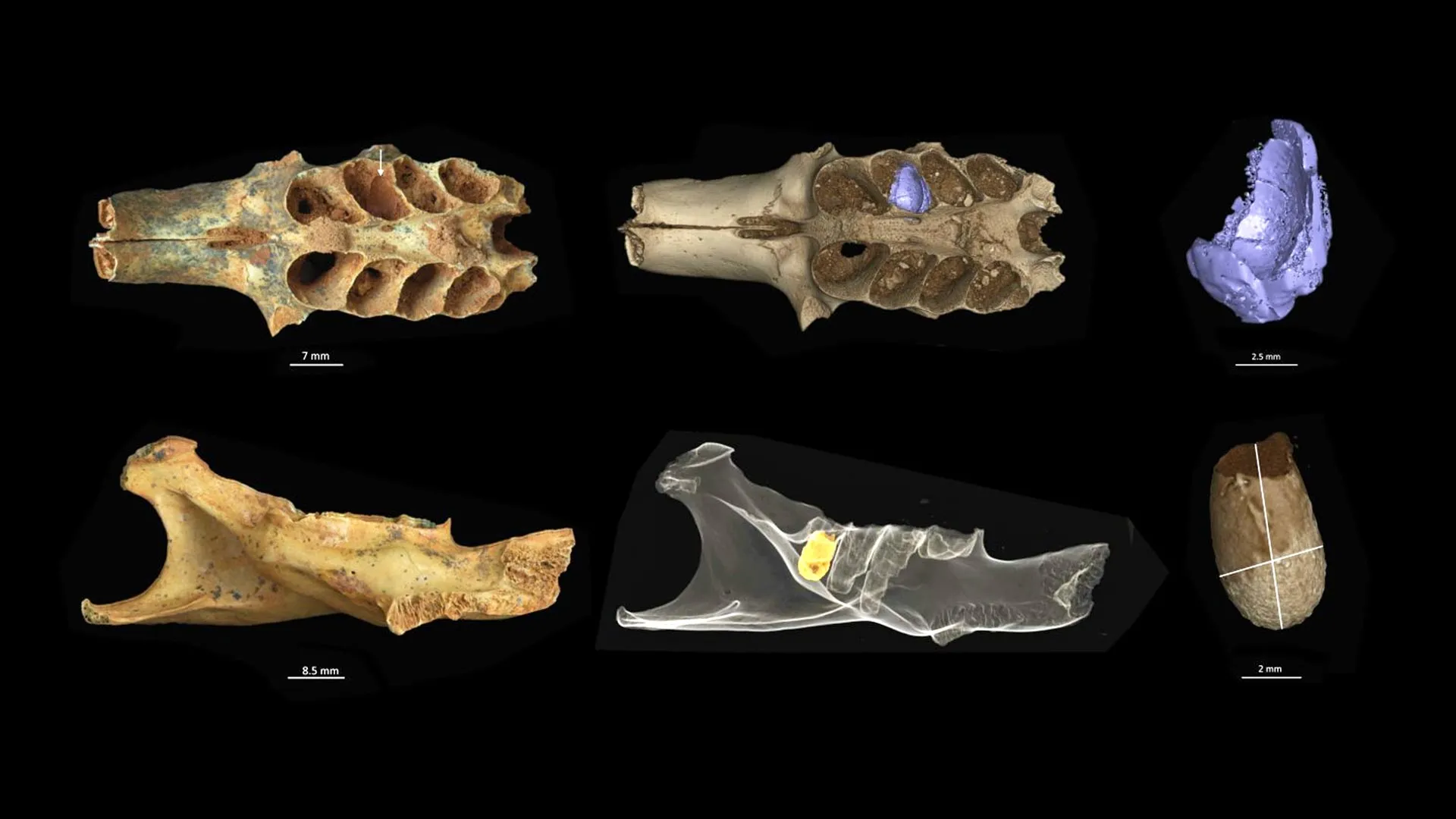
Paleontologists have discovered a uniquely strange behavior preserved in the fossil record of a Caribbean cave: ancient bees that nested not in soil or wood, as virtually all known bee species do, but inside the hollow cavities of fossil bones belonging to long-extinct animals. The discovery, published in Proceedings of the Royal Society B, represents the first documented case of bees nesting within pre-existing fossil cavities and provides an unexpected glimpse into the behavioral flexibility of prehistoric insects.
The fossils were found in Cueva de Mono, a cave system in the Dominican Republic on the island of Hispaniola. Researchers Lázaro W. Viñola-López and Mitchell Riegler of the Florida Museum of Natural History identified bee nest structures — including characteristic cell linings and pollen provisions — built inside the jaw bones of hutias (a family of large Caribbean rodents now largely extinct) and within the teeth sockets of ground sloths, both of which were abundant on Hispaniola before the megafaunal extinctions that followed human arrival on the island.
The behavior is remarkable for several reasons. Modern bees show highly constrained nesting preferences; while some species use hollow stems, pre-existing burrows, or rock crevices, the use of actual fossil bone cavities has never previously been observed or recorded. The cave environment of Cueva de Mono appears to have been both an accumulation site for animal remains and a shelter attractive to cavity-nesting bees, creating the unusual juxtaposition of insect behavior and paleontological material.
Viñola-López, who has spent years studying the fossil cave fauna of the Caribbean, said the discovery was initially puzzling. The team had been examining the bone material for signs of predation or weathering when they noticed the distinctive waxy cell walls characteristic of bee nests lining the internal cavities. "We had to look very carefully to understand what we were seeing," he said. "Bee nests inside fossil bones — there's no framework in the existing literature that prepares you for that."
The exact species of bee responsible for the nests has not yet been definitively identified, as the fossil material does not include preserved bee specimens. However, the physical characteristics of the nesting cells are consistent with solitary bees in the family Megachilidae, the leafcutter and mason bees, which are known for their use of pre-existing cavities and their habit of lining cells with plant material, mud, or resin.
The timing of the nesting relative to the extinction of the host animals is also of interest. Ground sloths and hutias were present on Hispaniola until relatively recently in geological terms — hutias in some form survived into the post-Columbian period before being hunted to extinction — meaning the bees may have been nesting in bones that were only recently deposited rather than ancient fossils in the conventional sense. The cave environment would have preserved the bones in relatively intact condition, making them structurally suitable as nesting sites.
The study adds to a body of research examining how Caribbean cave systems preserve evidence of past ecological interactions, and how the extinction of large vertebrates on islands can reshape the behavior of surviving species in unexpected ways.