A 4,000-Year-Old City Got Richer and More Equal at the Same Time, Reversing the Usual Rule
House sizes at Mohenjo-daro converged as the Indus Valley metropolis matured. The city spent its wealth on drains, street grids and standardized weights rather than palaces.
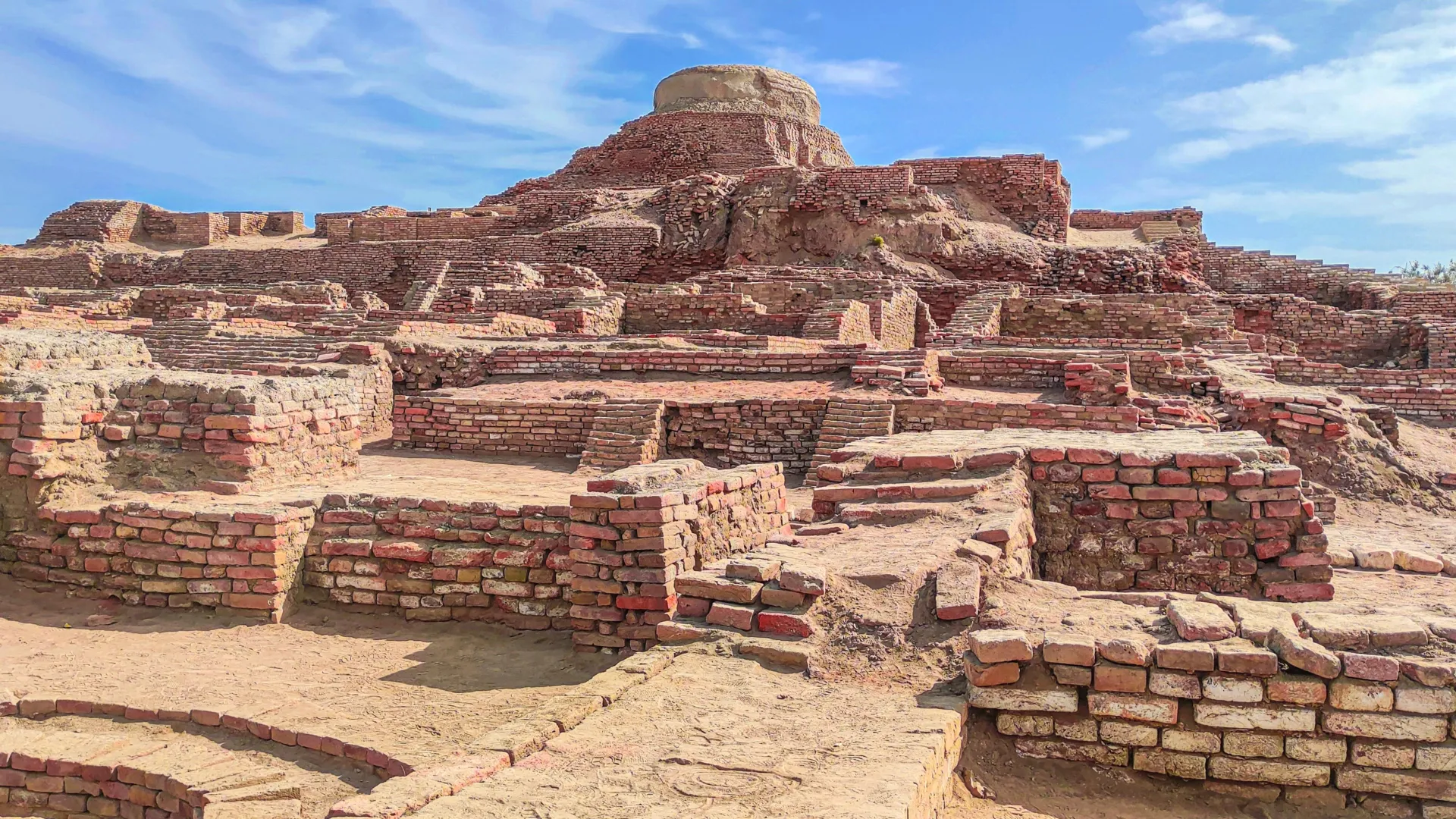
Mohenjo-daro, the largest city of the Indus Valley civilization, became more economically equal as it grew richer — the opposite of what happened in nearly every other early urban society, according to a study published in the journal Antiquity.
Researchers led by Dr. Adam Green of the University of York's Department of Archaeology measured the distribution of house sizes across the city and tracked how that distribution changed as Mohenjo-daro matured over several centuries beginning around 2600 BCE. Floor area is the standard archaeological proxy for household wealth: it is preserved when almost nothing else is, and in societies without written records it is often the only quantitative handle on inequality that survives.
What the measurements showed was a narrowing. "Legacy data from the ancient city shows that as the city matured, the gap between the largest and smallest homes narrowed," Green said. By the city's later phases, the spread had fallen to levels comparable with small early farming villages — settlements of a few dozen households, not a metropolis that may have held tens of thousands of people. Compared with contemporary Mesopotamian cities and with later Greek settlements, Mohenjo-daro comes out markedly more egalitarian.
The physical layout of the city fits that finding. Excavators have never found anything at Mohenjo-daro that reads unambiguously as a palace or a royal tomb, and no monumental temple complex of the kind that dominates Ur or Uruk. What the city did build, on a scale that still impresses, was infrastructure: brick-lined drainage running beneath the streets, standardized fired-brick dimensions, an orderly street grid, wells distributed through residential neighborhoods, and a system of weights and measures standardized closely enough to have been used across a trading network spanning more than a thousand kilometers. Those are investments whose benefits are difficult to concentrate in a few hands.
The result cuts against a durable assumption in the study of early states — that urbanization, agricultural surplus and social stratification necessarily arrive together, with a small elite capturing the gains from density and specialization. That pattern is real and well documented in Mesopotamia, in Egypt and in the Andes. Mohenjo-daro appears to be a case where the pattern does not hold, and it was not a marginal experiment: the Indus civilization at its height covered a larger area than either contemporary Egypt or Mesopotamia.
The caveats are the ones that always attach to this kind of work. House size is a proxy, not a bank statement; it captures dwellings that survived, in areas that have been excavated, using excavation records that in this case date largely to the early twentieth century. The Indus script remains undeciphered, so there is no textual account of who owned what. What the bricks show is a city that grew for centuries without concentrating its housing wealth — and, so far, no evidence of anyone living conspicuously better than everyone else.
Originally reported by ScienceDaily.