A 100% Tariff on Drones Over 55 Pounds Took Effect Wednesday. A Thermal Camera Triggers It Too
Trump signed a Section 232 proclamation doubling the price of large or thermal-imaging drones and their components. Smaller civilian models get 25%.
A tariff that doubles the landed price of a large drone took effect Wednesday, and the line it draws is not about who made the aircraft. It is about what the aircraft can do.
Under a proclamation signed by President Trump, imported unmanned aircraft systems face a 100% ad valorem duty if their maximum takeoff weight exceeds 25 kilograms — about 55 pounds — or if they integrate a thermal imager. Docking stations and a list of critical components fall under the same rate. Everything else in the category, meaning most small civilian drones and parts, is taxed at 25%. Both rates began Sept. 3, 2026.
The thermal-imaging trigger is the part that reaches furthest. Infrared sensors are standard equipment on the drones used for mapping fire lines, inspecting power infrastructure, surveying crops at night and running search operations, none of which are military missions. A machine that never leaves a county emergency services hangar is taxed at the same rate as one built for a battlefield, because the tariff keys off the sensor rather than the buyer.
Allies got a ceiling. Imports from the European Union, Japan, South Korea, Taiwan, Switzerland and Liechtenstein are capped at 15%. Drones made in the United Kingdom face no more than 10%, on the condition that all hardware, software and technology originate in the United States or one of the listed countries. A third tier covering additional components does not start until Feb. 9, 2027 — a 180-day runway the White House describes as time for importers to move their sourcing.
The target is not in dispute. China's drone industry was worth roughly $15.6 billion in 2025 and holds what the administration calls the deepest component supply chain in the world. DJI alone dominates the commercial market in the United States, and the Army banned its aircraft from service use back in 2017 over security concerns. The proclamation, issued under Section 232 of the Trade Expansion Act, rests on a finding that dependence on foreign drones and parts is itself a national security threat.
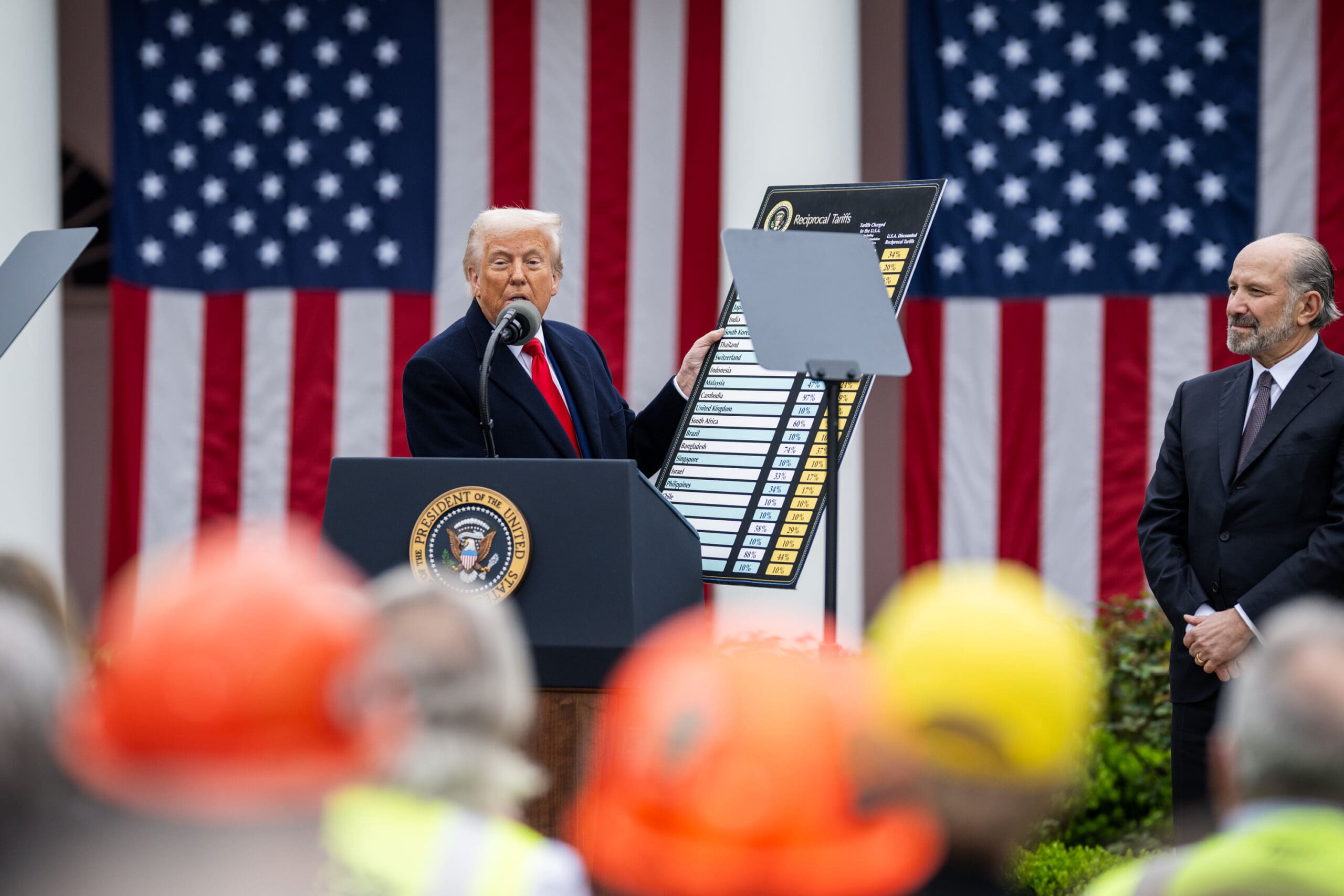
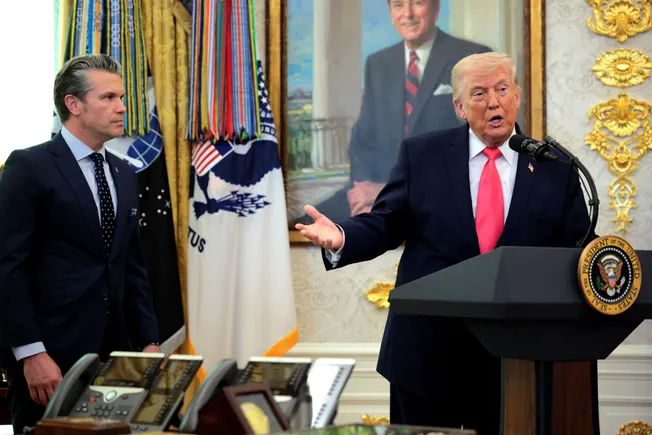
Defense Secretary Pete Hegseth was present for the announcement. Commerce Secretary Howard Lutnick was handed the harder job: standing up an incentive program meant to pull drone manufacturing onshore. That is the assumption underneath the whole policy — that a tariff steep enough to make imports uneconomic will pull factories to the United States rather than simply raise prices for the agencies, utilities and farms that buy the machines.
Domestic manufacturers have very little capacity at the top of the weight range today, and the components most affected — flight controllers, motors, radios, camera modules — are precisely the ones that come out of Shenzhen. Buyers with contracts already signed are the first to feel it. The February 2027 tier is when the rest of the supply chain finds out whether six months was enough.