67,800-Year-Old Hand Stencil in Indonesia Cave Is Now the Oldest Known Art on Earth
An international team used laser-ablation uranium-series dating to confirm that a faded, claw-fingered handprint on Muna island far predates any European cave art, reshaping what scientists thought they knew about the origins of human symbolic thinking.
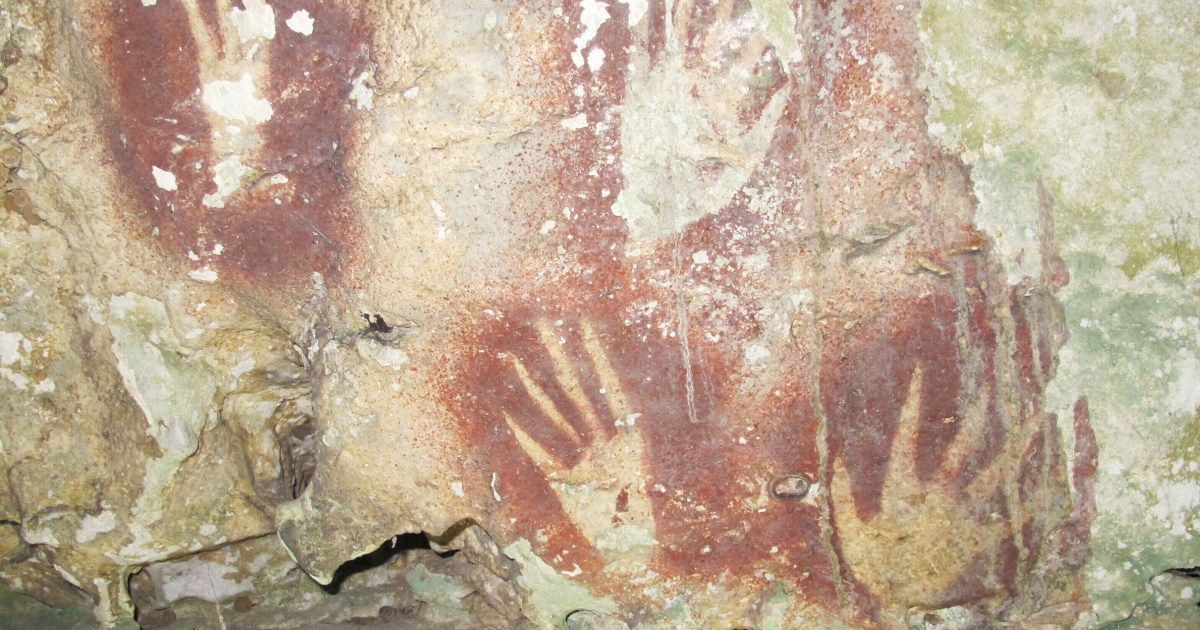
A faded, reddish hand stencil on the wall of a limestone cave on the Indonesian island of Muna has been dated to at least 67,800 years ago, making it the oldest confirmed piece of cave art ever found on Earth — older than any known rock painting by more than 15,000 years. The discovery, announced by an international team of Indonesian and Australian researchers, pushes the origins of symbolic human expression deep into the Pleistocene era and raises profound questions about the cognitive capabilities of our earliest modern ancestors.
The hand stencil was found in a cave called Liang Metanduno, off the coast of Sulawesi in eastern Indonesia. Cave art specialist Adhi Oktaviana, the paper's lead author at Indonesia's National Research and Innovation Agency, first noticed the faint image in 2015, nearly hidden behind more recent paintings layered on top. To determine its age, the team used laser-ablation uranium-series dating — a technique pioneered by Maxime Aubert of Griffith University in Australia that uses a laser to remove a tiny amount of calcium carbonate deposited over the pigment and analyze its uranium decay chain. The method is considered highly accurate and non-destructive.
What makes the stencil unusual beyond its age is its shape. The fingertips in the stencil appear pointed, almost claw-like, an effect created by the artist deliberately narrowing the outline of their own fingers before blowing pigment onto the rock surface. This "narrowed finger" motif appears in several other caves across Sulawesi and has been found repeated over thousands of years, suggesting it carried cultural significance — a visual symbol passed from generation to generation in a tradition that stretches across tens of millennia.
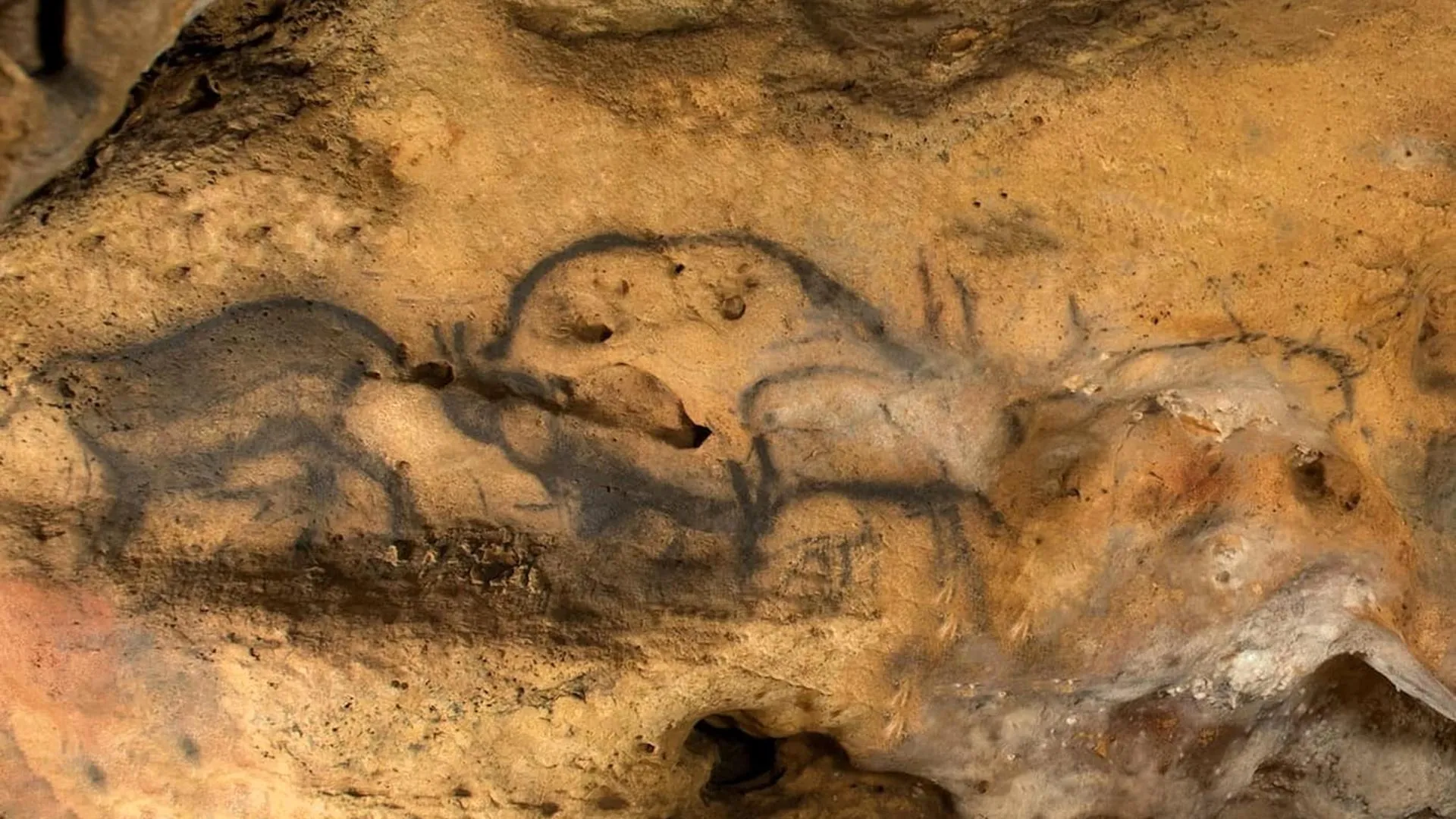
The newly dated stencil is roughly 16,600 years older than the pig paintings the same team documented in the Maros-Pangkep caves of Sulawesi, themselves previously considered the world's oldest figurative art. It is also about 1,100 years older than hand stencils found in a Spanish cave believed to have been made by Neanderthals. The finding reinforces a growing scientific consensus that art did not originate in Europe, as was long assumed based on the abundance of preserved European cave art, but arose independently — and perhaps much earlier — in Southeast Asia, where the equatorial climate has made preservation difficult and many paintings remain undated.
The implications for human evolutionary history are significant. If modern humans were creating symbolic art with deliberate aesthetic choices in Indonesia nearly 68,000 years ago, it means the cognitive architecture underlying symbolic thought — widely regarded as a defining feature of modern humanity — was already fully in place when our ancestors first began migrating out of Africa. It also raises the possibility that earlier, undated examples may yet be found. "We are only at the beginning of understanding how far back this tradition goes," Oktaviana said.