Xi Jinping Meets Taiwan Opposition Leader in Beijing, First High-Level Cross-Strait Talks in a Decade
KMT chairwoman Cheng Li-wun traveled to the Great Hall of the People on a self-described "peace mission" as Beijing pushes for influence ahead of a planned Trump-Xi summit in May.

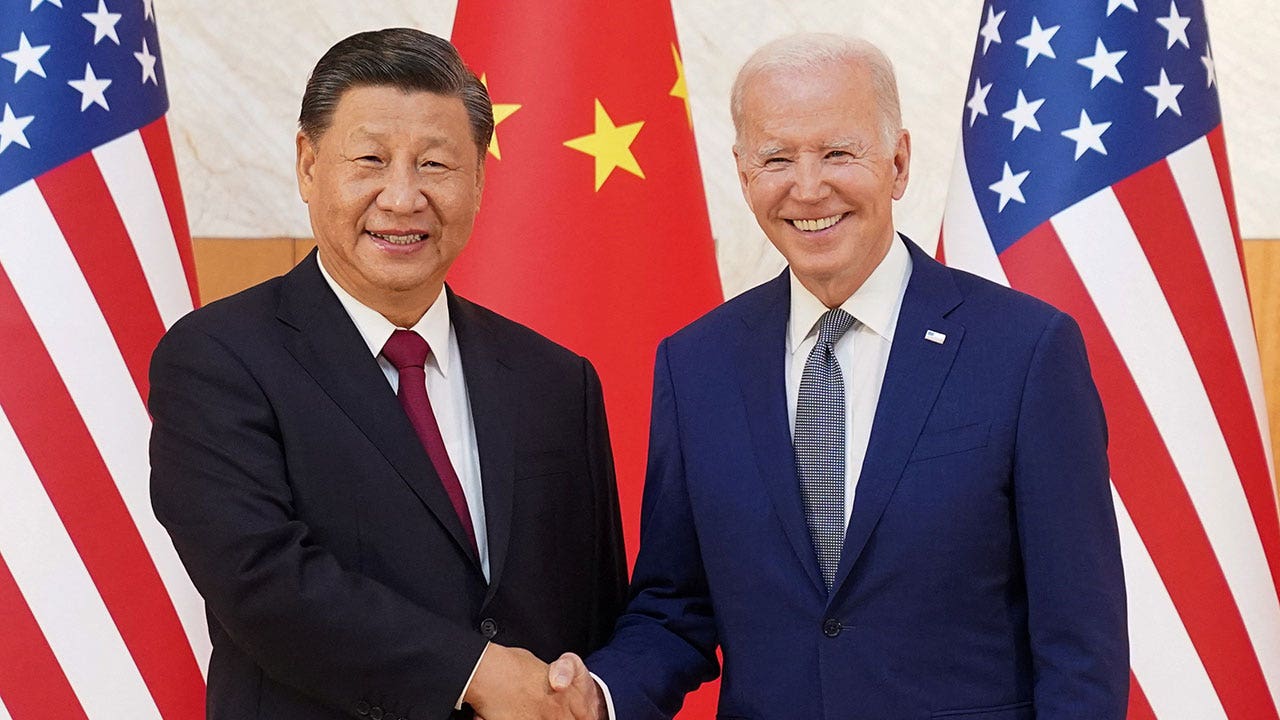
China's President Xi Jinping met with Cheng Li-wun, the chairwoman of Taiwan's Kuomintang opposition party, at Beijing's Great Hall of the People on Thursday — the first formal meeting between the leaders of the Chinese Communist Party and the KMT in nearly a decade. The encounter, carefully choreographed in the ornate East Hall where Xi receives foreign dignitaries, lasted approximately two hours and produced no joint statement, but both sides described it as a turning point in cross-strait dialogue at a moment of heightened geopolitical tension.
Xi told Cheng that people on both sides of the Taiwan Strait are "one family" and called for continued "peaceful development" of relations between the mainland and the island. "The Chinese people do not bully one another," Xi said, according to state media, deploying language that simultaneously signals goodwill and rejects Taiwan's formal sovereignty. Cheng, a former Taipei city councillor who took over the KMT leadership in 2024, described her visit as a "peace mission" and said that Taiwanese citizens "do not want war" and desire dialogue. She is the first sitting KMT party leader to meet Xi in person since then-chairman Eric Chu visited Beijing in 2015.
The meeting comes less than a month before a planned May summit between Xi and US President Donald Trump, where Taiwan is expected to be a pivotal agenda item. Trump's aides have signaled willingness to discuss the island's status in the context of a broader US-China trade and security package. That prospect has alarmed leaders in Taipei, where President Lai Ching-te and his ruling Democratic Progressive Party have repeatedly warned that any arrangement negotiated without Taiwan's consent would be illegitimate. The DPP has refused all direct contact with Beijing since taking office, which the CCP labels the party as a separatist force.
Beijing has explicitly refused to engage with the DPP, making the KMT the only political bridge available for any formal cross-strait communication. China views the Kuomintang, which governed the mainland until 1949 before retreating to Taiwan after losing the civil war, as a more manageable interlocutor than Lai's administration. Critics in Taipei, including multiple DPP lawmakers who held a protest outside the airport on Wednesday as Cheng's delegation departed, accused her of providing Beijing with a diplomatic tool to undermine Taiwan's democratic institutions and create the illusion of progress on reunification without the consent of Taiwan's 23 million people.
The geopolitical timing heightens the stakes considerably. With the US deeply engaged in negotiations over Iran's nuclear program and the Strait of Hormuz, Washington's bandwidth for managing Taiwan contingencies is reduced. The OSCE and multiple European governments have signaled concern that any Trump-Xi deal on Taiwan could set a precedent for great-power agreements that override smaller democracies' self-determination. Japan's Chief Cabinet Secretary issued a statement Thursday reaffirming that Tokyo expects any changes in the Taiwan Strait's status quo to be resolved peacefully through dialogue among parties directly concerned — pointedly without excluding Taipei. The meeting between Cheng and Xi has injected new urgency into debates about Taiwan's political future at precisely the moment that question's answer may be decided in part by forces far removed from the island itself.