Wild Animals Can Tell a Tourist From a Hunter, a Sweeping New Study Finds
Three decades of research show that animals fear humans mainly when we kill — a finding that could reshape how conservationists manage wildlife near people.
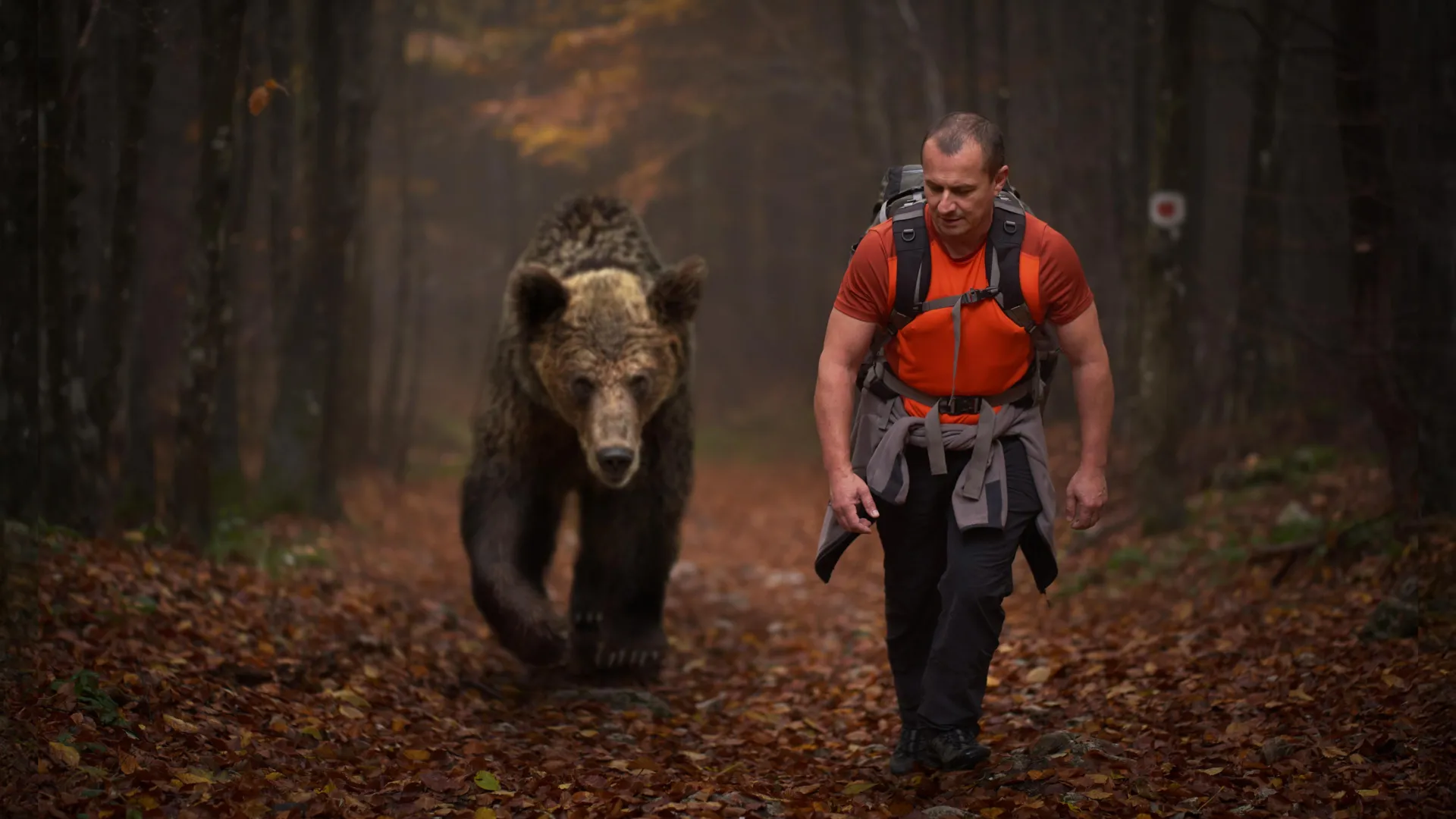
Wild animals appear to distinguish between humans who threaten their lives and humans who merely watch them, according to a sweeping new analysis that synthesized three decades of research. The study found that animals ramp up fear behaviors — staying alert, fleeing, feeding less — specifically when humans hunt or fish, but respond inconsistently to non-lethal human activity such as tourism or scientific research.
Researchers at the Centre for Ecological Sciences at the Indian Institute of Science combed through thirty years of studies documenting how wild animals across many species and ecosystems changed their feeding, vigilance and movement patterns in response to people. The pattern that emerged was clear: lethal humans provoke a distinct and consistent fear response, while the presence of harmless humans does not.
"Lethal humans such as hunters and fishers are indeed perceived as threatening," said Shawn D'Souza, the study's lead author. "Animals in areas exposed to lethal humans tend to be more vigilant and spend less time foraging." The work, published in the journal Ecology Letters, adds rigorous, large-scale evidence to a growing view of humanity as a uniquely powerful "super-predator" whose very reputation reshapes animal behavior.
That reputation carries ecological weight. When frightened animals spend more time watching for danger and less time eating or moving, the ripple effects can cascade through an ecosystem — altering grazing patterns, shifting predator-prey dynamics and reshaping which plants and animals thrive. In effect, the fear that humans inspire can sculpt entire landscapes without a single shot being fired.
The findings also carry a counterintuitive lesson for conservation. The authors suggest that limited, targeted culling in some situations may teach wildlife to avoid human-dominated areas more effectively than many current conflict-management strategies, potentially reducing dangerous encounters over the long term. It is a provocative idea in a field that often treats any killing as a last resort.
More broadly, the study reframes how scientists think about the human footprint on the natural world. Our impact, the authors argue, is not only physical but psychological — animals carry a mental map of where people mean death and where they do not, and they organize their lives around it. Understanding that map, the researchers say, could help humans and wildlife share an increasingly crowded planet. The team now hopes to test whether animals can also unlearn that fear over time in places where hunting has stopped — a question with direct consequences for rewilding efforts and the recovery of species pushed to the brink of extinction.