NASA Satellite Catches the Black Sea Glowing an Electric Turquoise From Orbit
The vivid color comes from a summer explosion of chalk-armored plankton so vast it can be seen from space — captured in stunning detail by NASA's new PACE mission.
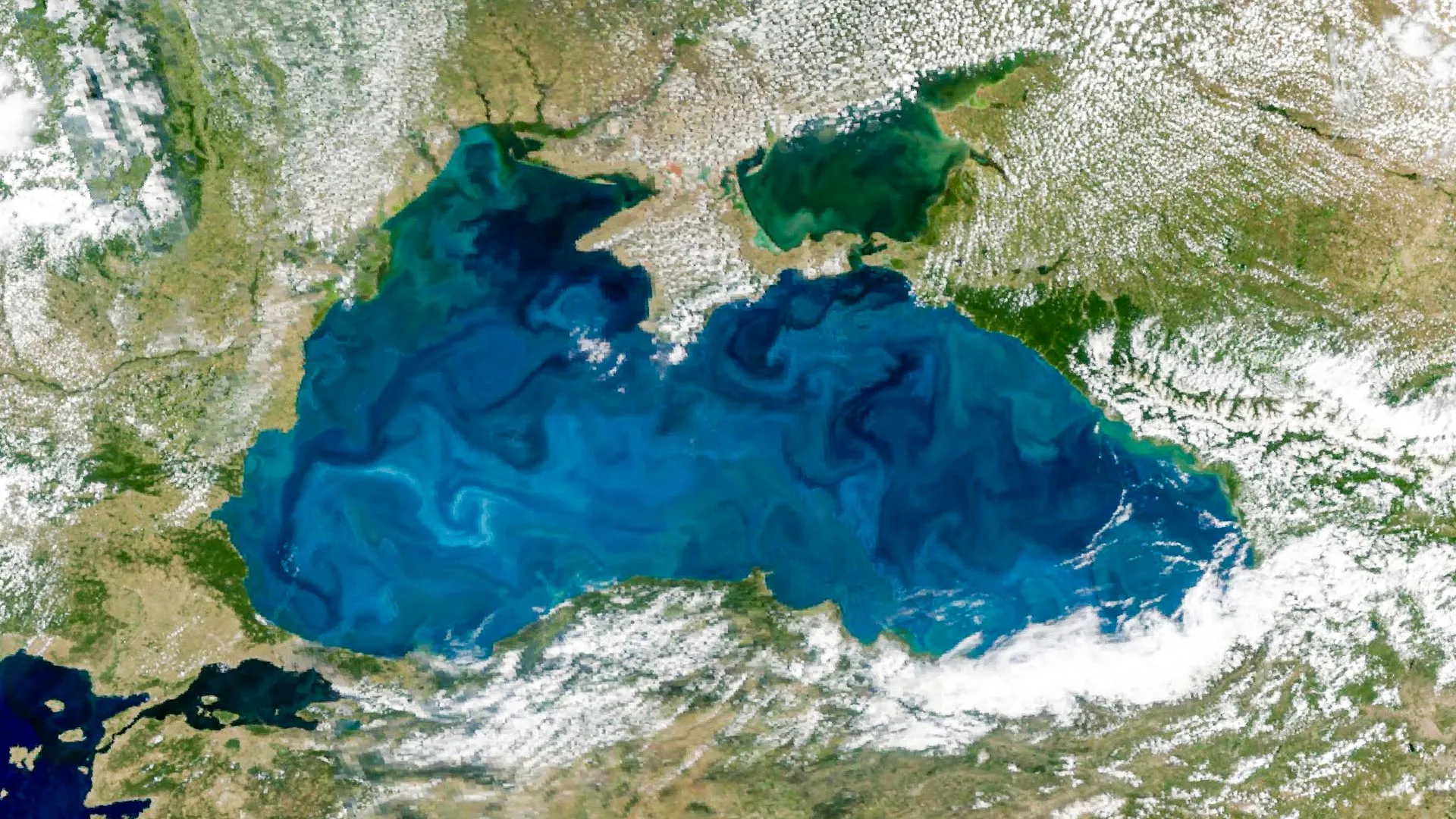
NASA's PACE satellite has captured the Black Sea transforming into a swirl of brilliant turquoise, a seasonal spectacle so vast that it is visible from orbit. The image, taken on June 22 by the mission's Ocean Color Instrument, shows milky, electric-blue currents curling across the sea and spilling toward the Bosphorus, the narrow strait that threads through Istanbul.
The startling color is the work of coccolithophores — microscopic phytoplankton wrapped in plates of chalky calcium carbonate. When these organisms multiply into enormous blooms during late spring and early summer, their reflective shells scatter sunlight back through the water, giving the normally deep gray-blue sea a bright, milky sheen. The bloom was so extensive that an astronaut aboard the International Space Station also photographed it, revealing intricate swirls traced by ocean currents.
PACE, which stands for Plankton, Aerosol, Cloud, ocean Ecosystem, was built to study exactly this kind of microscopic life. Its Ocean Color Instrument can distinguish subtle differences in the hues of the sea surface, allowing scientists to identify not just where plankton are blooming but what kinds are present — a capability that older ocean-color satellites lacked.
The distinction matters because phytoplankton sit at the foundation of the marine food web and play an outsized role in Earth's climate. Coccolithophores in particular pull carbon dioxide from seawater to build their calcium-carbonate shells, and when they die they can carry that carbon toward the seafloor. Tracking the timing and size of their blooms helps researchers understand how the oceans absorb carbon and how those patterns may shift as the planet warms.
Each spring and summer, the surface of the Black Sea often shifts from deep gray-blue to bright turquoise, but the intensity and reach of the blooms vary from year to year with temperature, nutrients and currents. By capturing the event in unprecedented color detail, PACE gives scientists a new tool to monitor these changes and the vast, unseen populations of life that drive them.
For all its scientific value, the image is also simply beautiful — a reminder that some of the largest living displays on Earth are made by some of its smallest organisms, painting an entire sea in a color bright enough to be seen from hundreds of miles above. Researchers plan to keep watching as the bloom fades over the coming weeks, using PACE to gauge how much carbon the tiny organisms ultimately lock away — data that will feed the climate models scientists rely on to project the ocean's shifting role in a warming world.