WHO and France Launch Sweeping One Health Initiatives on World Health Day 2026
A landmark summit in Lyon unveiled four global initiatives including rabies elimination and a unified H5N1 response framework.
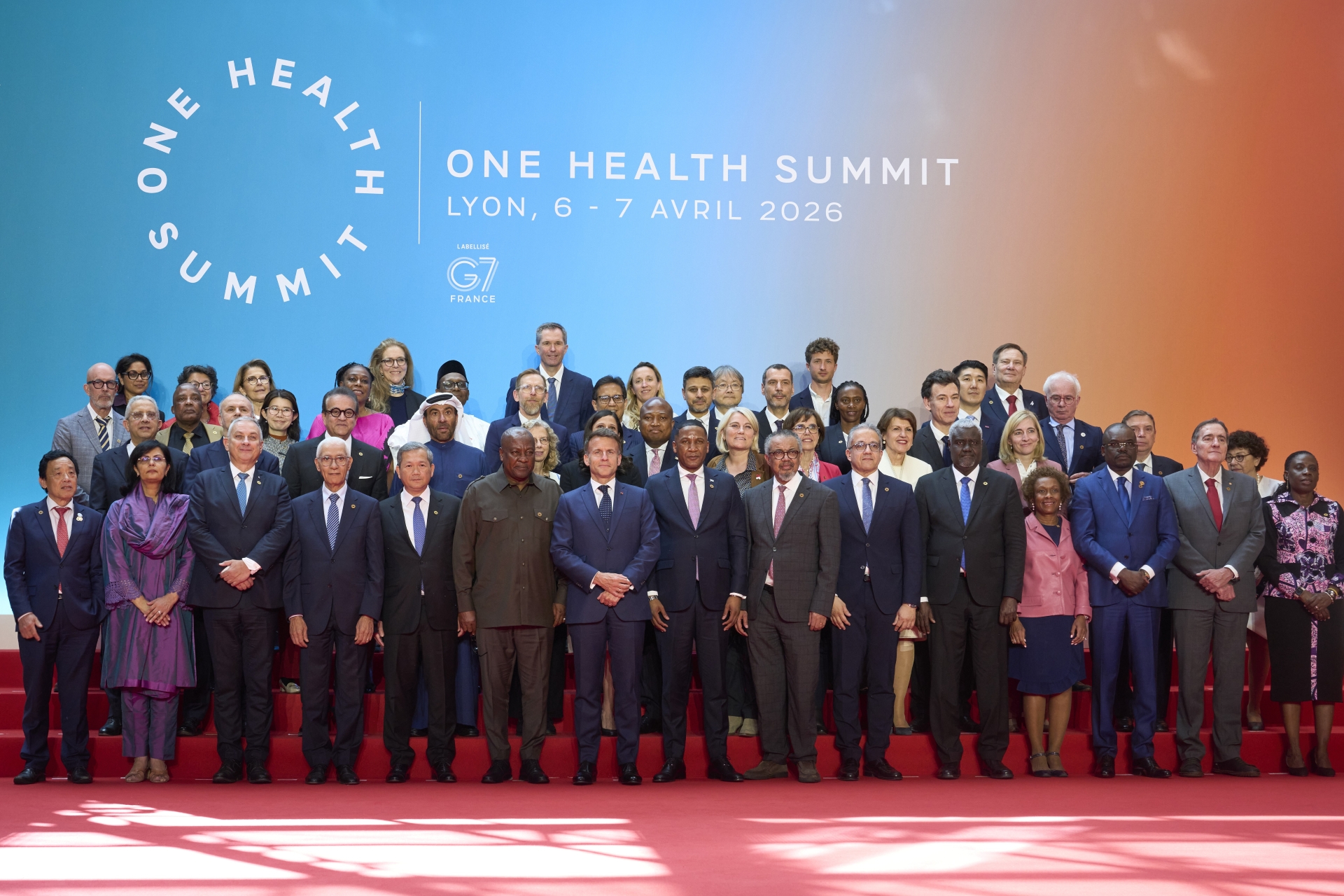
The World Health Organization and France jointly launched a sweeping package of global health initiatives on April 7 — World Health Day 2026 — at a landmark One Health Summit in Lyon, convened under France's presidency of the Group of Seven. The gathering brought together health ministers, scientists, and global officials to advance the principle that human health, animal health, and environmental health are inseparable — and that pandemic prevention requires coordinating all three simultaneously.
The summit unveiled four major initiatives. First, a Global Network of One Health Institutions will be established as a formal partnership among the WHO, the Food and Agriculture Organization of the United Nations, the United Nations Environment Programme, and the World Organisation for Animal Health. Second, the One Health High-Level Expert Panel will be expanded and extended through 2027, continuing the scientific advisory body's work on pandemic risk and cross-species disease transmission. Third, the Rabies Elimination Initiative commits to eradicating dog-mediated human rabies globally by 2030 — a disease that kills approximately 60,000 people per year, the majority of them children, with most deaths occurring in Africa and Asia where vaccine access remains limited. Fourth, an Avian Influenza Strategic Framework will unify global coordination on H5N1 and related strains under the same four-organization partnership.
WHO Director-General Dr. Tedros Adhanom Ghebreyesus framed the day's announcements as a reckoning with lessons learned from COVID-19, which killed an estimated 15 million people and inflicted trillions of dollars in economic damage. "The health of people, animals and the environment we share are inextricably interwoven, and we cannot protect one without protecting all three," Tedros said at the opening ceremony in Lyon. French President Emmanuel Macron, whose country holds the G7 chair this year, echoed the message: "One Health is not just about protecting health, it is about recognizing that we live as one system." France's hosting of the summit reflects Paris's consistent advocacy for multilateral pandemic preparedness frameworks in the post-COVID era.
The timing of World Health Day 2026 carries an ironic charge. The theme — "Together for health. Stand with science" — comes as the United States under President Trump has continued to distance itself from global health governance structures, including withholding contributions to the WHO and withdrawing from international pandemic treaty negotiations. The WHO has responded by deepening partnerships with European governments and international bodies to fill the diplomatic and financial gaps left by American disengagement. This year's Global Forum of WHO Collaborating Centres, which convened concurrently with the summit from April 7 to 9, drew representatives from more than 800 scientific institutions across 80-plus countries.
The One Health framework rests on a stark statistical reality: approximately 60 percent of known infectious diseases in humans originate in animals, and 75 percent of emerging pathogens are zoonotic — meaning they jump from other species to humans. The COVID-19 pandemic, whether it originated in a wet market or a laboratory, exemplifies the risk. So does the ongoing H5N1 avian influenza situation, which has caused periodic human deaths and requires constant surveillance to prevent the kind of sustained human-to-human transmission that would trigger a new pandemic. The Lyon summit's emphasis on institutionalizing cross-species health surveillance represents the international scientific community's best attempt to catch the next spillover event before it becomes a catastrophe.