Scientists Finally Solve Water's 134-Year-Old Mystery: X-Ray Lasers Reveal the Hidden Critical Point That Explains Why Ice Floats
Stockholm University researchers used ultra-fast X-ray pulses to experimentally confirm the liquid-liquid critical point in supercooled water at –63°C, settling a debate dating to 1892 and illuminating why water's strange properties make life on Earth possible.

Scientists have experimentally confirmed the existence of a hidden "liquid-liquid critical point" in supercooled water, settling a scientific debate that dates back to Wolfgang Röntgen's first observation of water's anomalous behavior in 1892. The discovery, published in the journal Science this month, was made by researchers at Stockholm University working with teams at POSTECH in South Korea, the Max Planck Society, and several other institutions. It represents one of the most significant advances in the physical chemistry of water in over a century — and may help explain why life as we know it can exist on Earth.
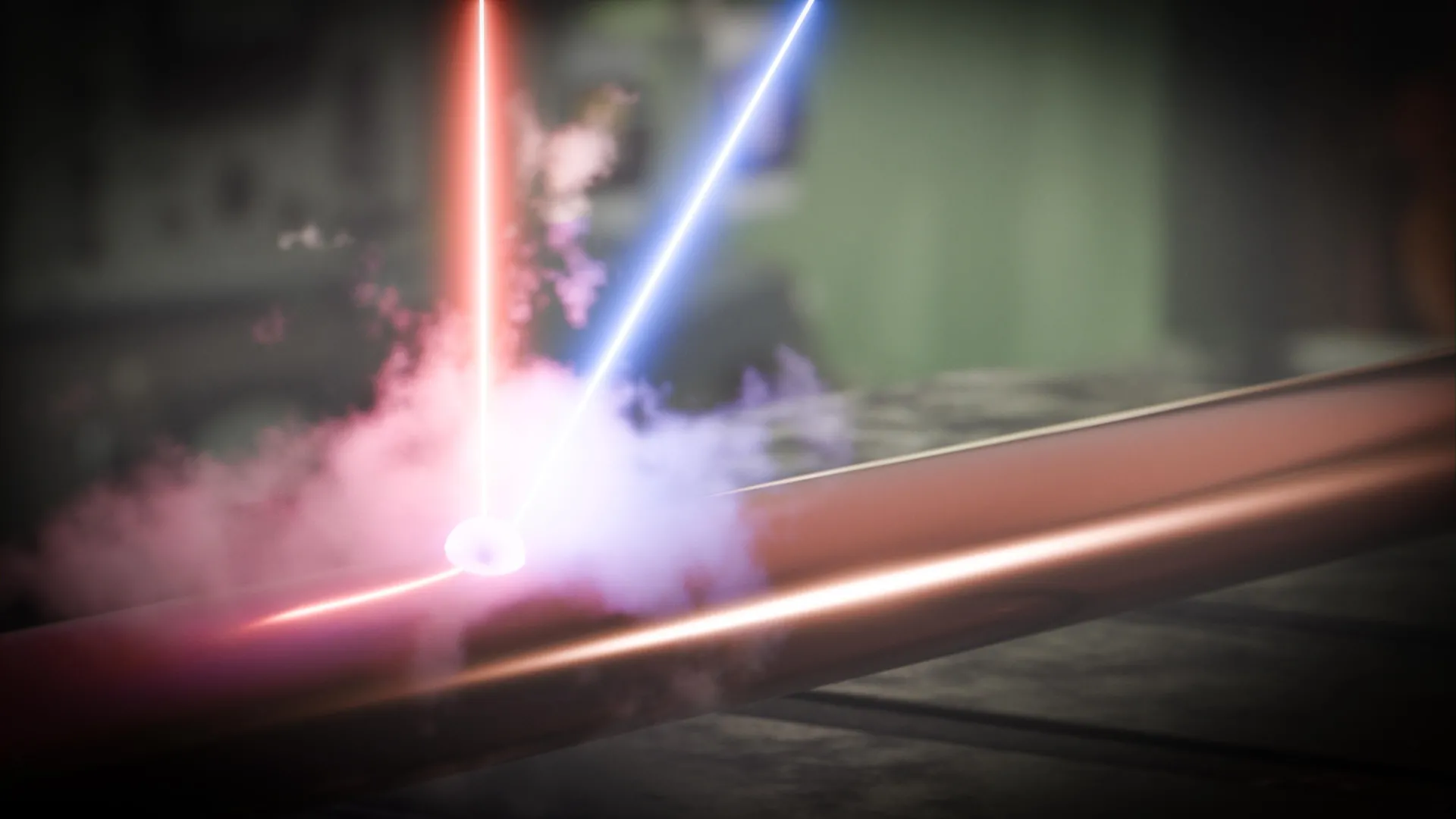
The critical point, located at approximately minus 63 degrees Celsius and 1,000 atmospheres of pressure, is the temperature and pressure at which two distinct liquid forms of water — a high-density form and a low-density form — become indistinguishable from each other. Physicists had theorized for decades that such a point must exist to explain water's bizarre suite of anomalous properties, but proving it experimentally was extraordinarily difficult because water freezes almost instantly under the conditions required to observe the effect. The breakthrough came by using ultra-fast X-ray pulses at the PAL-XFEL facility in South Korea to probe tiny ice samples within nanoseconds to microseconds of being melted by short infrared laser pulses — fast enough to catch liquid water before it refroze.
"We have found that such a point exists," said Anders Nilsson, professor at Stockholm University and senior author on the study. The implications ripple outward far beyond the laboratory. The fluctuations generated near this critical point propagate outward to ambient conditions — meaning the strange behavior of water at room temperature and atmospheric pressure is a direct consequence of this hidden singularity lurking deep in its supercooled phase diagram. "I find it very exciting that water is the only supercritical liquid at ambient conditions where life exists," said co-author Fivos Perakis. His colleague Robin Tyburski offered a vivid analogy: "It looks almost like you cannot escape the critical point if you enter it, almost like a black hole."
The practical significance is difficult to overstate. Water's anomalous properties — the fact that ice floats rather than sinks, that water is densest at 4 degrees Celsius rather than at its freezing point, that it has an unusually high heat capacity — are not incidental quirks but prerequisites for life on Earth. Ice floating means lakes freeze from the top down, insulating aquatic life below. Water's high heat capacity moderates the climate. Protein folding, cell membrane behavior, and virtually all of biochemistry depend on water's anomalous relationship with itself. Understanding why water behaves this way at a fundamental molecular level has implications for biophysics, geochemistry, climate modeling, and materials science.
The discovery opens new avenues for research in several fields. Atmospheric scientists may be able to use the new data to improve models of how supercooled water droplets in clouds behave during cloud formation and precipitation. Materials scientists studying ice formation in aviation, cryobiology, and food preservation will have a more complete theoretical framework for their work. And the technique itself — using ultra-fast X-ray probes to catch fleeting metastable states in liquids before they transform — offers a new experimental method applicable to many other materials whose hidden phase transitions have remained inaccessible.