Venezuela's Delcy Rodríguez Stays in Power Past 90-Day Limit as Maduro Pleads Not Guilty in New York
Three months after the US military captured Nicolás Maduro, Venezuela's acting president has exceeded her constitutionally set term without a vote to extend it — while ordinary Venezuelans wait in vain for economic improvement.
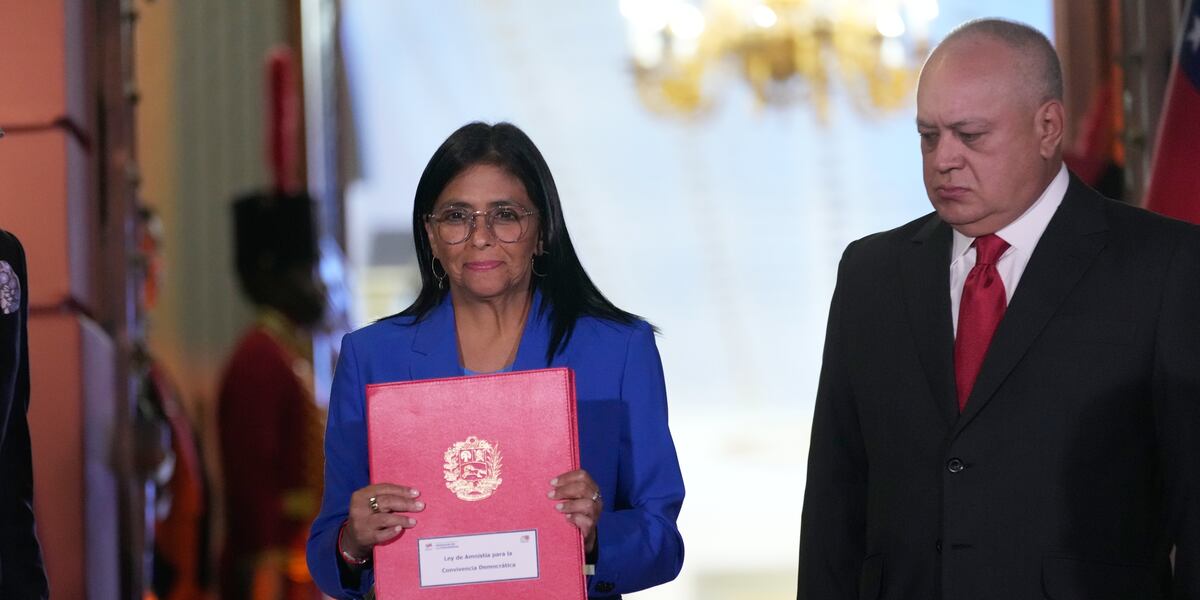
Venezuela's acting president Delcy Rodríguez has passed the 90-day constitutional limit on her tenure without a formal National Assembly vote to extend it, deepening the legal ambiguity at the heart of a country whose leadership structure was upended in January when the United States military captured longtime ruler Nicolás Maduro and flew him to New York to face federal drug trafficking charges.
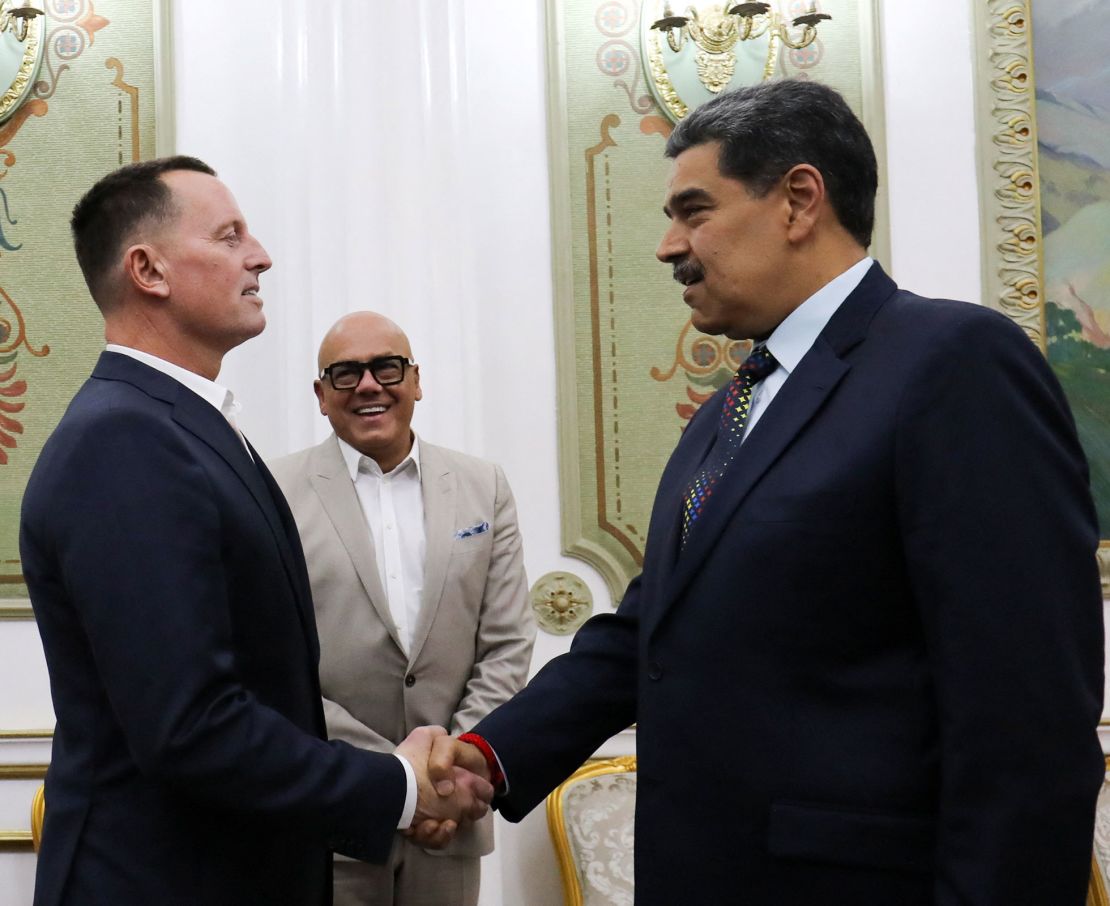
The 90-day clock began on January 5, when Rodríguez was sworn into office by her brother, Jorge Rodríguez, who serves as president of Venezuela's National Assembly. Venezuela's Supreme Court had categorized Maduro's capture as a "forced absence resulting from a kidnapping" — a legal fiction that allowed Rodríguez to assume the presidency without triggering a snap election. The court set a 90-day limit on that arrangement, with a possible extension to six months if the National Assembly voted to approve it. That deadline passed April 4 without any publicly announced vote.
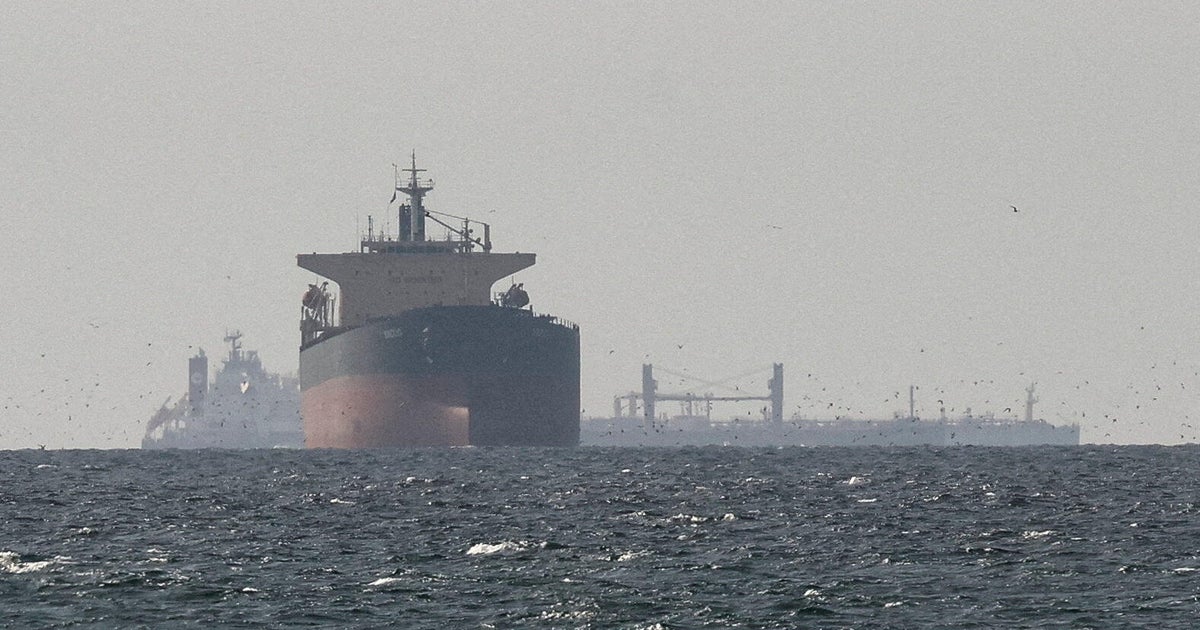
Since taking power, Rodríguez has moved rapidly to distinguish her administration from Maduro's increasingly isolated posture. She replaced senior government officials, held meetings with international energy executives, and pitched Venezuela's oil sector — the world's largest proven reserves — as open for private capital investment. The Trump administration, which ordered the military operation that seized Maduro, made a surprising choice: rather than backing Venezuela's traditional opposition, it recognized Rodríguez as the country's "sole Head of State" and lifted US Treasury sanctions against her personally.
In Manhattan federal court, Maduro and his wife Cilia Flores have both pleaded not guilty to drug trafficking charges. The Southern District of New York indictment, originally sealed years before his capture, alleged that Maduro used Venezuela's military and government apparatus to facilitate the export of cocaine to the United States in cooperation with Colombian narcoterrorist group FARC. His trial date has not been publicly set.
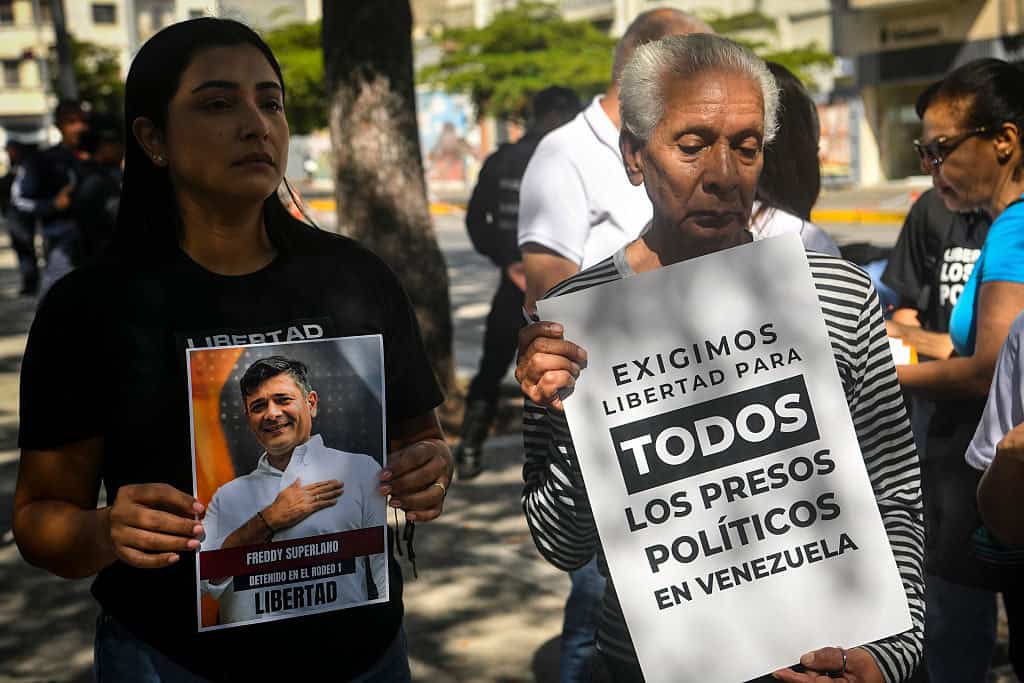
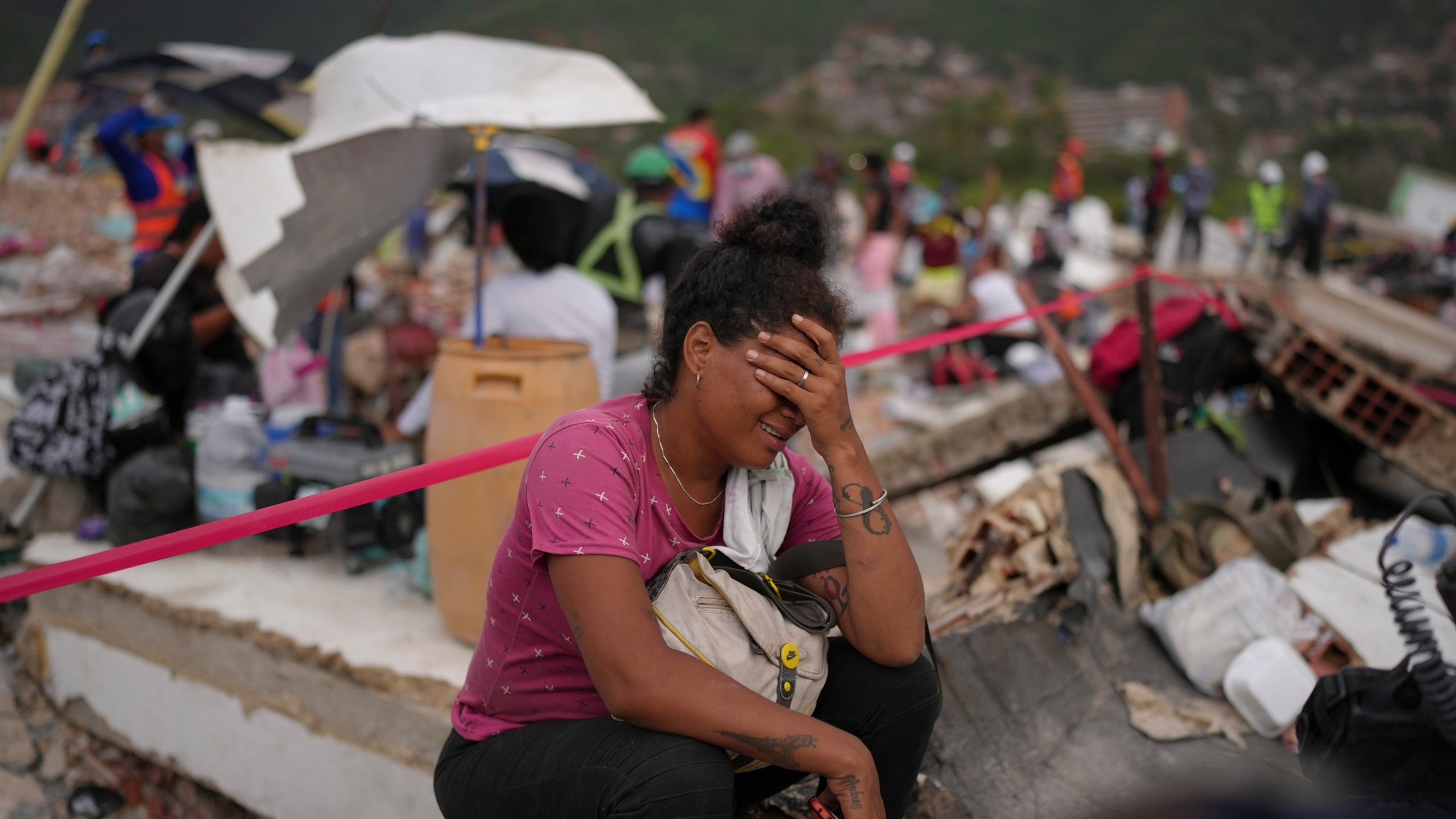
For ordinary Venezuelans, the change in government has not yet translated into tangible improvements. Approximately 700 political prisoners have been released since January, but hundreds more remain in detention. The minimum wage has been frozen at 130 bolivares per month since 2022 — a rate that bears almost no relationship to actual purchasing power in a country where a basic food basket for a family of five cost nearly $650 in February. Citizens who had hoped that Maduro's removal would bring economic normalization have been confronted instead with a slow-motion transition that resolves nothing quickly.
Analysts describe the situation as a test of whether military victory can produce lasting political change without a negotiated transition plan. Venezuela's ruling PSUV party, which controls the National Assembly, has the votes to extend Rodríguez's mandate or trigger new elections, but has so far done neither publicly. Washington, for its part, appears content to work with Rodríguez while Maduro's legal case proceeds. "The limits of the regime capture strategy are becoming clearer by the week," wrote one Western Hemisphere policy analyst. "You can remove a leader. Rebuilding a state is another matter entirely."