Ukraine's Top Negotiators Meet Witkoff and Kushner in Miami as Russia Refuses to Join Talks
The U.S.-brokered meeting brought together Kyiv's security and military chiefs for a second round of diplomacy, but Moscow rejected the American venue and repeated its preconditions for ceasefire.

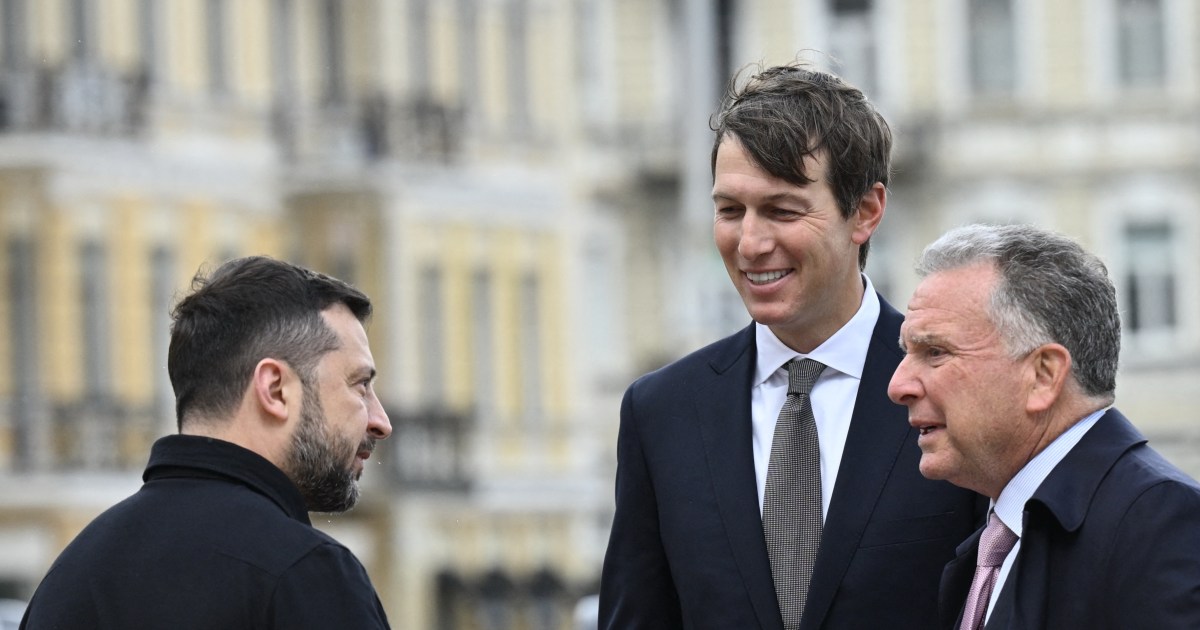
Ukraine's top negotiating delegation met with U.S. Special Envoy Steve Witkoff and White House adviser Jared Kushner in Miami over the weekend, continuing a months-long American effort to broker an end to the war with Russia even as battlefield fighting raged unabated across eastern Ukraine. The meeting, held on March 21 and 22, brought together Ukrainian National Security Council Secretary Rustem Umerov, Presidential Office Head Kyrylo Budanov, and parliamentary leader David Arakhamia for what Ukrainian officials described as substantive discussions about the framework for a potential ceasefire and eventual peace settlement.
Russia did not attend the Miami talks. Moscow has repeatedly rejected American proposals for trilateral negotiations, insisting instead that any talks take place in Switzerland or Turkey — countries it regards as more neutral hosts. The Kremlin has also insisted that the United States acknowledge Russia's territorial gains before any substantive discussions can begin, a precondition Kyiv has categorically refused. The previous round of trilateral meetings took place in Geneva on February 17 and 18, and produced no formal agreements, though participants described the sessions as the most substantive direct engagement in more than three years of conflict.
Ukrainian President Volodymyr Zelensky, who did not attend the Miami meeting, said he wanted a 'clear timeline' for the next round of talks and expressed frustration with the pace of diplomacy. Zelensky noted that over the past seven days, more than 8,000 Russian soldiers had been killed or seriously wounded on the front lines, according to Ukrainian military figures — a casualty rate that suggests the fighting has not abated despite ongoing diplomatic activity. Ukraine's Air Force said it intercepted 127 of 139 drones launched by Russia in a single overnight attack, the latest in a sustained drone campaign targeting Ukrainian cities and energy infrastructure.
On the ground, Russian forces launched 821 attacks on 40 settlements in the Zaporizhzhia region in a single 24-hour period, killing three Ukrainian civilians. The relentless pressure in the south suggests Russia is not moderating its military ambitions despite the diplomatic engagement in Miami. Ukrainian commanders say Russian forces continue to press forward in the Donetsk and Zaporizhzhia regions, seeking incremental territorial gains they believe will strengthen their negotiating position if talks do produce a ceasefire agreement. Total Russian casualties since the February 2022 invasion now stand at approximately 1,288,850 killed or wounded, according to the Ukrainian General Staff, though such figures are difficult to independently verify.
The Miami meeting is the latest in a series of American diplomatic efforts led by Witkoff, a real estate developer and longtime Trump ally who was appointed special envoy in the early days of the second Trump administration. Critics of the process have noted that Witkoff and Kushner lack formal diplomatic training and argue that their approach has at times appeared to favor Russian positions, a charge the White House denies. Supporters argue that their direct access to Trump, and their willingness to engage unconventionally, gives them more leverage than career diplomats. Zelensky has walked a careful line, publicly welcoming U.S. engagement while privately signaling to European partners that he wants NATO allies involved in any final settlement.