Ukraine Decimates Russian Oil Export Hubs; Moscow Threatens European Defense Firms
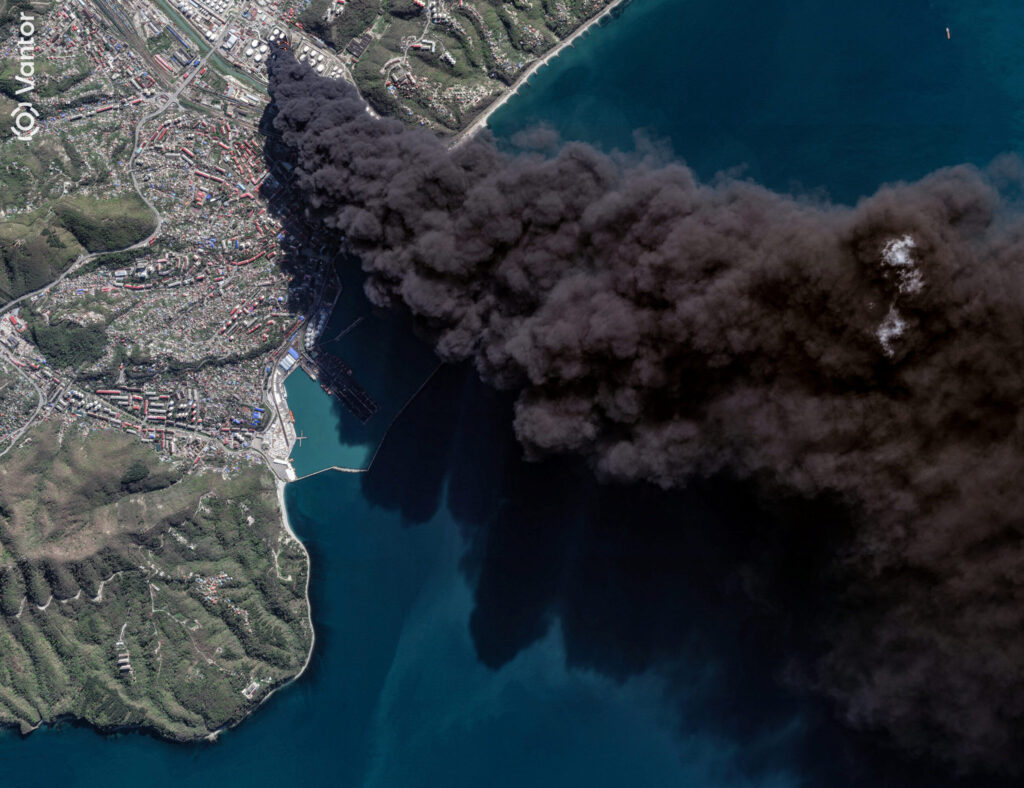
Ukrainian long-range drones struck the Tuapse oil refinery and marine terminal on Russia's Black Sea coast on Sunday night, setting ablaze three large fuel storage tanks and forcing a temporary halt to loading operations at one of Russia's major petroleum export facilities, according to Ukrainian military intelligence and satellite imagery analyzed by the Institute for the Study of War. The strike, which involved at least 14 drones of the type Ukraine has used in previous deep-penetration attacks, caused fires that burned for approximately 18 hours before Russian emergency services extinguished them. Russian officials acknowledged the attack, calling it an act of terrorism against civilian infrastructure, and warned that further Ukrainian strikes on Russian energy export facilities could destabilize European energy markets.
The Tuapse facility, located approximately 130 kilometers south of Novorossiysk on the northeastern coast of the Black Sea, processes crude oil from fields in the Urals and transports refined products — including diesel, naphtha, and fuel oil — to customers in Turkey, Bulgaria, and other Black Sea basin countries. The refinery handles approximately 240,000 barrels per day of crude throughput and the associated marine terminal exports refined products via tanker. Damage assessments based on satellite imagery suggested that one of the three burning tanks, which held finished diesel product, was a total loss, while two others sustained significant structural damage that would require weeks of repair.
Ukraine said the strike was a legitimate military operation targeting infrastructure that funds Russia's war effort and serves as a logistics node for fuel supply to Russian military operations in southern Ukraine. Ukrainian military intelligence noted that the Tuapse terminal had been used for bunkering operations supporting Russian Black Sea Fleet vessels and vessels operating under sanctions evasion schemes. Russia framed the attack in its international communications as aggression against civilian energy infrastructure with no military nexus, and delivered formal diplomatic notes to several European capitals warning that attacks of this type could reduce the availability of refined petroleum products in European markets through secondary supply chain disruptions.
European energy officials said the immediate impact on supply would be limited, as Black Sea refined product exports represent a small fraction of total European petroleum supply and strategic petroleum reserves could absorb short-term disruptions. However, energy analysts noted that if Ukraine's long-range drone campaign against Russian refineries and terminals continued to escalate — the strike was the ninth major attack on Russian oil infrastructure in the past four months — cumulative damage could meaningfully reduce Russia's oil export revenues and potentially create localized fuel shortages in countries heavily dependent on Russian refined products.
The Kremlin's warning to European capitals was seen by NATO officials as an attempt to discourage Western support for Ukraine by framing Ukrainian military operations as a threat to European energy security — a rhetorical strategy Russia has deployed repeatedly since the beginning of the full-scale invasion in 2022.