Ukraine's Military Desertion Crisis: 200,000 Troops Listed AWOL as War Enters Year 5
Exhausted soldiers, forced mobilization, and years without meaningful rest rotations have produced a desertion rate that is straining Ukraine ability to hold frontline positions.
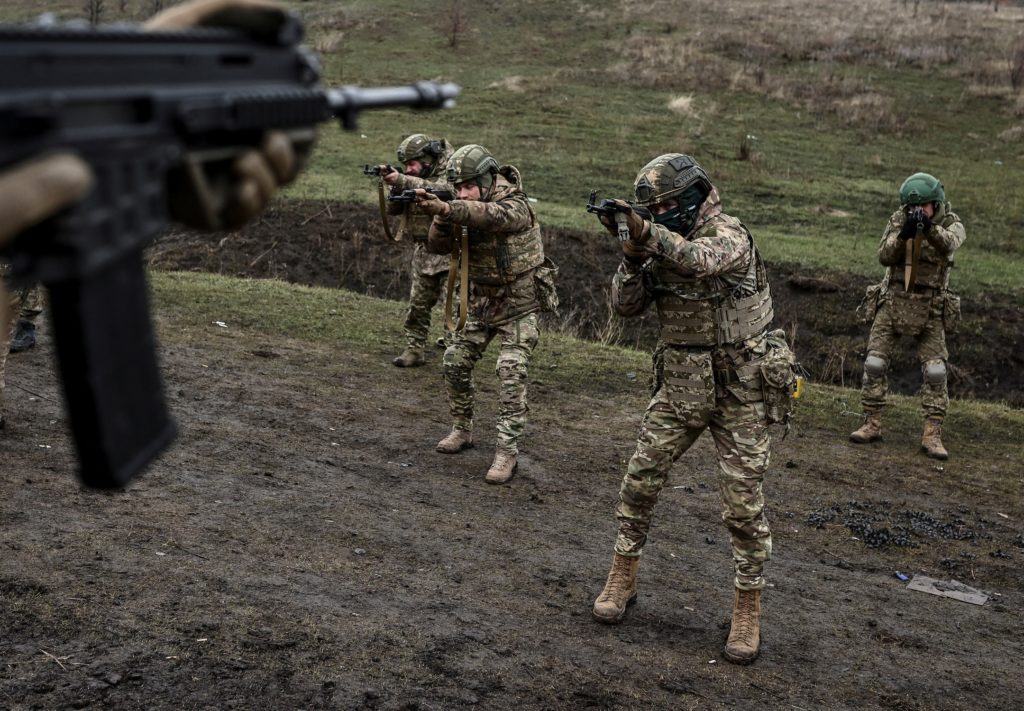
Ukraine's military is grappling with a desertion crisis of historic proportions as the war against Russia enters its fifth year, with Ukrainian Defense Minister Mykhailo Fedorov stating in January 2026 that as many as 200,000 service members were listed as absent without leave. Military analysts and frontline commanders say the true scope of the problem may be even larger, with some estimates suggesting the Ukrainian armed forces are losing as many as 40,000 soldiers per month to desertion, injury, and mental health breakdowns.
The crisis traces its roots to the combination of forced mobilization, which began in earnest in 2024, and the relentless physical and psychological toll of years of high-intensity combat. Unlike the early months of the war, when Ukrainian society largely rallied around a volunteer military, the current phase has been marked by what soldiers describe as "busification" — a slang term for the practice of military recruitment officers pulling men off public buses, out of markets, and away from workplaces to fill depleted ranks. The resentment generated by forced conscription has contributed directly to rising AWOL rates.
One soldier, who agreed to speak with PBS NewsHour on condition that only his first name, Andriy, be used, described his trajectory as typical. "I couldn't just sit there healthy and young and not go defend my country," he said of his initial decision to enlist following the 2022 invasion. "But after two years at the front with no rotation, no leave, commanders sending people to their deaths — it was crazy. I understood why men leave."
Chief Sergeant Volodymyr Tkach, a veteran infantry trainer who asked to be identified by rank and last name only, told reporters that the psychology of his unit shifted dramatically between 2022 and 2025. Where early-war cohesion held even small units together under fire, exhaustion and grief have eroded the social bonds that make military discipline function. "When a man has seen his friends killed three times over, when he has not seen his family in two years, when he does not believe there is an end — the unit cannot hold him," Tkach said.
A 2024 study published by the US Army War College documented widespread clinical-level post-traumatic stress disorder among Ukrainian combat veterans, with researchers finding rates of mental breakdown far higher than in any Western military deployment of the modern era. The study noted that Ukrainian soldiers were often deployed for twelve to eighteen continuous months without meaningful rest rotations — a tempo that would violate the operational doctrine of every NATO military.
The desertion crisis is creating tangible battlefield consequences. Russian forces have made incremental advances in several sectors of the eastern front in 2025 and early 2026, with Ukrainian commanders privately acknowledging that thinly manned positions can no longer mount the kind of elastic defense that stymied Russian offensives in earlier years. Official Ukrainian casualty figures remain classified, but Western intelligence estimates suggest total losses — killed, wounded, and missing — have exceeded 400,000 since the invasion began.
Ukraine's parliament has passed increasingly harsh legislation to address the desertion problem, including significant prison sentences for those found guilty under military law. But enforcement has been uneven and prosecutions have not translated into deterrence. Critics of the government's approach argue that punitive measures alone cannot address a crisis rooted in human limits. Calls for a negotiated ceasefire, once politically toxic in Ukraine, have grown louder in recent months — though any talks that would require territorial concessions to Russia remain deeply divisive. Meanwhile, on the front lines, commanders continue trying to hold positions with the soldiers who remain.