Trump Makes Pearl Harbor Joke to Japan's PM Takaichi in Oval Office to Explain Iran Secrecy
When a Japanese reporter asked why allies weren't warned before the Iran strikes, Trump turned to Prime Minister Takaichi and quipped: 'Who knows better about surprise than Japan?' — stunning the room.
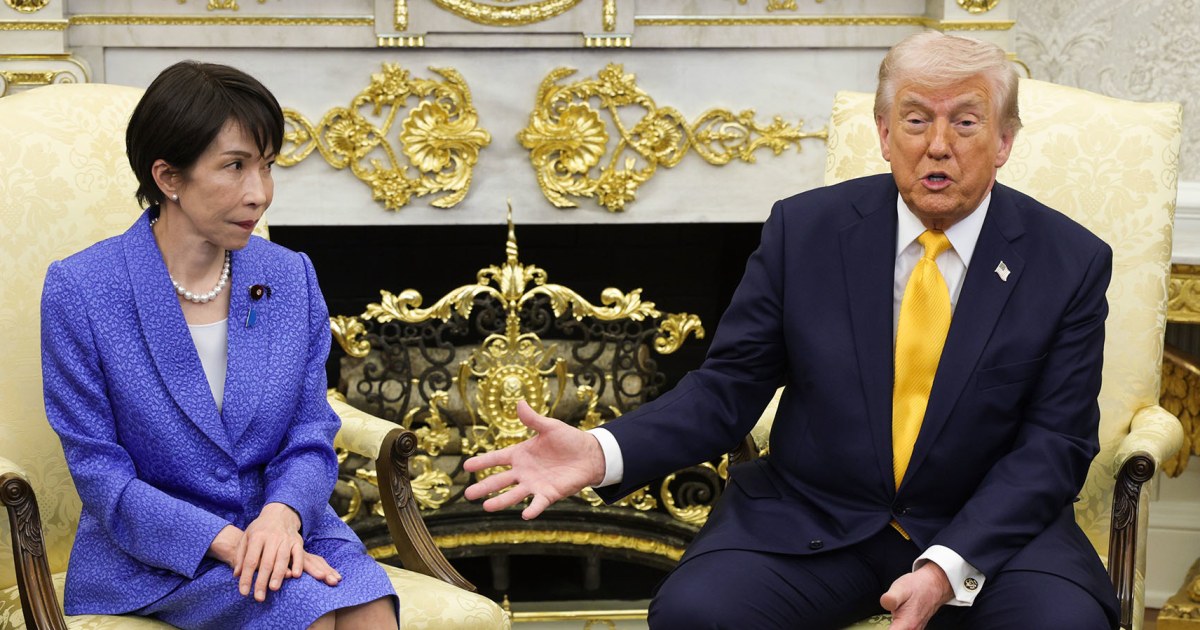
President Donald Trump invoked Japan's December 1941 attack on Pearl Harbor during an Oval Office meeting Thursday with Japanese Prime Minister Sanae Takaichi, delivering a quip that briefly silenced a room filled with senior administration officials and prompted the Japanese leader's demeanor to visibly stiffen.
The moment came when a Japanese reporter asked Trump why the United States had given Japan and other allies no advance notice before launching its joint assault on Iran with Israel in late February. "We went in very hard and we didn't tell anybody about it because we wanted surprise," Trump replied. Then, turning toward Takaichi, he added: "Who knows better about surprise than Japan? OK, why didn't you tell me about Pearl Harbor?" The remark drew some uneasy laughter before the room fell quiet. According to multiple officials present, Takaichi appeared to draw a deep breath and leaned back in her seat, her expression difficult to read. Vice President JD Vance, Secretary of State Marco Rubio, and Defense Secretary Pete Hegseth were among those seated in the Oval Office when the comment was made.
Trump went on to defend the decision to keep allies in the dark, arguing that strategic surprise was critical to the operation's early success. He claimed the United States and Israel had destroyed more than 50 percent of their planned targets in the first two days of the campaign. Japan, which relies heavily on Persian Gulf energy imports and maintains substantial commercial shipping interests in the region, had pressed Washington for greater consultation rights before any escalation involving the Strait of Hormuz — a waterway that is vital to Japan's energy security. The bilateral meeting also covered trade and Japan's potential role in escorting commercial tankers through the strait, where Iran has effectively halted normal transit for nearly three weeks.
Trump's invocation of Pearl Harbor breaks a longstanding diplomatic norm. While U.S. and Japanese officials have frequently discussed the weight of World War II history in the bilateral relationship — particularly around the atomic bombings of Hiroshima and Nagasaki in August 1945 — American leaders have traditionally avoided explicit references to Pearl Harbor in the direct presence of Japanese counterparts. Japan and the United States became formal allies through a 1951 peace treaty and have maintained one of the world's closest security partnerships for more than seven decades, anchored by a mutual defense treaty and tens of thousands of U.S. troops based in Japan.
The incident drew sharp commentary in Japan, where the surprise attack on Pearl Harbor — which killed 2,390 American military personnel and civilians on December 7, 1941 — remains a sensitive chapter in the national memory, particularly as it set in motion the chain of events that led to Japan's catastrophic defeat and the nuclear destruction of two of its cities. Several Japanese opposition politicians called on Takaichi to formally register a protest with the Trump administration. Her office had not issued a public statement by Friday morning Tokyo time. Some American observers noted that Trump appeared to be using Pearl Harbor as a rhetorical shorthand for military surprise, not as a celebration of the attack — a distinction that critics argued offered little diplomatic comfort to the Japanese delegation sitting across the table in the Oval Office.
Originally reported by NBC News.