Strongest Earthquake of 2026 Strikes Near Tonga — Magnitude 7.5, No Tsunami
The deep-focus quake centered 95 miles west of Neiafu rattled nearby Pacific islands but caused no significant damage, its destructive power dissipated by a depth of 148 miles below the ocean floor.

A magnitude 7.5 earthquake struck the Pacific Ocean near the Kingdom of Tonga on March 24, 2026, making it the most powerful earthquake recorded anywhere on Earth so far this year. The quake's epicenter lay approximately 95 miles west of Neiafu, Tonga's second-largest city, and roughly 370 miles east of Fiji, in a seismically active stretch of the Pacific Ring of Fire that regularly produces significant tremors.
Despite the quake's substantial magnitude, no tsunami warning was issued, and reports of structural damage were limited. Scientists attributed the relatively contained impact to the earthquake's depth: the rupture occurred approximately 148 miles below the Earth's surface. At such depths, the energy released by fault movement is substantially dissipated before seismic waves reach the surface, reducing both the intensity of ground shaking felt on nearby islands and the ocean-floor displacement that typically generates destructive tsunamis.
Residents on Tonga's Vava'u island group, the closest populated land mass to the epicenter, reported feeling strong shaking for approximately one to two minutes. Local emergency management officials conducted rapid assessments of key infrastructure, including the harbor and the runway at Vava'u International Airport, and reported no significant damage. Communication lines to the outer islands remained operational, allowing officials to confirm that no injuries had been reported as of the hours following the event.
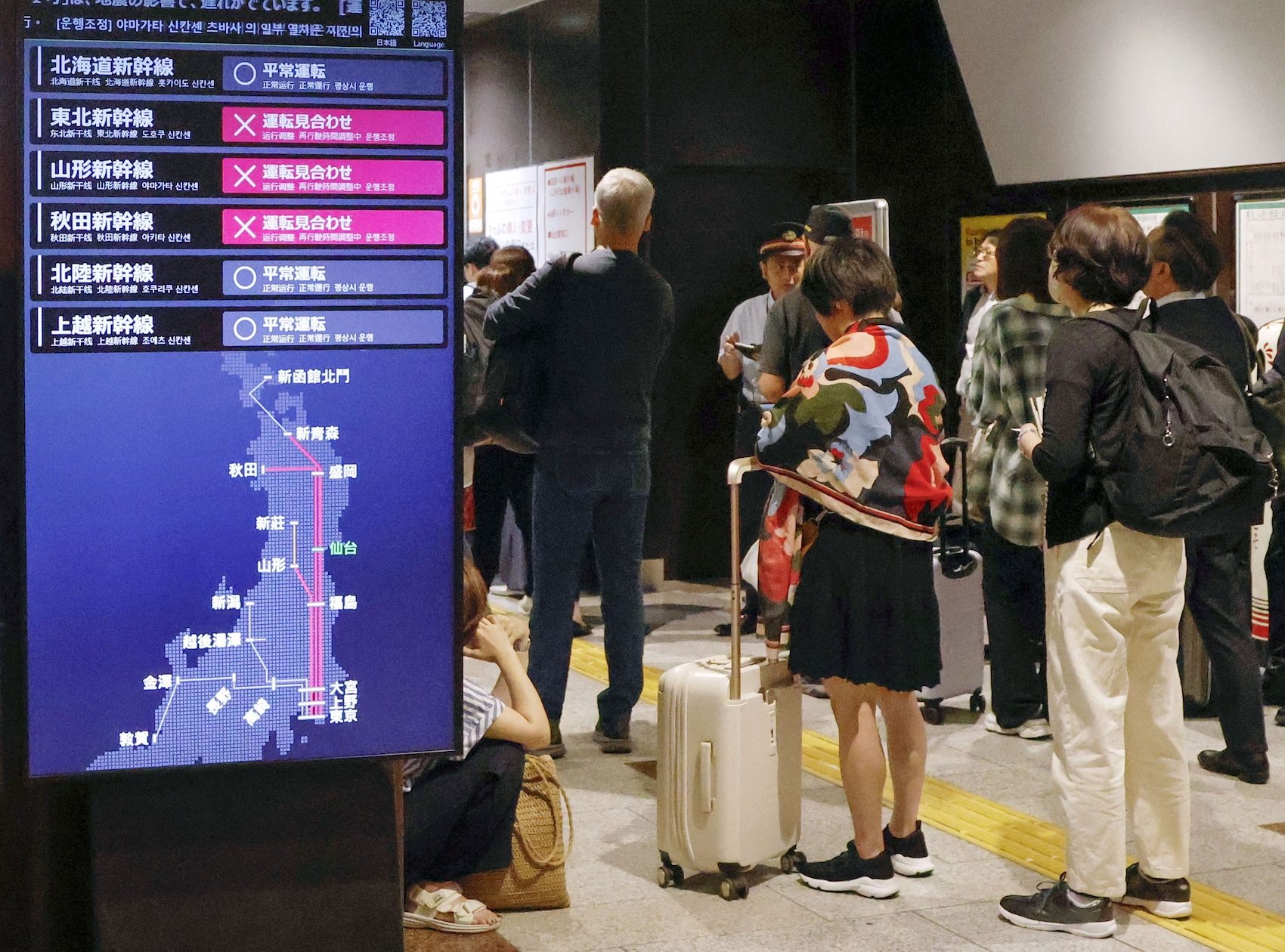
The quake is part of a broader pattern of elevated seismic activity across the Pacific in early 2026. A separate magnitude 6.5 earthquake struck off northern Japan on March 26, felt widely across northern Honshu and southern Hokkaido, and a cluster of moderate quakes has been recorded along the Cascadia Subduction Zone off the Pacific Northwest coast of the United States in recent weeks, though none have caused significant damage.
Tonga sits at the collision zone between the Pacific Plate and the Australian Plate, one of the most seismically productive geological settings on the planet. The Tonga Trench, which descends to approximately 10,800 meters — making it the second-deepest oceanic trench on Earth — lies just to the east of the island chain and has historically produced some of the largest earthquakes ever recorded. The country's vulnerability to seismic and volcanic events was dramatically illustrated in January 2022, when the eruption of the Hunga Tonga–Hunga Ha'apai submarine volcano generated a tsunami that damaged much of Tonga's coastline and was detected across the entire Pacific basin.
Seismologists at the U.S. Geological Survey monitoring the March 24 event said the fault mechanism was consistent with the subduction of the Pacific Plate beneath the Australian Plate, a process that has operated for tens of millions of years and will continue to generate major earthquakes in the region indefinitely. USGS scientists noted that while this quake caused no significant harm, the region's ongoing tectonic activity makes it one of the highest-risk zones on Earth for future large-magnitude events.
For Tonga's population of approximately 100,000 people, the experience of living alongside such geological forces has shaped the culture and infrastructure of the island nation across generations. Newer construction in population centers follows earthquake-resistant building codes developed with international assistance after previous disasters. Emergency management drills are conducted regularly on the main island of Tongatapu, where the capital Nuku'alofa is located. Local officials said the rapid all-clear following Monday's quake was a testament to the effectiveness of those preparedness measures.