Three Journalists Killed as Israeli Strike Hits Clearly Marked Press Car in Southern Lebanon
Fatima Ftouni, Mohammed Ftouni, and Ali Shoaib died when at least four precision missiles struck their vehicle on the Jezzine highway — the eleventh journalist killed in Lebanon since the broader conflict began.

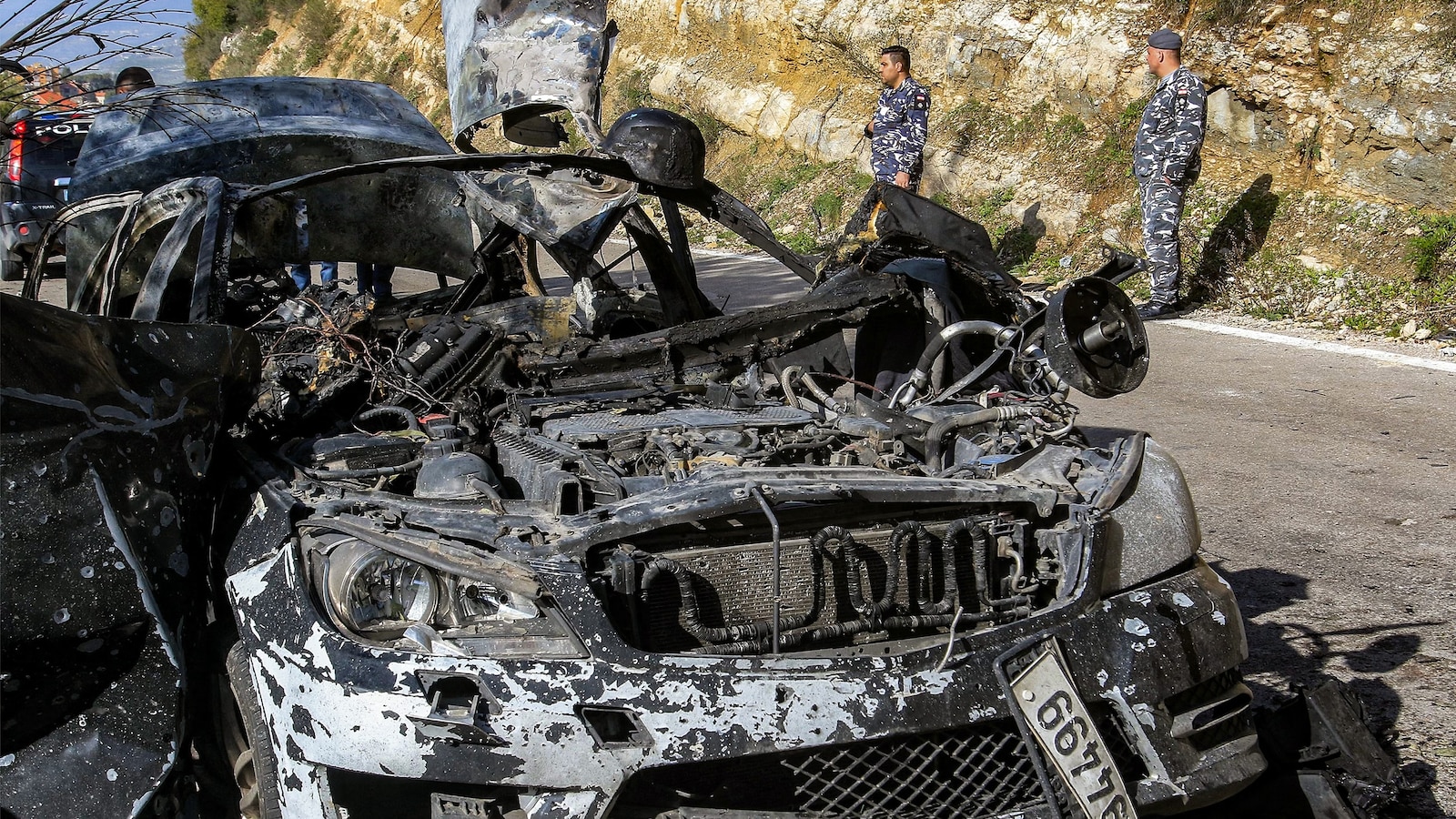
Three journalists were killed Saturday when an Israeli airstrike hit a clearly marked press vehicle on the Jezzine highway in southern Lebanon, drawing international condemnation and renewing urgent questions about the targeting of media workers in a conflict that has already claimed more journalists' lives than any war in recent history. The journalists killed were Fatima Ftouni and her brother Mohammed Ftouni, both of whom worked for Lebanese satellite channel Al Mayadeen, and Ali Shoaib, a reporter for Al-Manar television. At least four precision missiles struck the vehicle, reducing it to a mangled wreck. Press equipment — including vests and camera tripods — was scattered across the road at the scene.
The Israeli military acknowledged conducting the strike. IDF spokesperson Avichay Adraee accused Shoaib of being embedded with a Hezbollah intelligence unit, claiming he had used his journalism credentials as cover to gather intelligence on Israeli troop positions in southern Lebanon and distribute Hezbollah propaganda. The IDF provided no evidence to support the claim. When the Committee to Protect Journalists contacted the Israeli military requesting proof that Shoaib was a combatant, the IDF replied that "the incident is being further investigated."
Lebanese President Joseph Aoun described the strike as "a blatant crime that violates all the norms and treaties under which journalists enjoy international protection in wars," adding that Israel had violated "the most basic rules of international law" by targeting civilians carrying out their professional duty. Prime Minister Nawaf Salam called it "a flagrant violation of international humanitarian law." The CPJ's regional director, Sara Qudah, connected the killing to a broader documented pattern: "We have seen a disturbing pattern in this war and in others involving Israel of accusing journalists of being active combatants and terrorists without providing credible evidence."
The three killed Saturday were not isolated victims. Al Mayadeen had already lost six journalists since hostilities began, including reporters Farah Omar, Rabih Me'mari, Ghassan Najjar, and Mohammad Reda. Two other journalists were killed in Lebanon in the days immediately before Saturday's strike — Hussain Hamood two days earlier and Mohammed Sherri of Al-Manar nine days prior. Four other journalists had been killed across the broader Middle East since the Iran war began in late February. The Committee to Protect Journalists recorded a global high of 129 journalists killed in 2025, the worst year on record in three decades of data collection, with Israel responsible for two-thirds of those deaths. More than 270 journalists have been killed by Israeli military operations since 2023, making Israel responsible for more journalist deaths than any country in the CPJ's recorded history.
The Lebanon conflict has intensified since the start of the U.S.-Israel campaign against Iran in late February 2026, with Hezbollah forces in southern Lebanon continuing to clash with Israeli forces along the border. Saturday's strike came on the same day that nine paramedics were killed across five separate healthcare facility attacks in the region, compounding international condemnation. The United Nations and several European governments have called for independent investigations into recent attacks on journalists and medical workers.
The IDF's justification — that journalists affiliated with Hezbollah-linked outlets forfeit their protections — has been firmly rejected by international law experts. Press freedom organizations note that even journalists who work for politically aligned outlets retain full protections under international humanitarian law unless they are directly participating in hostilities — a standard requiring individual determination backed by verifiable evidence produced before a strike, not investigated afterward. Al Jazeera correspondent Obaida Hitto reported from the scene that the journalists "were just doing their job" and that the press community intended to continue its coverage despite the danger.