Supreme Court Agrees to Decide Whether the Second Amendment Protects the AR-15
The justices took up challenges to assault-weapons bans in Illinois and Connecticut — the first time the court will directly rule on the constitutionality of such laws.
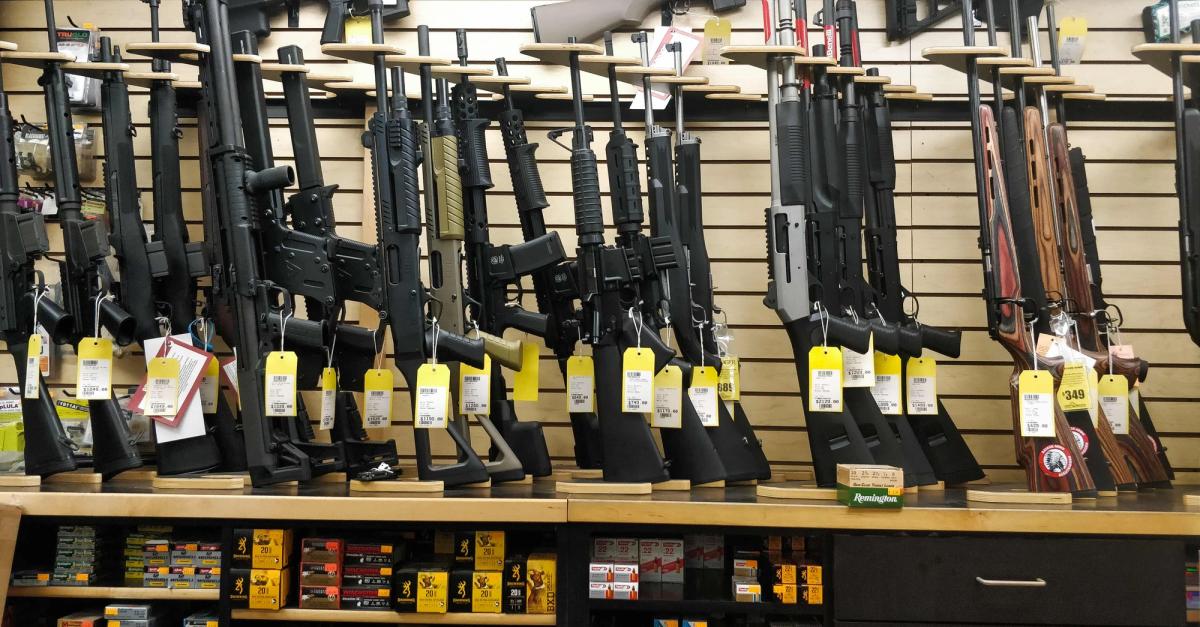
The Supreme Court agreed on June 30 to decide whether the Constitution protects the right to own the AR-15 and similar semiautomatic rifles, setting up what could be the most consequential gun-rights ruling in more than a decade. The justices granted review in two consolidated cases, Viramontes v. Cook County and Grant v. Higgins, that challenge bans on so-called assault weapons in Illinois and Connecticut.
At the heart of both cases is a single question the court has never squarely answered: does the Second Amendment protect commonly owned semiautomatic rifles, including the AR-15, the best-selling rifle in the United States? Lower courts have split sharply on the issue, upholding some bans while striking down others, and gun-rights advocates have pressed the justices for years to resolve the confusion. A decision will directly affect the validity of assault-weapons restrictions in every state and locality that has enacted one.
The Illinois case was brought by Cutberto Viramontes, who went to federal court in Chicago in 2021 arguing that Cook County's prohibition violates his right to keep and bear arms. The companion case, Grant v. Higgins, challenges Connecticut's assault-weapons ban, a law enacted in the aftermath of the 2012 Sandy Hook Elementary School massacre, in which a gunman used a semiautomatic rifle to kill 20 children and six adults.
The case reaches the court against the backdrop of its recent Second Amendment jurisprudence. In its 2022 decision in New York State Rifle & Pistol Association v. Bruen, the court held that gun regulations must be consistent with the nation's "historical tradition" of firearms rules, a test that has since scrambled lower-court analysis and produced a wave of conflicting decisions on modern weapons the founders never contemplated.
Gun-control groups warn that striking down the bans could invalidate laws in roughly a dozen states and the District of Columbia and make it far harder to regulate the weapons most often used in mass shootings. Gun-rights organizations counter that AR-15-style rifles are owned by millions of law-abiding Americans for lawful purposes and that flat bans cannot survive constitutional scrutiny.
Oral arguments are expected in the fall, with a ruling likely by the end of the term in June 2027. Whichever way the court rules, the decision will reverberate through statehouses and courtrooms nationwide, either cementing the constitutionality of assault-weapons bans or sweeping them away in a single stroke. Legal analysts note that the current court, with its 6-3 conservative majority, has generally been sympathetic to expansive readings of gun rights, and a broad ruling in favor of the challengers could reshape firearms policy in the most restrictive states. State officials defending the bans argue that legislatures have long regulated especially dangerous weapons and that the AR-15's military lineage and rate of fire place it outside the ordinary protections afforded to handguns for self-defense.