Smart Perovskite Crystals Reshape Under Light in Major Semiconductor Breakthrough
Researchers discover that perovskite crystals can dramatically change shape when exposed to light and return to original form, enabling new light-controlled devices.

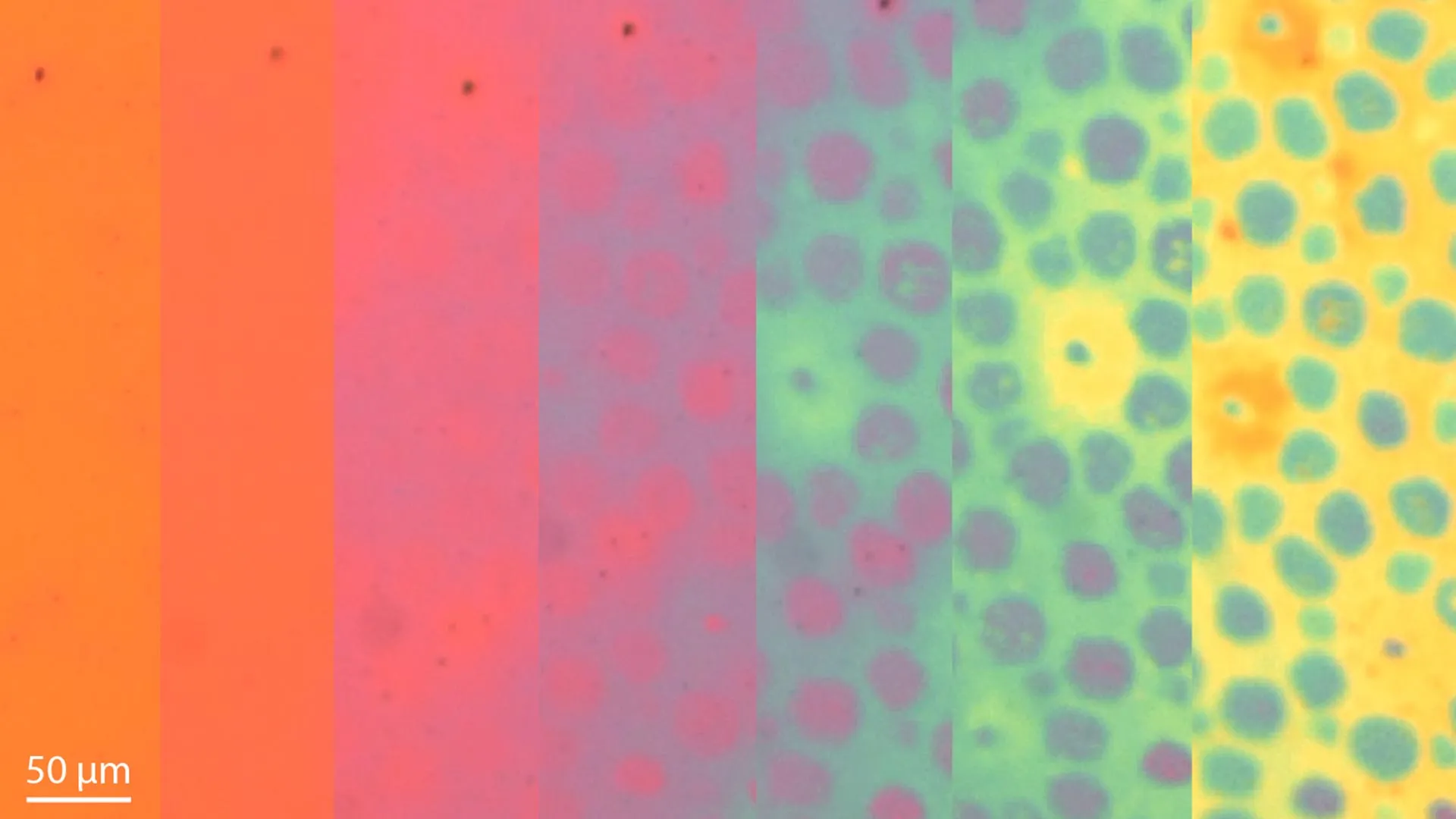
Researchers at the University of California, Davis have discovered a remarkable property in perovskite crystals that could revolutionize semiconductor technology: the ability to dramatically and reversibly change shape when exposed to light. This photostriction effect, published in Advanced Materials, demonstrates behavior not seen in conventional semiconductors like silicon and gallium arsenide, positioning perovskites as 'smart materials' that can be precisely controlled through light exposure.
Marina Leite, professor of materials science engineering at UC Davis and senior author of the study, emphasized the unique nature of these materials compared to traditional semiconductors. "They are 'smart materials' that can be tuned to respond to a stimulus in a way we can control," Leite explained. "Their chemistry is very different in a way that can be beneficial for creating devices we couldn't build before." The research involved directing laser light onto perovskite crystals while monitoring structural changes using X-ray measurements.
The experiments revealed that light exposure causes rapid shifts in the crystals' internal lattice structure, which then returns to its original arrangement when the light is removed. Graduate student Mansha Dubey, who led the experimental work, documented that this cycle can be repeated multiple times without degradation. "There is a dramatic change in the lattice when you shine light on it, a unique phenomenon that you don't see with silicon or gallium arsenide," Leite noted, highlighting the distinctive characteristics that separate perovskites from established semiconductor materials.
One of the most promising aspects of this discovery is the tunable nature of the photostriction effect. The strength and characteristics of the shape change can be controlled by adjusting both the intensity and color of the applied light, as well as modifying the chemical composition of the perovskite material. "It's not a binary on/off effect; it can be a scaled response, like a dimmer, depending on the light you shine on it," Leite explained, suggesting applications where precise, graduated responses are required.
The findings open new possibilities for developing light-controlled semiconductor devices that could operate in ways impossible with current technology. Perovskites already show promise in solar cells and optoelectronics due to their adjustable bandgap properties, which allow scientists to control the wavelengths of light the materials absorb and emit. The addition of controllable shape-changing capabilities could lead to entirely new categories of responsive electronic devices, sensors, and actuators that adapt their physical properties in real-time based on optical inputs.