Scientists Unlock Secret of Nature's Proton Highway in Phosphoric Acid
Breakthrough research reveals how electrical charges move so efficiently through biological systems and energy technologies.

Scientists have made a significant breakthrough in understanding how phosphoric acid facilitates the rapid movement of electrical charges in both biological systems and modern energy technologies. By using advanced experimental techniques to freeze key molecular structures to extremely low temperatures, researchers discovered that nature's "proton highway" operates through a surprisingly ordered and stable configuration that contradicts previous theoretical predictions.
Phosphoric acid and related phosphate compounds are ubiquitous in living organisms, serving as essential components of DNA, RNA, cell membranes, and ATP—the molecule that stores and transfers energy in cells. These compounds play a crucial role in moving positive charges, or protons, throughout biological systems. The same properties make phosphoric acid valuable in technological applications such as batteries and fuel cells, where efficient proton conduction is essential for optimal performance.
The research team from the Fritz Haber Institute, working with collaborators from Leipzig and the United States, focused on identifying the molecular mechanisms behind proton-shuttling, a process where charges hop from one molecule to another along hydrogen bond pathways. While scientists have long understood that this process occurs, the precise molecular details have remained elusive until now.
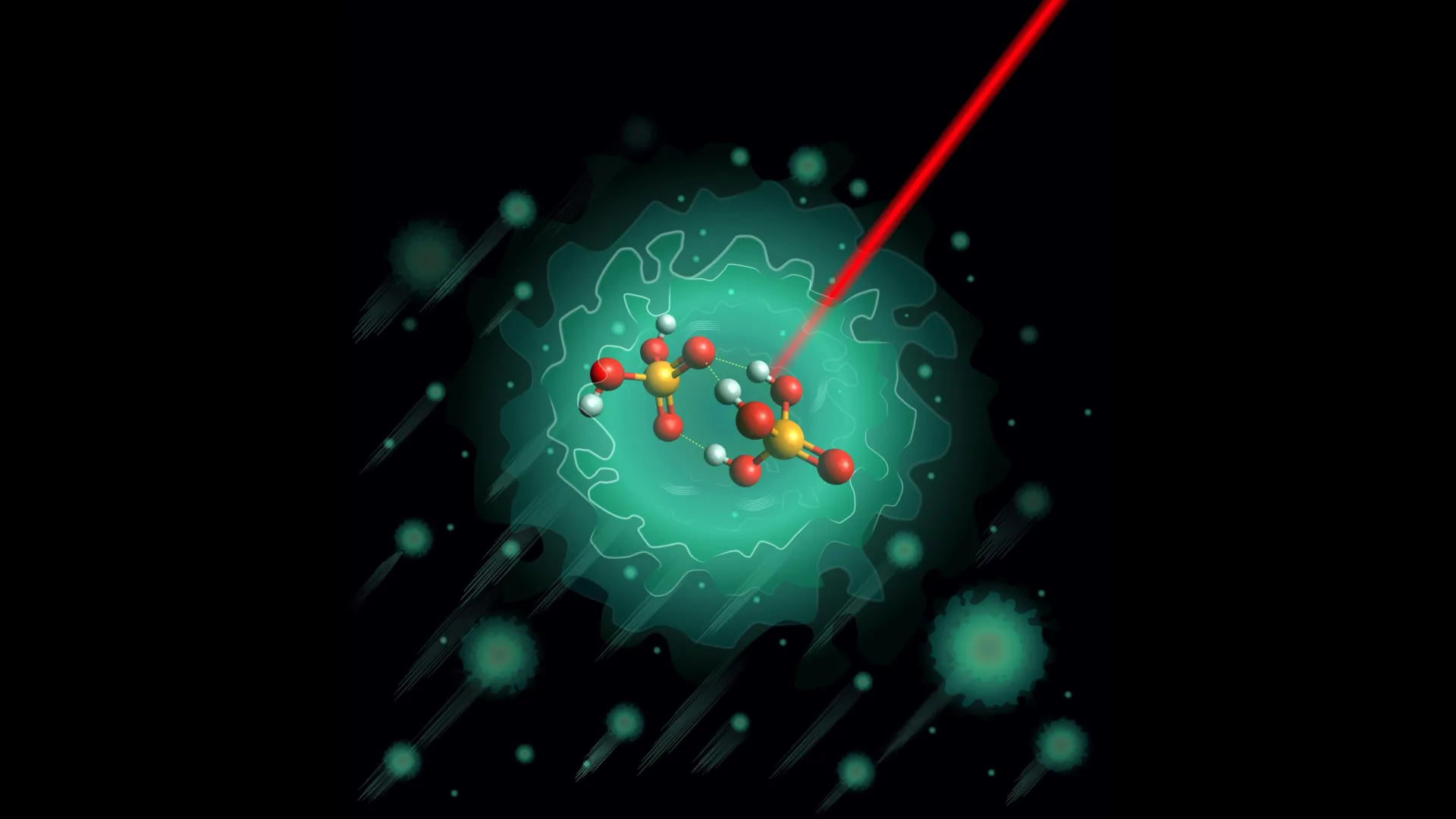
Using cutting-edge experimental methods, the researchers created a specific negatively charged molecule known as the deprotonated dimer H3PO4·H2PO4- and cooled it inside helium nanodroplets to just 0.37 degrees above absolute zero. At this extremely low temperature, molecular disturbances are virtually eliminated, allowing for highly precise analysis using infrared spectroscopy combined with quantum chemical calculations.
The findings revealed an unexpected result that challenges existing theoretical models. While previous calculations predicted that the molecule could exist in two equally probable structures, experimental evidence showed only one stable configuration. This structure features three hydrogen bonds connected through a shared oxygen atom and presents specific barriers that control proton movement. The discovery provides crucial insights into the fundamental mechanisms that enable efficient charge transport in biological systems and may inspire the development of more effective energy storage and conversion technologies.