Scientists Transform MXenes Into Revolutionary Nanoscrolls for Next-Generation Electronics
Researchers have rolled flat 2D materials into ultra-thin tubes that create 'highways' for rapid ion transport, dramatically improving battery and sensor performance.

Scientists at Drexel University have achieved a breakthrough in nanomaterial engineering by successfully transforming flat MXene sheets into one-dimensional nanoscrolls that are 100 times thinner than human hair yet significantly more conductive than their traditional counterparts. This advance, published in Advanced Materials, represents a major leap forward for applications in energy storage, biosensors, and wearable electronics.
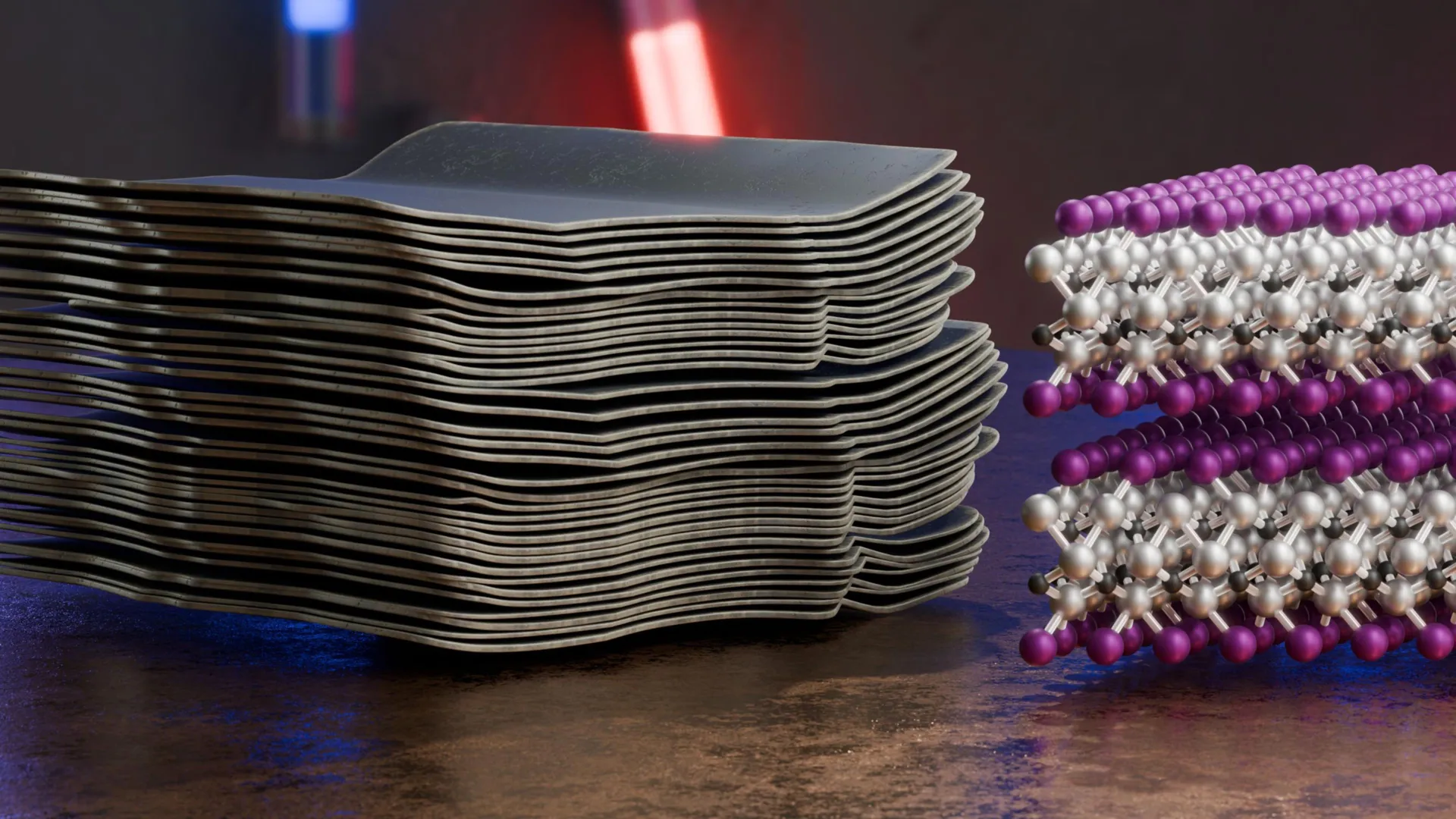
The research team, led by Distinguished University Professor Yury Gogotsi, developed a scalable method for producing these nanoscrolls from MXene precursors while maintaining precise control over their shape and chemical composition. Unlike traditional flat MXene flakes that stack on top of each other and create confined spaces that impede ion movement, the new tubular nanoscrolls provide open pathways that act as 'highways' for rapid transport.
'With standard 2D MXenes, the flakes lay flat on top of each other, which creates a confined-space and a difficult path for ions or molecules to navigate,' explained postdoctoral researcher Teng Zhang. The team's innovation prevents this nano-confinement effect by converting the 2D nanosheets into 1D scrolls, allowing ions to move freely through the tubular geometry with far less resistance.
The production process involves carefully adjusting the chemical environment around multilayer MXene flakes using water to trigger a structural imbalance called a Janus reaction. This creates internal strain within the layers, which is then released as the layers peel apart and curl into tight scrolls. The researchers successfully applied this method to six different types of MXenes, including titanium carbide, niobium carbide, vanadium carbide, tantalum carbide, and titanium carbonitride.
The breakthrough addresses a significant challenge in the field, as previous attempts to create MXene nanoscrolls often produced uneven results despite the materials' advantages over graphene, including richer chemistry, easier processing, and higher conductivity. The team was able to consistently produce 10 grams of nanoscrolls in a single batch, demonstrating the scalability needed for practical applications in next-generation electronic devices.