Scientists Store Massive Data Using Light in 3D Space, Breaking Efficiency Barriers
New holographic storage technique combines amplitude, phase, and polarization to dramatically increase data capacity and speed.

Scientists have demonstrated a new holographic data storage technique that achieves 130 percent efficiency by encoding information throughout the full three-dimensional volume of a material rather than only on its surface, a breakthrough that researchers say could eventually allow a device the size of a sugar cube to hold more data than all of the world's current hard drives combined.
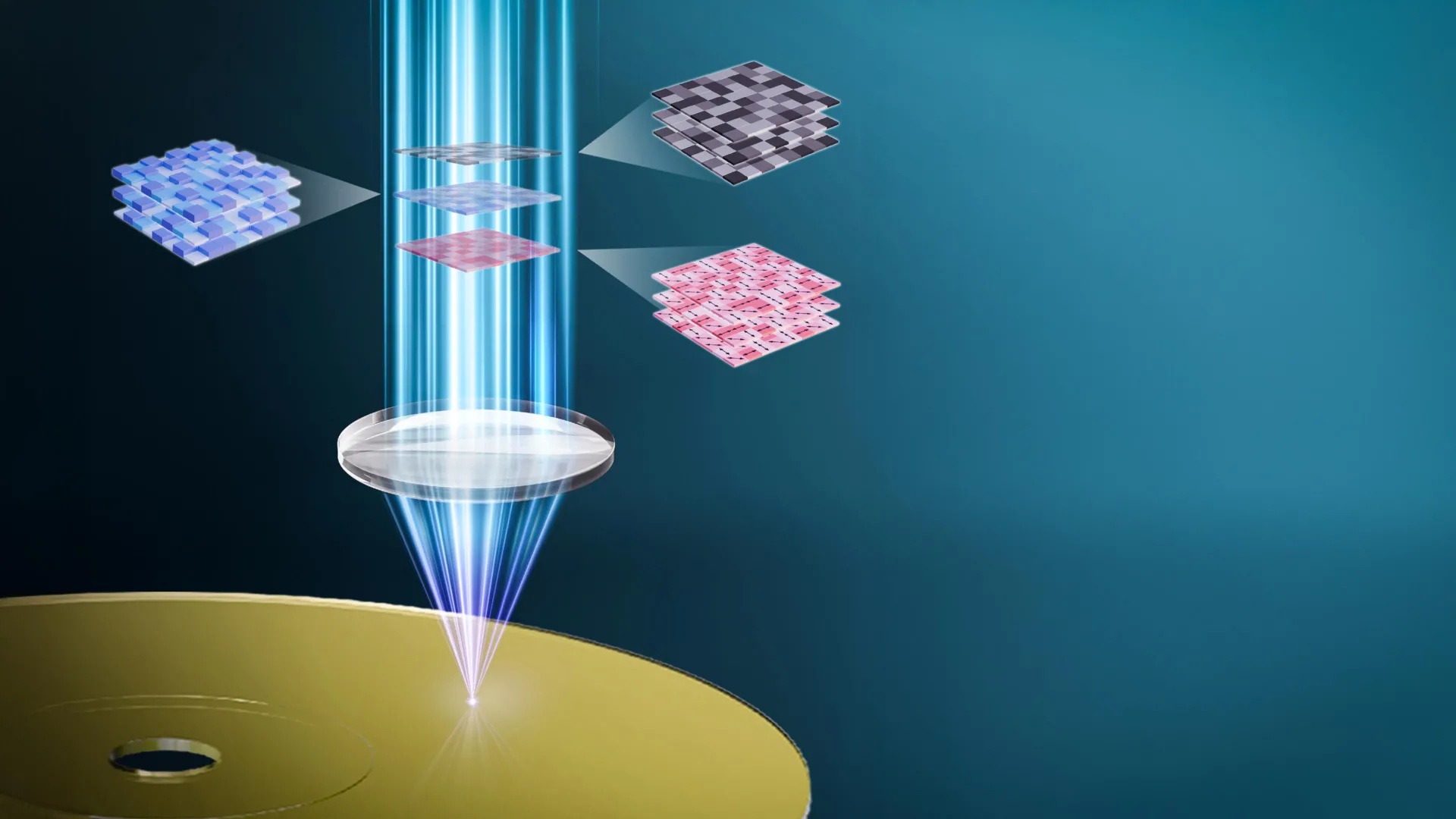
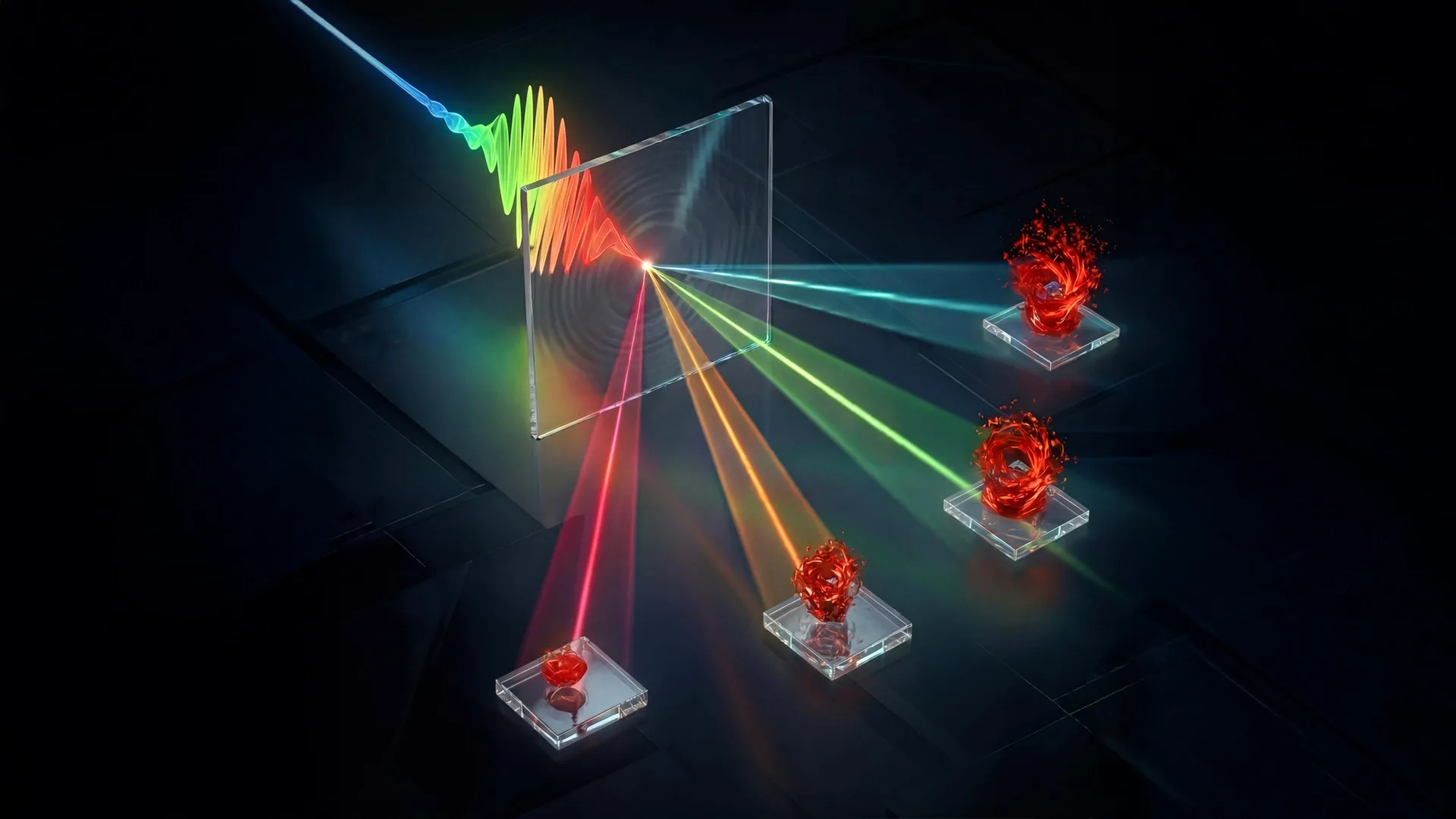
The technique, developed by a team at the University of Southampton's Optoelectronics Research Centre and described in a paper published in Nature Photonics, uses precisely shaped laser pulses to write data into nanostructures embedded in fused silica glass. Unlike conventional storage media that write bits on a flat magnetic or optical surface, the new method encodes information in five dimensions — three spatial dimensions plus the polarization and intensity of light — within the glass matrix.
The 130 percent efficiency figure refers to the ratio of information stored per unit volume relative to the theoretical limit for purely surface-based storage. By distributing data through the entire depth of the material rather than only its surface layers, the technique captures storage capacity that conventional approaches leave unused. The researchers also demonstrated that data written into the fused silica glass remained stable at temperatures up to 1,000 degrees Celsius, suggesting the technology could be used for long-term archival storage of critical records.
Practical implementation faces significant engineering challenges. The laser writing process currently takes several seconds per bit, far too slow for everyday data storage applications. The research team said they had identified pathways to increase writing speeds by orders of magnitude through parallelization and faster pulse modulation, but acknowledged that a commercial product was likely years away. Reading the stored data also requires specialized optical equipment not yet miniaturized to consumer scale.
The potential applications extend well beyond consumer electronics. The team envisions the technology being used for national archive storage, the preservation of genomic databases, and the long-term storage of records that need to survive for centuries without degradation. Conventional magnetic hard drives have a practical lifespan of three to five years before failure risk becomes significant, and even purpose-built archival tape media typically guarantees only 30 years of reliable storage.