Scientists Discover Nature's Proton Highway Uses Single Stable Structure
Breakthrough research reveals how phosphoric acid efficiently conducts electrical charges in both living systems and energy technologies.

Scientists have unlocked a fundamental mystery of how electrical charges move through living systems and energy technologies by discovering the precise molecular structure behind nature's "proton highway." Researchers from the Fritz Haber Institute, working with international collaborators, found that phosphoric acid creates highly efficient pathways for proton transport through a single, stable molecular configuration that contradicts previous theoretical predictions. The discovery could lead to significant improvements in batteries, fuel cells, and our understanding of biological energy systems.
Phosphoric acid and related compounds play crucial roles throughout biology, serving as key components in DNA, RNA, cell membranes, and ATP—the molecule that stores and transfers energy in all living cells. These compounds excel at moving positive charges, or protons, through a process called "proton-shuttling" where charges hop from molecule to molecule along hydrogen-bonded pathways. While scientists have long known this process occurs, the exact molecular mechanisms have remained elusive until now.
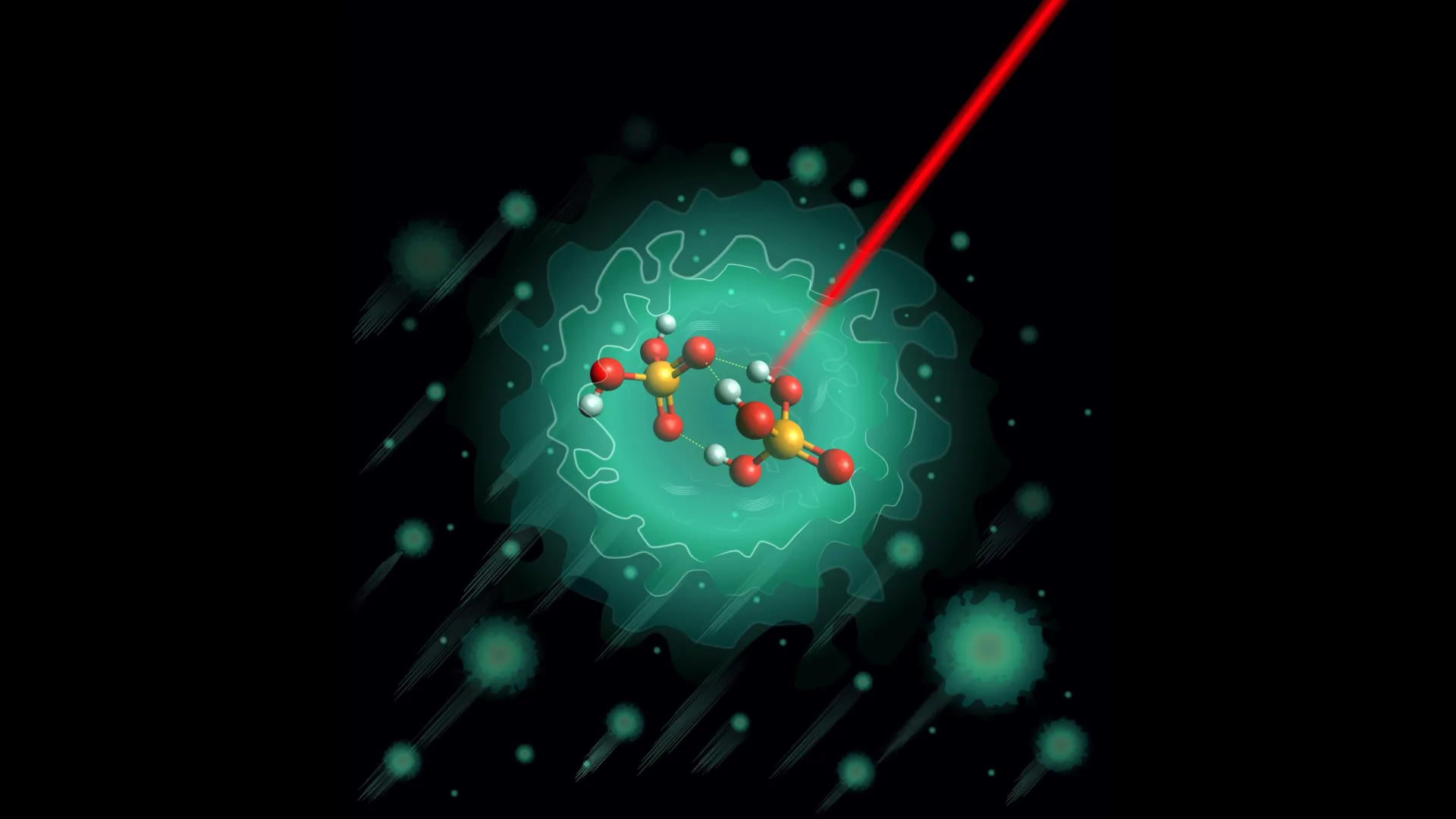
To investigate these mechanisms, researchers focused on a specific negatively charged molecule known as the deprotonated dimer H3PO4·H2PO4-. They cooled this molecule to extremely low temperatures using helium nanodroplets, reaching just 0.37 degrees above absolute zero to eliminate thermal disturbances. Using infrared spectroscopy combined with quantum chemical calculations, they were able to analyze the molecule's structure with unprecedented precision and discovered something unexpected.
Theoretical models had predicted that this molecule could exist in two equally probable structures, but experimental results revealed only one stable configuration. This structure features a relatively rigid arrangement with three hydrogen bonds connected through a shared oxygen atom, creating specific pathways for proton movement. The discovery helps explain why proton transport in phosphate-containing materials is so remarkably efficient, as the single stable structure optimizes the hydrogen-bond network for charge transfer.
The findings have significant implications for both biological understanding and technological development. In living systems, this research provides new insights into how cells manage energy transfer and maintain electrical signaling. For technology applications, the discovery could inspire the design of more efficient fuel cells and batteries by mimicking nature's optimized proton-conducting mechanisms. The research team notes that similar bonding patterns may be universal in related systems, suggesting broader applications for these fundamental principles in energy storage and conversion technologies.