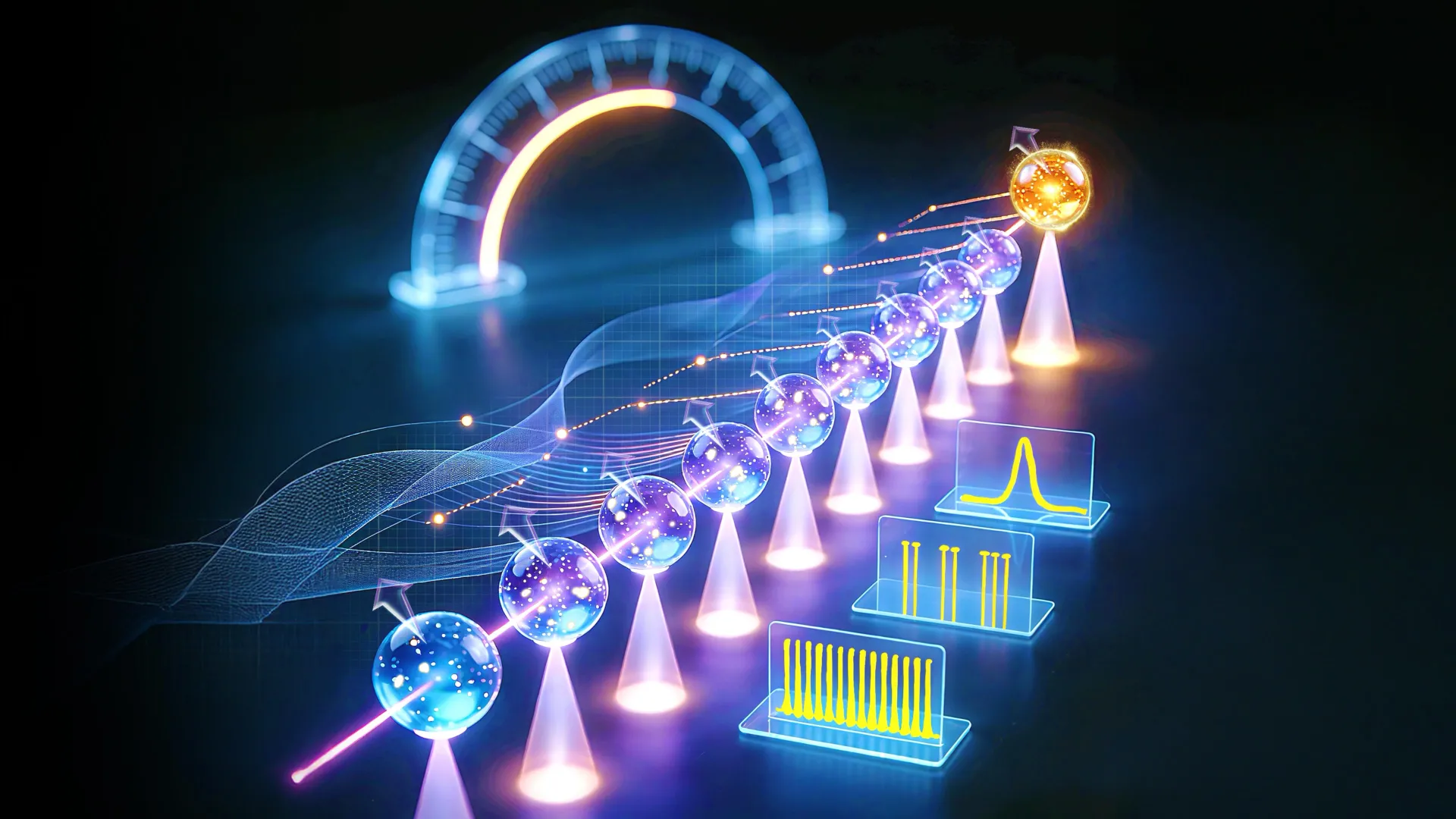
Scientists Create Revolutionary 'Phonon Laser' That Could Measure Gravity With Unprecedented Precision
Breakthrough technology manipulates sound vibrations at quantum level, potentially enabling satellite-free navigation systems and ultra-precise force measurements.
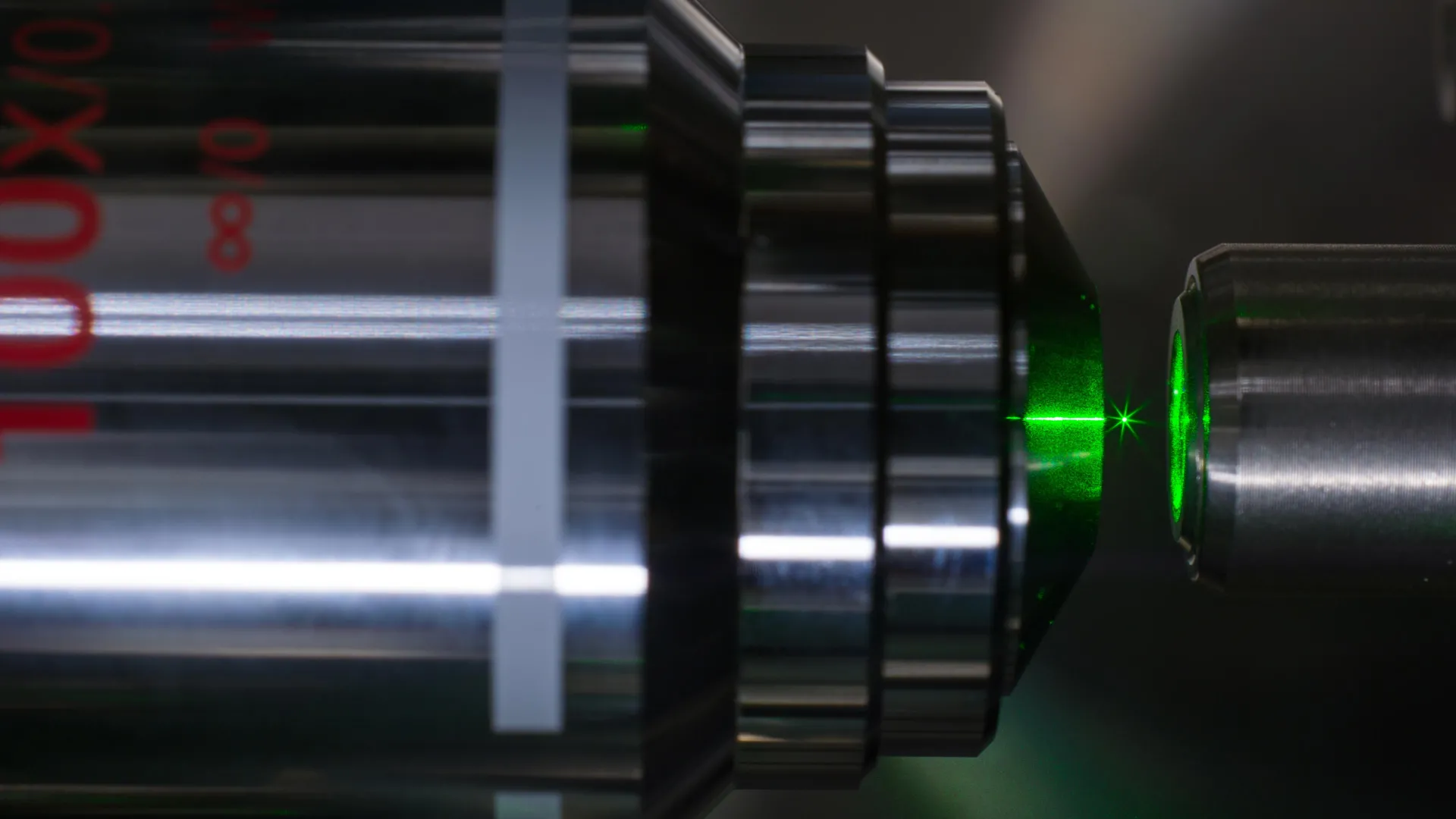
Researchers at the University of Rochester and Rochester Institute of Technology have developed a groundbreaking "phonon laser" that controls tiny vibrations at the quantum level with unprecedented precision, potentially revolutionizing how scientists measure gravity, motion, and fundamental forces. Unlike traditional lasers that manipulate light particles called photons, this new device controls phonons—individual units of vibration or sound—opening entirely new possibilities for quantum physics research and precision measurements.
Since their invention in the 1960s, traditional lasers have transformed both science and daily life through their ability to control photons. The new phonon laser extends this concept to the realm of sound and vibration, allowing researchers to manipulate these quantum mechanical units with laser-like precision. The technology builds on earlier work by Nick Vamivakas, the Marie C. Wilson and Joseph C. Wilson Professor of Optical Physics at the University of Rochester, who first demonstrated a phonon laser in 2019 using optical tweezers in a vacuum to trap and levitate vibrations.
The key breakthrough addressed a major challenge that has limited the practical applications of all laser technologies: noise. "While a laser looks to the naked eye like a steady beam, there's actually a lot of fluctuation, which causes noise when you're using lasers for measurement," explains Vamivakas. By using a technique called "squeezing" to reduce thermal noise, the team dramatically improved the precision of their phonon laser. This noise reduction allows for measurements that are far more accurate than those possible with traditional light-based lasers or radio frequency technologies.
The enhanced precision of squeezed phonon lasers could enable revolutionary applications in navigation and fundamental physics research. Scientists have proposed quantum compasses as highly accurate, "unjammable" alternatives to GPS systems that don't rely on satellites—and phonon lasers could be key to making such concepts practical reality. The technology's ability to measure acceleration and forces with exceptional accuracy also makes it a powerful tool for studying gravity and other fundamental forces with unprecedented sensitivity.
The research, published in Nature Communications and supported by the National Science Foundation, represents a significant advance in quantum technology that could impact fields ranging from navigation to fundamental physics research. By successfully reducing noise in phonon laser systems, the team has opened new possibilities for precision measurement that could help scientists probe the deepest mysteries of quantum mechanics and the fundamental forces that govern our universe.