Chief Justice Roberts Pushes Back: Americans Wrongly See Us as 'Purely Political Actors'
In a Hershey, Pennsylvania speech eight days after Louisiana v. Callais hollowed out the Voting Rights Act, the Chief Justice insisted unpopular rulings reflect 'what the Constitution means' — not policy preferences.
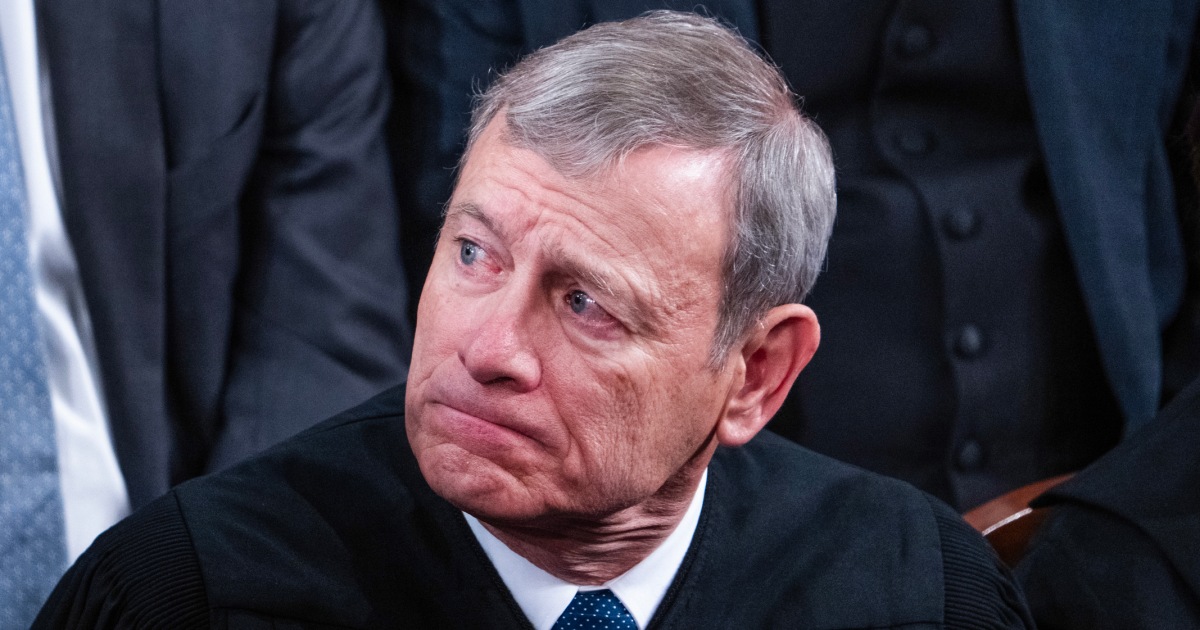
Chief Justice John Roberts used a rare on-the-record speech Wednesday in Hershey, Pennsylvania to push back against the increasingly common charge that the Supreme Court has become a political body, telling judges, lawyers and law students gathered for the Third Circuit Judicial Conference that the public's view of the justices as "purely political actors" is "not an accurate understanding of what we do." The speech, his most extensive public commentary in nearly a year, came eight days after the court's 6-3 ruling in Louisiana v. Callais sharply curtailed the Voting Rights Act and triggered a wave of Republican-led redistricting in Tennessee, Alabama, Louisiana and South Carolina.
"At a very basic level people think we're making policy decisions," Roberts told the audience inside the Hershey Lodge ballroom. "I think they view us as purely political actors, which I don't think is an accurate understanding of what we do." He defended the institution's recent unpopular rulings as the product of constitutional interpretation rather than partisan preference, telling the room that justices issue decisions "based on our best effort to figure out what the Constitution means and how it applies" and acknowledging that those decisions "are not always going to be popular, and they shouldn't be."
The context for Roberts's speech is unusually grim for the institution he leads. Public confidence in the Supreme Court hit an all-time low of 27 percent in last month's Gallup poll, the lowest reading in the survey's 50-year history. Democratic senators have introduced legislation to expand the bench and impose enforceable ethics rules; the Senate Judiciary Committee has issued subpoenas to Justices Clarence Thomas and Samuel Alito related to undisclosed gifts and travel; and President Trump has repeatedly attacked individual rulings against him as "crazy" and "radical," most recently calling Thursday's trade-court ruling against his tariffs an "attack on America."
Roberts did not name Trump, but he made plain that political pressure from any branch of government will not move him. "We do not work for the political branches and we do not work for public opinion," he said. "We work for the Constitution." He singled out lower-court judges who have faced threats and harassment after issuing rulings unpopular with the administration, calling such intimidation "a direct threat to the rule of law." Federal court security data released last month showed that threats against federal judges are running at four times the rate of 2024, with U.S. Marshals Service investigations up 38 percent in the first quarter alone.
The Chief Justice's defense did not satisfy his critics. Senate Judiciary Chair Dick Durbin, in a statement Thursday, said Roberts's speech "is hard to square with a year in which his court overturned the Voting Rights Act in May, scrapped IEEPA tariff doctrine in February, and let stand redistricting maps drawn explicitly to dilute Black political power." Conservative voices were warmer: Federalist Society co-chairman Leonard Leo praised Roberts for "telling the truth about what the court actually does," while Senate Minority Leader Chuck Schumer called the speech "a tone-deaf lecture from a court that has earned its reputation." Roberts is expected to deliver his year-end report on the federal judiciary on December 31, where he typically takes a more institutional, less polemical tone.