Revolutionary MXene Breakthrough Boosts Electrical Conductivity by 160 Times
New molten salt technique creates perfectly ordered atomic surfaces, transforming ultra-thin materials for next-generation electronics and energy storage.

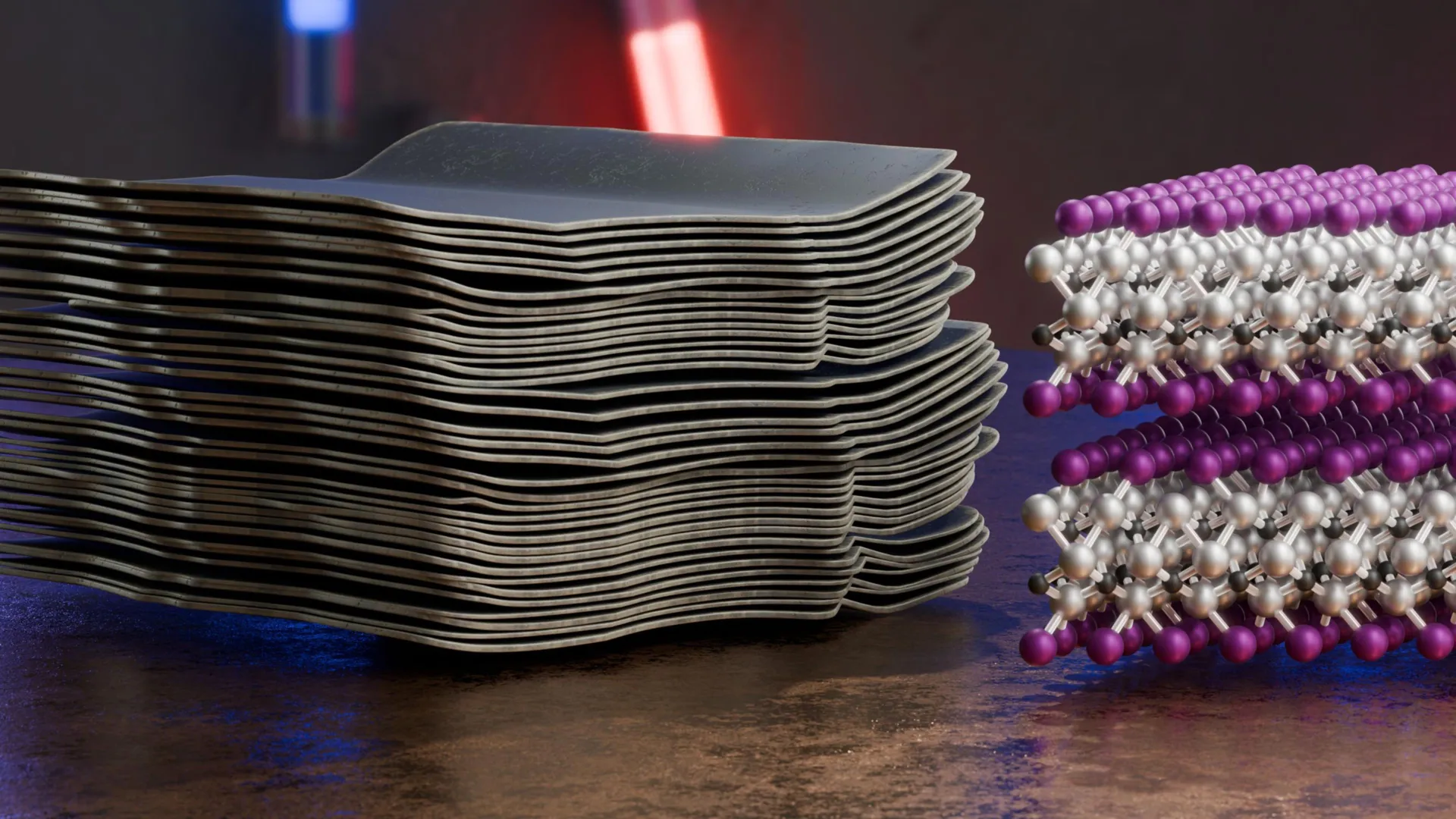
Researchers have achieved a dramatic breakthrough in MXene technology, developing a cleaner synthesis method that boosts electrical conductivity by up to 160 times compared to conventional production techniques. MXenes, discovered in 2011, are ultra-thin inorganic materials made from stacked layers of transition metals combined with carbon or nitrogen, with surface atoms that critically influence their electrical and chemical properties. Until now, most MXenes have been produced using harsh chemical etching that leaves surface atoms scattered randomly, creating atomic disorder that severely limits performance.
The new technique, known as the GLS method, takes a fundamentally different approach by using molten salts combined with iodine vapor instead of aggressive chemical treatments. This process allows scientists to precisely control which atoms attach to the MXene surface, resulting in materials with uniform, highly ordered atomic arrangements and dramatically reduced impurities. The team successfully demonstrated the versatility of their approach by producing high-quality MXenes from eight different precursor materials called MAX phases.
"This atomic disorder limits performance because it traps and scatters electrons, much like potholes slowing traffic on a highway," explained Dr. Dongqi Li from TU Dresden, highlighting why the breakthrough represents such a significant advance. The researchers focused their detailed analysis on titanium carbide MXene Ti3C2, one of the most widely studied examples in the field. When produced using conventional methods, this material typically contains a problematic mix of chlorine and oxygen on its surface, which interferes with electron movement and reduces overall electrical performance.
Using the GLS method, the team created Ti3C2Cl2, a version with only chlorine atoms arranged in a perfectly clean, ordered structure with no detectable impurities. The results were striking: the chlorine-terminated MXene showed a 160-fold increase in macroscopic conductivity and a 13-fold enhancement in terahertz conductivity compared to the same material made using traditional chemical etching. Additionally, researchers observed a nearly fourfold increase in charge carrier mobility, a key measure of how easily electrons can move through the material.
The implications extend far beyond improved electrical performance. Dr. Mahdi Ghorbani-Asl from the Institute of Ion Beam Physics and Materials Research at HZDR noted that surface atoms "strongly influence how electrons move through the material, how stable it is, and how it interacts with light, heat, and chemical environments." By combining experimental breakthroughs with density functional theory calculations, the research team gained detailed insights into how different surface configurations affect both stability and electronic behavior, opening new paths toward MXenes with tailored properties for specific applications in electronics, energy storage, and advanced materials.