Pope Leo XIV Leads Palm Sunday Mass Before Tens of Thousands, Condemns Using God to Justify War
In his first Palm Sunday as pope, Leo XIV rejected claims that God justifies armed conflict and offered special prayers for Christians in the Middle East, as his address carried extraordinary weight amid the US-Israel-Iran war entering its fifth week.

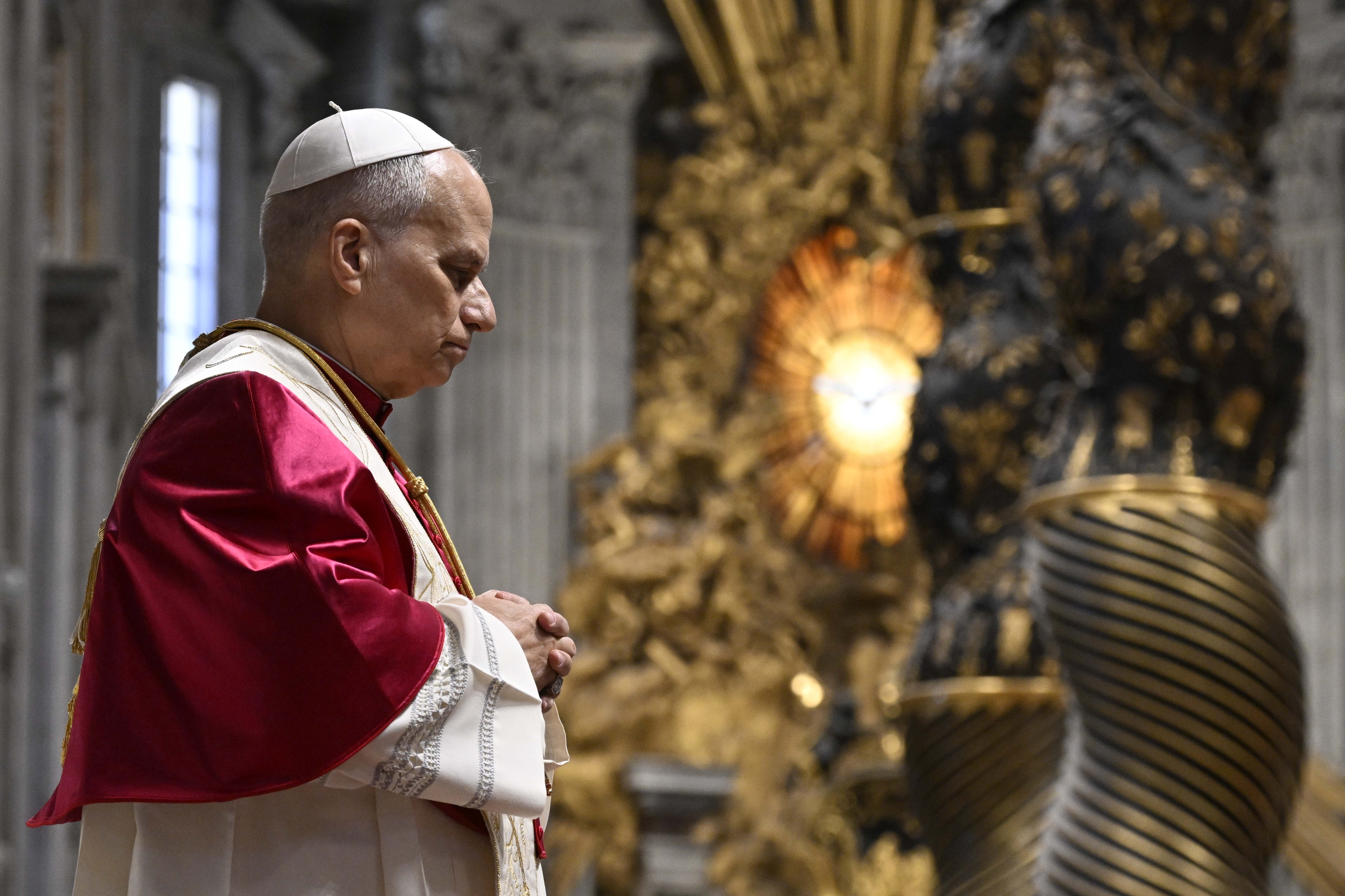
Pope Leo XIV presided over Palm Sunday Mass before tens of thousands of worshippers packed into St. Peter's Square in Rome on Sunday, using his homily to flatly reject the claim that God can justify or sanction acts of war — a message that carried particular weight as the US-Israel-Iran conflict entered its 30th day and Christian communities across the Middle East faced violence, displacement, and the closure of their holiest sites.
The address marked a pivotal moment in Leo XIV's young papacy. It was his first Palm Sunday as pope, and he chose not to use the occasion for comfort alone but for a clear moral statement directed at governments engaged in armed conflict. Without naming the United States, Israel, or Iran by name, he called on world leaders to "renounce the temptation to invoke the name of God in justification of violence" and urged immediate negotiations to end the war. He offered special prayers for Christian communities in Lebanon, Iraq, and Gaza, several of which have seen churches damaged or destroyed in recent weeks.
The crowd in St. Peter's Square was among the largest gatherings Leo XIV has addressed since taking the throne of Peter. Pilgrims from across the Catholic world — including large delegations from Lebanon, the Philippines, Brazil, and Poland — waved palm fronds in the bright spring sunshine as the pope processed through the square in the popemobile. Vatican officials said the mood was one of deep solemnity given the backdrop of war, and that the pope had personally insisted on including a specific plea for the people of Iran, where the Catholic Church maintains a small but long-established community.
The timing was deliberate. On the same morning as the Mass, Israeli police had blocked Cardinal Pierbattista Pizzaballa from entering the Church of the Holy Sepulchre in Jerusalem for Palm Sunday services — the first such exclusion in centuries, which drew condemnation from France, Italy, and US Ambassador Mike Huckabee. Leo XIV, speaking later in the day at the Angelus prayer, addressed the incident directly, calling the closure of Christianity's holiest site on one of its most sacred days "a wound to the heart of all believers" and urging Israeli authorities to ensure unimpeded access to religious sites.
The Vatican's public engagement with the Iran war has been carefully calibrated. Leo XIV dispatched his Secretary of State to Islamabad Thursday for consultations with the four-nation diplomatic group meeting there, and the Holy See has offered to facilitate prisoner exchanges and humanitarian corridors. The pope's Palm Sunday message was the most forceful public statement the Vatican has issued since the war began, reflecting a judgment that silence was no longer adequate.
Vatican spokesman Matteo Bruni said afterward that the pope had been in contact with religious leaders in Iran, Lebanon, and Israel throughout the conflict. "The Holy Father grieves for every death on every side of this war," Bruni said. "His message today was not political. It was a call to remember the fundamental teaching of every religion: that God does not will the death of the innocent."