Pompeii Reveals Its Doctor: Archaeologists Identify a Physician Killed Fleeing Vesuvius in 79 AD After Reopening a 1961 Plaster Cast and Finding His Sealed Medical Kit
Director Gabriel Zuchtriegel announced the discovery from the Archaeological Park of Pompeii on May 15, with CT scans and AI-driven 3D reconstructions revealing surgical tools, a slate compounding plate, a fabric purse of bronze and silver coins and a toothed-wheel locking mechanism preserved alongside the victim's body.
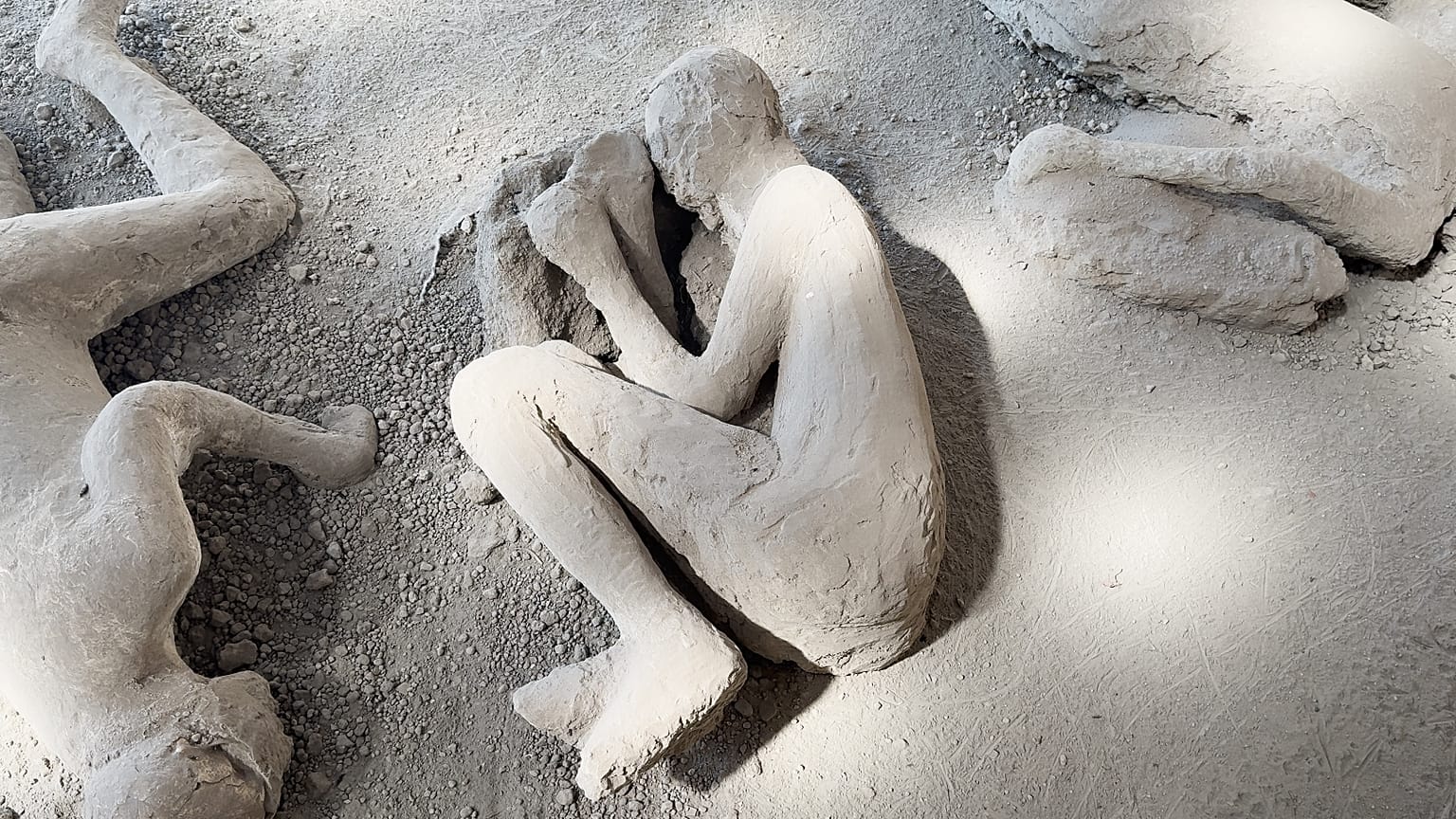
Archaeologists at the Archaeological Park of Pompeii have identified one of the victims who died trying to flee Mount Vesuvius in 79 AD as a Roman physician, after reopening a 1961 plaster cast made by famed archaeologist Amedeo Maiuri and discovering a sealed medical kit pressed against the body. The find, announced May 15 by park director Gabriel Zuchtriegel, is being described as one of the most evocative individual identifications ever made among the thousands of victims of the eruption — and proves that 21st-century imaging technology can still extract new information from excavations conducted more than 60 years ago.
The body was one of 14 recovered from the Orto dei Fuggiaschi, or "Garden of the Fugitives," a courtyard area where Pompeiians collapsed together while fleeing the pyroclastic surge. Maiuri's 1961 excavation had captured the group in plaster, the same technique pioneered by Giuseppe Fiorelli in the 19th century that turns the hollow voids left by decomposed bodies into ghostly casts of the dead. The casts were placed in storage and the individuals never given a profession or a name. Earlier this year, researchers reopened the cast for restoration and CT scanning and discovered a sealed organic-material box at the figure's side that had remained intact for 1,947 years.
CT scans, X-rays, tomographic imaging and AI-supported 3D reconstructions allowed the interdisciplinary team to examine the contents of the box without opening it. Inside they identified a series of small metal surgical instruments, a slate plate of the kind used to grind and compound medicinal or cosmetic substances, and what may be one of the earliest examples of a toothed-wheel locking mechanism preserved from antiquity. Alongside the box lay a fabric bag containing bronze and silver coins — the doctor's takings for the day, his ransom money, or perhaps simply his life's savings carried in haste as he tried to escape. The investigation drew together archaeologists, restorers, physical anthropologists, archaeobotanists, numismatists, radiologists and diagnostic technicians at the park, with imaging carried out at the nearby Maria Rosaria Nursing Home.
"Already two thousand years ago, there were those who were not just doctors during set hours, but doctors at all times," Zuchtriegel said in announcing the find, noting that the physician had grabbed his instruments before his coins — a small but telling glimpse into the priorities of his profession. The instruments resemble standard items from Roman surgical practice known from sites such as the House of the Surgeon in Pompeii and the Domus del Chirurgo in Rimini: probes, hooks, forceps and a delicate scalpel. The slate plate is the type used to prepare collyrium, the eye salve administered in ancient times. The discovery suggests the man may have been treating patients in or near the Orto dei Fuggiaschi when the second pyroclastic surge struck.
The find lands at a moment of intense scientific renewal at Pompeii. Excavations of new insulae have produced spectacular discoveries in the past two years, including the recently announced "once-in-a-century" find described by Italian Culture Minister Alessandro Giuli, and AI-based face reconstructions of victims trapped by the eruption. Italian Culture Minister Giuli said in a statement that the doctor's identification "puts a human face on disaster" and demonstrated the importance of revisiting historic excavations. The medical kit is expected to go on display in the park's Antiquarium later this year following further conservation and high-resolution publication of the imaging data.