Drexel Physicists Discover Liquids Can Snap Like Solids — Overturning 300 Years of Fluid Mechanics Theory
A Drexel University team found that viscous liquids fracture like brittle solids when stretched past a critical stress of 2 megaPascals, with the breaking point determined by viscosity rather than elasticity — a finding published in Physical Review Letters.
Physicists at Drexel University have overturned more than three centuries of assumptions about the behavior of liquids by demonstrating that ordinary viscous fluids can fracture like solid objects when subjected to sufficient tensile stress — a discovery that rewrites a foundational chapter of materials science and could have sweeping implications for engineering, medicine, and industrial fluid processing.
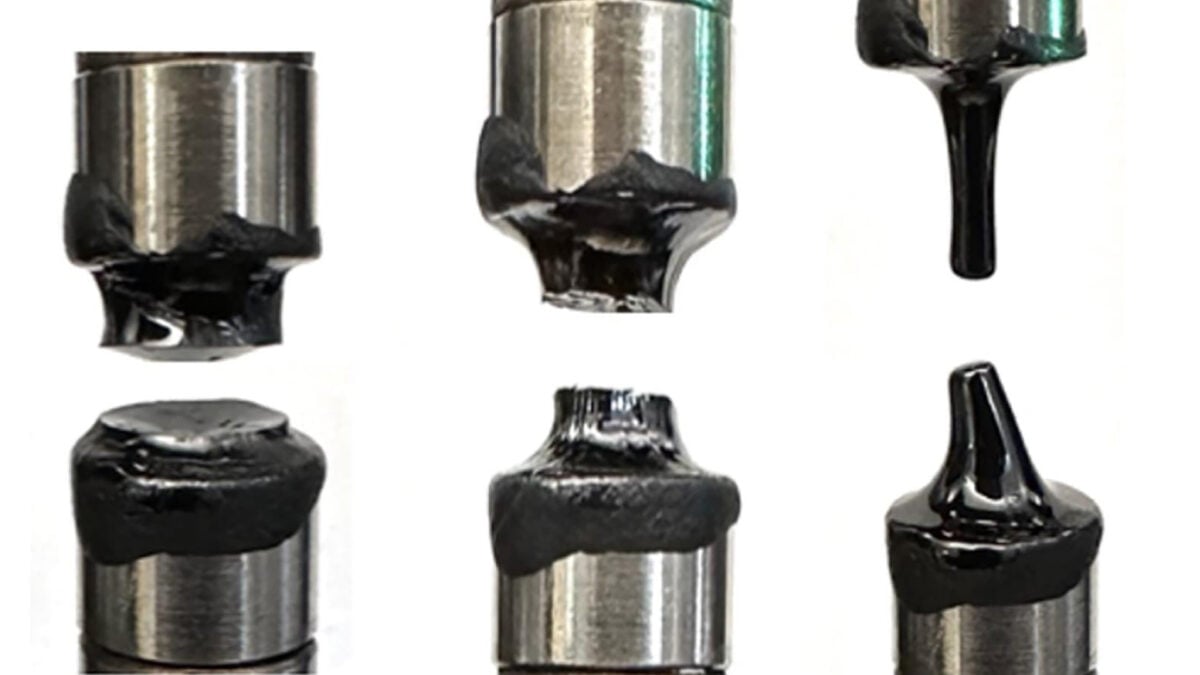
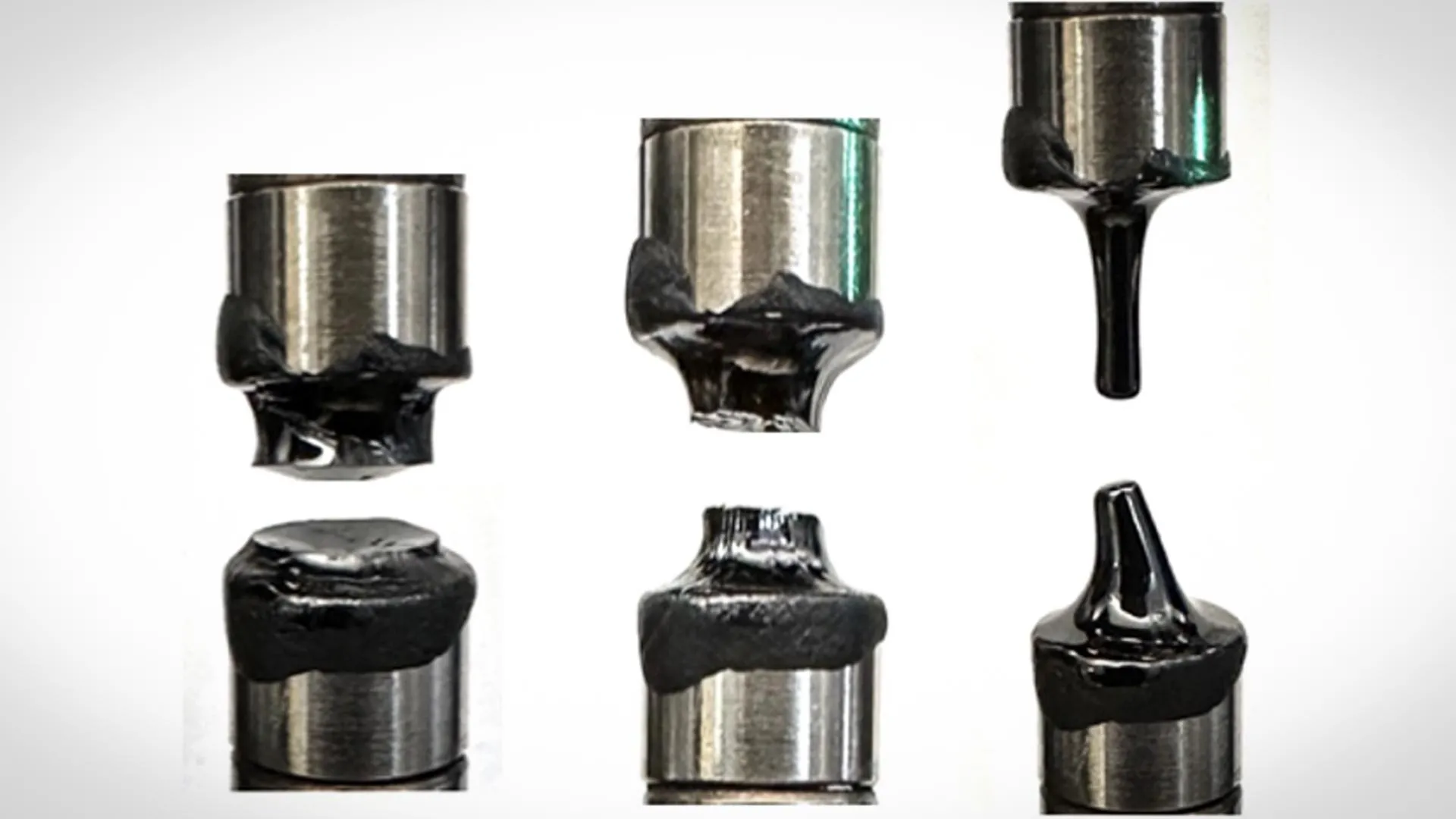
The finding, published March 30, 2026 in Physical Review Letters and conducted in collaboration with ExxonMobil Technology and Engineering Company, emerged from a routine laboratory test in Drexel's College of Engineering. Researchers were measuring the extensional rheology of tar-like hydrocarbon blends — testing how much force is required to make them stretch and flow — when something entirely unexpected happened. Instead of thinning and elongating like honey on a warm day, the liquids suddenly snapped apart cleanly, behaving exactly like solid materials at a breaking point.
"If pulled apart with enough force per area, a simple liquid will reach a point of 'critical stress,' when it actually fractures like a solid," said Dr. Thamires Lima, an Assistant Research Professor at Drexel and the lead author of the paper. The critical stress threshold was measured at approximately 2 megaPascals — roughly equivalent to the force a laundry bag loaded with 10 bricks would exert if it snagged on a fingernail while falling.
What makes the finding particularly striking is what it reveals about the underlying mechanism. Materials science has long maintained that fracture behavior is exclusively a property of solids, associated with elastic deformation and molecular bonds. Liquids, by definition, were thought to be incapable of this type of failure because their molecules are not bound in rigid lattices. Lima's team found that the determining factor was not elasticity at all but viscosity — the resistance of a fluid to flow.
To confirm the initial observations were not specific to the hydrocarbon blends, the team tested styrene oligomer, a chemically unrelated substance with the same viscosity, under identical stretching conditions. It fractured at the same critical stress. Repeating the tests at different temperatures — which changes viscosity — consistently showed that the fracture threshold tracked with viscosity, not chemical composition or molecular structure. The result suggests that a wide range of liquids may share this hidden fracture point.
The implications are potentially far-reaching. In hydraulic systems, liquids are routinely subjected to high tensile stresses during cavitation events — the rapid formation and collapse of vapor bubbles that can damage turbines, pumps, and pipelines. Understanding liquid fracture behavior could lead to better predictive models for these failure modes, potentially allowing engineers to design systems that avoid the conditions that trigger fracture. In biomedical contexts, blood vessels experience complex stress states; the possibility that blood plasma might fracture under extreme conditions may warrant investigation in the context of hemorrhagic injuries and high-speed trauma.
The discovery also raises fundamental questions about the theoretical boundary between solid and liquid matter. Classical mechanics treats these as categorically different phases, with solids defined by their ability to resist deformation and liquids by their inability to do so. Lima's findings suggest the division is blurrier than textbooks have described for centuries. A liquid, it turns out, can behave like a solid — at least for a split second before fracturing.
"This opens up entirely new questions about fluid behavior that we thought we understood," said a co-author from ExxonMobil Technology and Engineering. The research team is now working to develop a theoretical framework that can predict which liquids will fracture under which conditions, with the goal of enabling engineers to either exploit or prevent this phenomenon. Future work will examine whether the fracture behavior extends to other classes of viscous fluids, including biological liquids, polymer melts, and food-grade materials used in industrial processing.