NYU Physicists Build Time Crystal Using Sound Waves That Appears to Break Newton's Third Law — And You Can Watch It With Your Eyes
Professor David Grier's team levitated tiny styrofoam beads in standing acoustic waves, producing a macroscopic time crystal through nonreciprocal particle interactions that carry momentum away via sound, defying the equal-and-opposite-reaction principle.
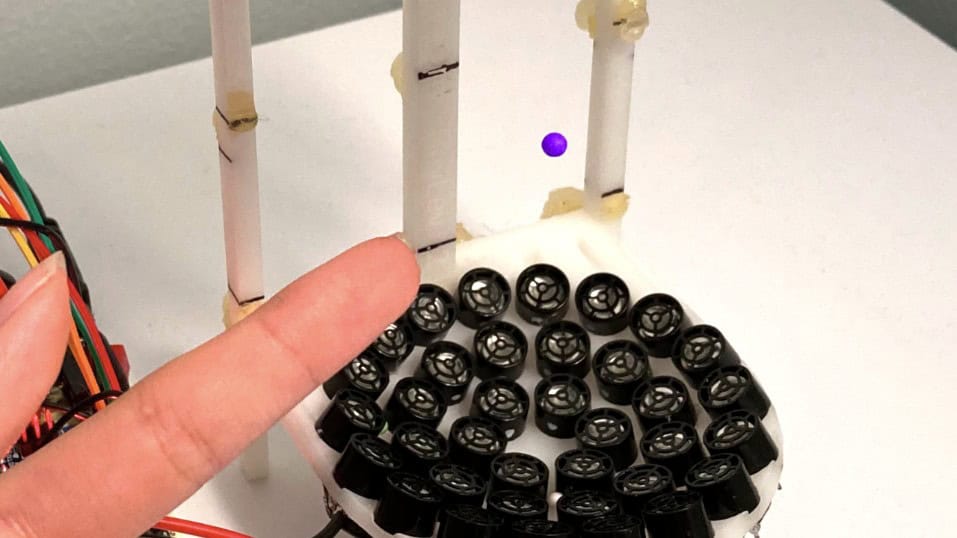
Physicists at New York University have created a new type of time crystal — a remarkable phase of matter characterized by spontaneous periodic motion that continues without continuous energy input — using nothing more than tiny styrofoam beads levitated in a standing wave of sound. The device, described in Physical Review Letters and now attracting widespread scientific attention, appears to violate Newton's Third Law of Motion in its internal interactions, a finding that has sparked fascination and debate among physicists around the world.
A time crystal is a state of matter that breaks time-translation symmetry: while ordinary crystals have atoms arranged in a repeating spatial pattern, time crystals have patterns that repeat in time, oscillating between configurations without a driving energy source. The concept was first proposed theoretically by Nobel laureate Frank Wilczek in 2012 and realized experimentally in 2017 using laser-cooled ions. The NYU team, led by Professor David Grier, director of the university's Center for Soft Matter Research, along with graduate student Mia Morrell and undergraduate Leela Elliott, has now produced what may be the first macroscopic time crystal observable with the naked eye.
The apparatus — roughly one foot tall and easily held in one hand — levitates tiny styrofoam beads in a column of standing acoustic waves. The beads spontaneously begin oscillating in periodic patterns that persist without any additional energy input beyond what maintains the standing wave itself. The oscillations emerge from a nonreciprocal interaction between the beads: larger particles exert a stronger acoustic force on smaller ones than the smaller beads exert in return. This asymmetry in force — where action does not equal reaction — appears to violate Newton's Third Law, which states that for every action there is an equal and opposite reaction.
The team is careful to note that momentum is in fact conserved in the system as a whole: the discrepancy arises because the acoustic wave carries away momentum, effectively acting as a reservoir that breaks the symmetry of direct particle-to-particle interaction. This mechanism, known as nonreciprocal interaction mediated by a background field, has been discussed theoretically but has rarely been demonstrated so clearly in a macroscopic system visible to the human eye. The work was published in Physical Review Letters, volume 136, issue 5, with a DOI of 10.1103/zjzk-t81n.
The practical applications extend well beyond the exotic physics. Grier's team has filed a patent for using the acoustic tweezers apparatus as a precision mass measurement device capable of determining particle masses with microgram precision, which could have applications in pharmaceutical manufacturing, aerosol science, and environmental monitoring of fine particles. The periodic oscillation pattern also has potential relevance to biological timing research, since time crystals provide a physical model of systems that maintain rhythmic behavior without continuous external forcing — analogous to the way biological clocks maintain circadian rhythms. For physics educators, the apparatus offers an unusually accessible window into some of the most counterintuitive behavior that matter can exhibit, at a scale where the phenomenon can simply be watched with the human eye.