Scientists Discover Entirely New State of Quantum Matter That Bridges Two Major Fields of Physics
A collaboration between Rice University and the Vienna University of Technology identified a quantum phase that simultaneously exhibits topological protection and quantum criticality — properties physicists had assumed were mutually exclusive.

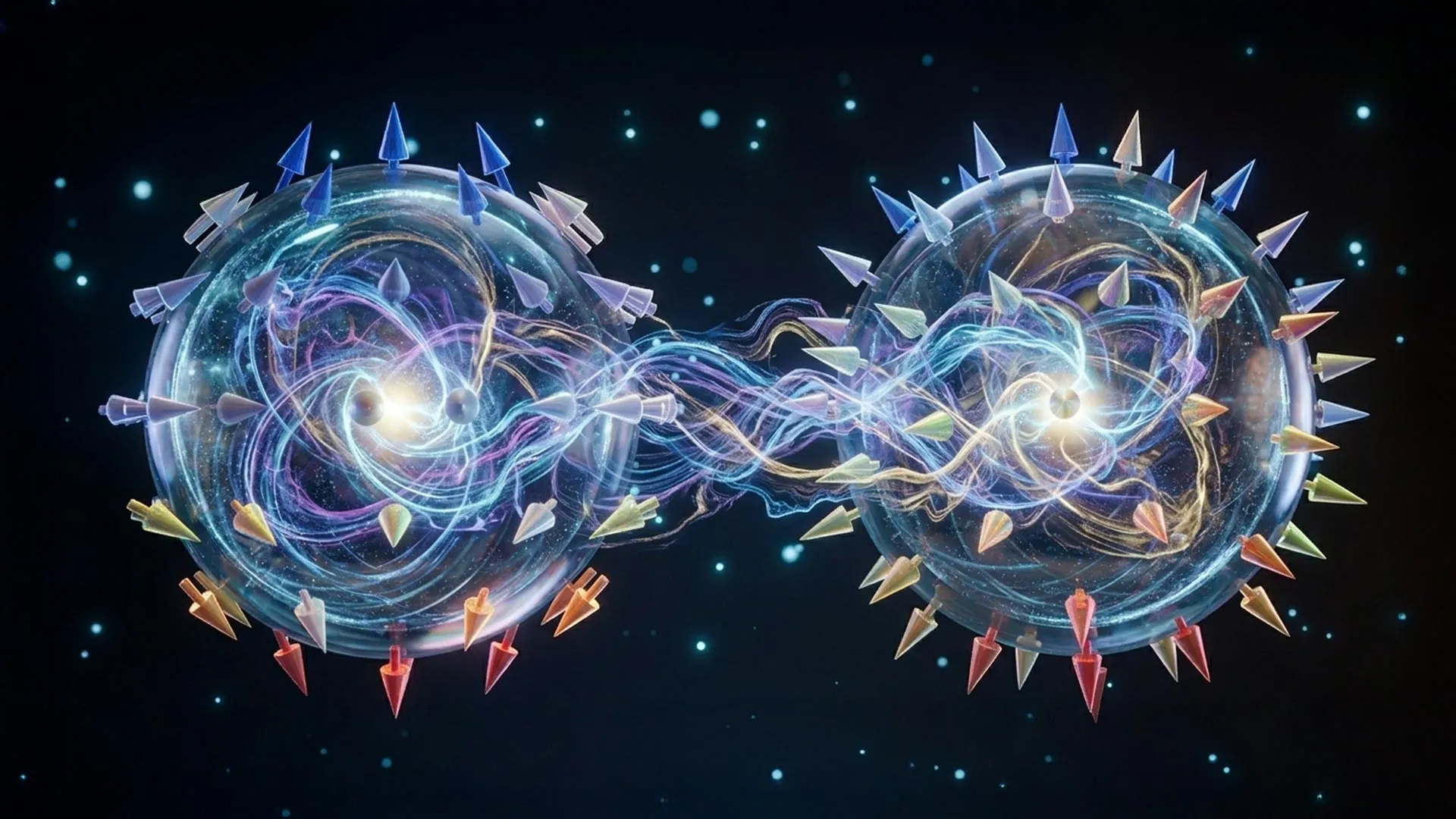
A team of physicists co-led by Rice University and the Vienna University of Technology has identified a previously unknown state of quantum matter that unifies two major fields of condensed matter physics — quantum criticality and electronic topology — which had until now been treated as essentially separate domains. The discovery, published in Nature Physics in January 2026, has significant implications for the development of robust quantum technologies, including new materials for quantum computing and sensing that can maintain their special properties even in the face of disruption.
Quantum criticality describes the behavior of materials at the precise boundary between two different phases of matter — think of water at exactly the boiling point, but in the quantum realm, where the fluctuations are governed by the laws of quantum mechanics rather than thermal heat. At these quantum critical points, materials exhibit unusual and potentially useful electronic properties. Electronic topology, on the other hand, is a property of how electrons are organized across an entire material at the quantum level, described by abstract mathematical quantities called topological invariants. Topological materials are of enormous practical interest because their surface properties are protected from disorder and impurities in ways that ordinary electronic states are not — they are, in a sense, immune to certain kinds of interference.
What the Rice-Vienna collaboration discovered is that these two phenomena are not merely co-existing curiosities in some exotic materials — they are intimately linked and can mutually generate each other. Using a class of materials called heavy fermions, where electrons behave as though they are hundreds of times heavier due to the strength of their mutual interactions, experimental physicist Prof. Silke Paschen's team at the Vienna University of Technology found clear signatures of a quantum state that has never before been categorized. The experimental findings matched theoretical predictions developed independently by Prof. Qimiao Si at Rice University, whose group had been building a theoretical framework suggesting that strong electron-electron interactions could generate topological states rather than destroy them — the opposite of what had been assumed.
"What we have found is that quantum criticality and topology are not just coexisting — they are intertwining and reinforcing each other to create something qualitatively new," Si said in a statement accompanying the publication. "This is a new phase of quantum matter, and it has properties that neither quantum criticality nor topology alone can explain." The discovery opens an entirely new parameter space for materials design. Topological states protected by quantum criticality might be more robust than existing topological insulators, which can lose their special properties when heated or subjected to external disturbances.
The practical road from laboratory discovery to working technology is long, but researchers and industry observers note that the history of condensed matter physics is full of cases where an apparently esoteric discovery of a new quantum state eventually led to major applications. High-temperature superconductors — first discovered in the 1980s and still not fully understood — now underlie MRI machines and particle accelerators. Topological insulators, discovered only in the 2000s, are now being incorporated into early quantum computing prototypes. The new topological-critical quantum state, because it emerges from the same strong correlation physics that underlies many industrially relevant materials, may translate to applications more rapidly than some predecessors. Several quantum computing companies, including Microsoft, which has bet heavily on topological qubits, expressed interest in the findings when contacted by physics journalists following the Nature Physics publication.