Nepal's Former Rapper Balendra Shah Sworn In as Prime Minister
The unexpected political newcomer faces immediate pressure to ensure accountability for deadly violence and mass arson that rocked the country last year.
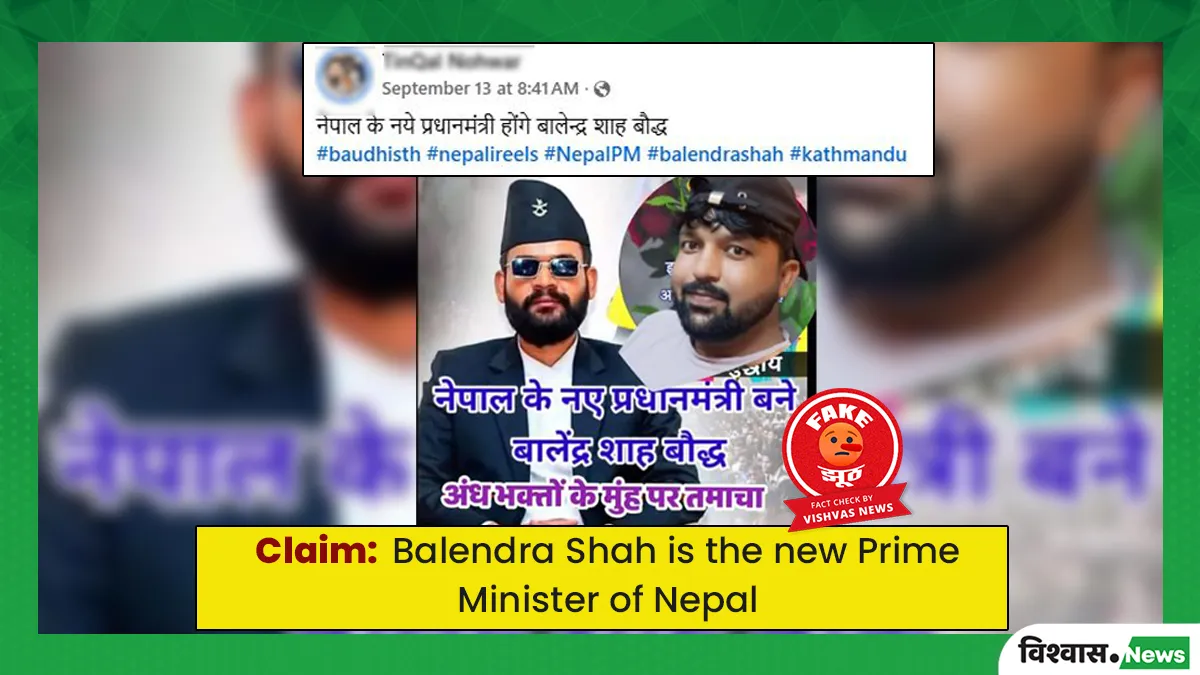
Balendra Shah, the former rapper known by his stage name Balen, was sworn in as Nepal's prime minister on Thursday in a ceremony at the presidential palace in Kathmandu, capping an extraordinary political rise that has taken the 34-year-old from recording studios to the highest office in the Himalayan nation.
Shah, who first entered politics as an independent candidate for mayor of Kathmandu in 2022, won the position in a landslide that stunned Nepal's entrenched political establishment. His subsequent rise to the national stage was fueled by a grassroots movement of young Nepalis frustrated with decades of corruption, political instability, and economic stagnation under the country's traditional parties.
The new prime minister faces immediate and formidable challenges. Nepal was rocked last year by weeks of deadly violence and mass arson that killed more than 300 people and destroyed thousands of homes and businesses across the Kathmandu Valley and other major cities. The unrest, which began as protests against government corruption, spiraled into broader communal violence that exposed deep social fractures. Many of the perpetrators have not been brought to justice, and victims' families have been demanding accountability.
In his inauguration address, Shah pledged to establish an independent commission to investigate the violence and hold those responsible accountable, regardless of their political connections. He also promised sweeping reforms to Nepal's governance structure, including measures to combat corruption, modernize the bureaucracy, and attract foreign investment to a country where nearly a quarter of GDP comes from remittances sent home by workers abroad.
Shah's path to the premiership was anything but conventional. Born in Kathmandu to a middle-class family, he studied civil engineering before pursuing a career in Nepali hip-hop, where his lyrics often addressed social inequality, corruption, and the frustrations of young Nepalis unable to find opportunity in their own country. His music videos, which accumulated millions of views on YouTube, gave him a platform and name recognition that he leveraged into his successful mayoral campaign.
As mayor of Kathmandu, Shah earned a reputation as an unconventional but effective administrator. He launched aggressive campaigns against illegal construction, cleaned up the city's rivers, and confronted powerful business interests that had long operated with impunity. His willingness to take on entrenched power structures earned him both admirers and enemies, and he survived at least two attempts to remove him from office through political maneuvers.
His elevation to prime minister came after weeks of coalition negotiations following parliamentary elections in which no party secured a majority. Shah's Bibeksheel Sajha Party, which he helped found, won 47 seats in the 275-member parliament, making it the third-largest bloc. He secured the premiership by assembling a coalition with the Communist Party of Nepal (Unified Marxist-Leninist) and several smaller parties, though the alliance is widely seen as fragile.
Nepal's political history offers cautionary lessons. The country has had more than 30 prime ministers since the end of absolute monarchy in 1990, with coalition governments frequently collapsing amid factional disputes. Analysts say Shah's outsider status could be both an advantage and a liability. He brings a fresh perspective untainted by the deal-making culture that has defined Nepali politics, but he lacks the deep party networks and patronage relationships that have traditionally been necessary to hold coalitions together.
International reaction to Shah's appointment has been broadly positive. India, which maintains enormous influence over Nepal's politics and economy, issued a congratulatory statement and invited him to visit New Delhi. China, which has been expanding its economic presence in Nepal, also welcomed the new government. The United States, through its embassy in Kathmandu, expressed hope that Shah's administration would prioritize democratic governance and human rights.