NASA Scientist Tracks a New Meteor Shower Back to a 'Rockcomet' Being Slowly Cooked Apart Near the Sun
Sifting through millions of meteor sightings, researcher Patrick Shober identified 282 fireballs that share an extreme orbit — evidence of a hidden Sun-grazing asteroid disintegrating in the inner solar system, with implications for planetary defense.
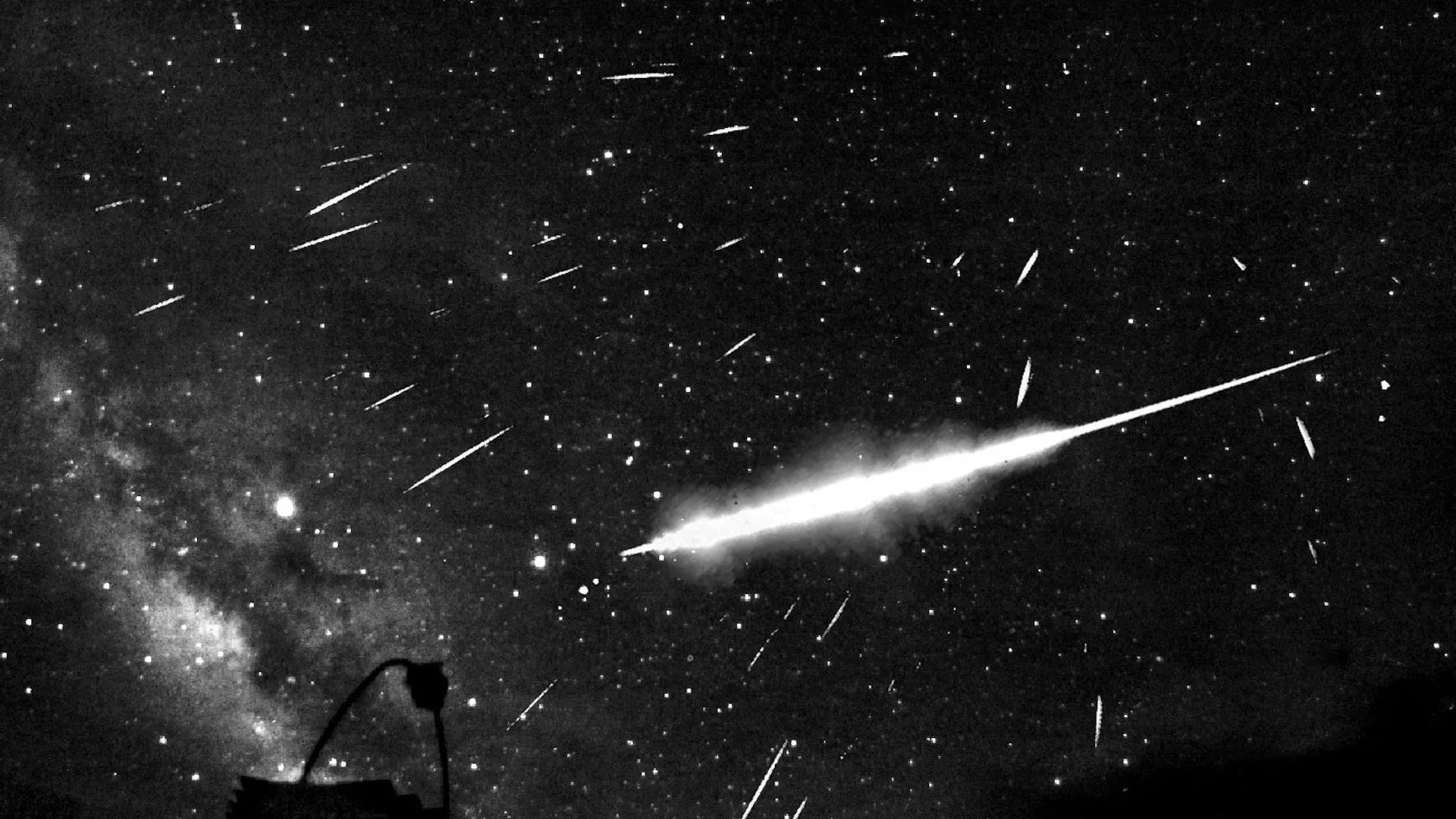
Earth has spent who knows how many years flying through the dusty wake of a slowly disintegrating asteroid without anyone noticing — until now. A NASA-funded researcher has identified a previously unknown meteor stream containing 282 distinct fireballs that all trace back to the same point in space, evidence that an unseen 'rockcomet' is being cooked apart in an orbit that plunges far closer to the Sun than Earth's, according to a study published this week in The Astrophysical Journal.
The discovery, by Dr. Patrick Shober of NASA's Goddard Space Flight Center, came out of a deliberately patient piece of data archaeology. Shober sifted through millions of meteor observations recorded by camera networks and automated detection systems over the past two decades, hunting for groupings of shooting stars whose calculated orbits clustered tightly around a single trajectory. The 282 meteors he flagged share an extreme orbit that swings inward to within roughly a fifth of Earth's distance from the Sun — close enough that an asteroid traveling that path would be repeatedly baked at hundreds of degrees.
'When you find this kind of tight orbital signature in the meteor record, you are essentially looking at the debris trail of a single object,' Shober said in materials accompanying the publication. 'The signature is consistent with what we call a rockcomet — an asteroid that gets close enough to the Sun for its surface to crack, vaporize and shed material, even though it isn't an icy comet in the traditional sense.' The parent body itself has not been located, despite intensive follow-up searches with ground-based telescopes; researchers believe it may simply be too small or too dark to register against the glare of the inner solar system.
The finding matters for more than just sky-watching. Sun-grazing rockcomets belong to a poorly understood population of near-Earth objects that telescopes routinely miss, because they spend most of their time hidden in the Sun's daytime sky rather than the easier-to-survey night side. Planetary defense efforts run by NASA's Center for Near-Earth Object Studies depend on building a complete catalogue of any object that could pose a long-term collision risk; meteor streams like the one Shober identified offer a back-door method to detect them, because the debris trails persist in space long after the parent asteroid has stopped venting material.
Shober's group used a combination of orbital mechanics, statistical clustering and visual reconstruction software to confirm that the 282 fireballs are part of a single stream rather than chance alignments of unrelated meteors. The stream appears to peak in mid- to late-November, although the count is too low and too erratic to call it a major meteor shower in the public-facing sense; sky-watchers are far more likely to enjoy the Leonids or Geminids around that time than to notice the newly minted stream. Scientifically, however, the signal is loud and clear.
The Astrophysical Journal paper outlines several follow-up steps the team plans to pursue. Most pressing is the hunt for the parent rockcomet itself, which would require coordinated observations during narrow windows when the asteroid's orbit takes it briefly into a dark patch of sky. Shober is also working with European meteor camera networks to expand the search for additional meteor streams that might trace back to other hidden Sun-grazers. If the technique works, astronomers could end up dramatically expanding the census of inner-solar-system asteroids over the next few years — using nothing more than the random light shows that have always been streaking across Earth's night sky.