OHSU Team Catches Cancer's Most Notorious Protein Moonlighting as a DNA-Repair Mechanic — Explaining Why Chemo Sometimes Fails
Lead author Rosalie Sears shows phosphorylated MYC physically migrates to damaged DNA in tumor cells, opening a new combination strategy with first-in-class inhibitor OMO-103.

The cancer-driving protein MYC, overactive in more than 70 percent of human tumors and long considered one of the most consequential oncogenes in human biology, also moonlights as a direct DNA-repair agent that helps tumor cells survive chemotherapy, according to a study published Friday in Genes & Development by researchers at Oregon Health & Science University. The finding identifies a previously unappreciated mechanism of treatment resistance and points to a potential second-line role for MYC inhibitors that are already in early-phase clinical trials.
Rosalie Sears, the Krista L. Lake Chair in Cancer Research at OHSU and co-director of the Brenden-Colson Center for Pancreatic Care, served as senior author, with Gabriel Cohn — now a postdoctoral researcher at the University of Würzburg in Germany — as first author. Using high-resolution imaging of cultured pancreatic and breast cancer cells exposed to ionizing radiation and to a panel of DNA-damaging chemotherapy agents, the team showed that a phosphorylated form of MYC migrates within minutes to sites of double-strand DNA breaks and physically helps recruit the cellular machinery responsible for homologous recombination and non-homologous end-joining repair.
That is a striking departure from MYC's textbook role. For four decades, oncologists have understood MYC primarily as a transcription factor — a protein that binds DNA at gene promoters and drives the expression of programs that push cells toward growth and proliferation. The Sears laboratory's finding shows that on top of that day job, MYC has a non-canonical structural role at the point of repair itself. "Instead of regulating genes, we showed it is physically going to sites of DNA damage and helping bring in repair proteins," Sears said in a statement accompanying the paper.
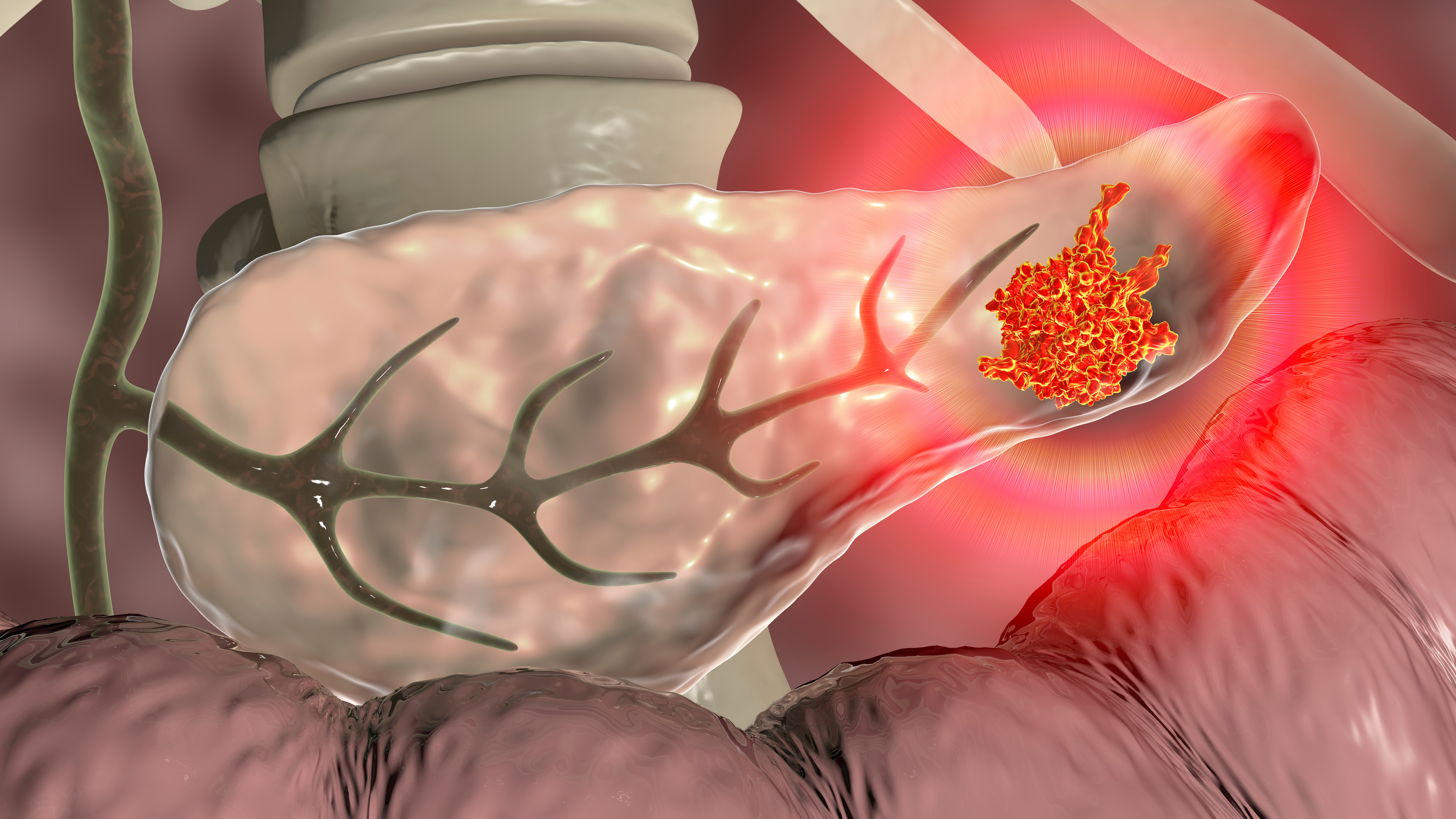
The immediate clinical implication is that drugs blocking MYC's transcriptional activity could also undermine the repair function and synergize with conventional chemotherapy or radiation. OHSU's Knight Cancer Institute is already running a window-of-opportunity Phase 1/2 trial of OMO-103, the first-in-class MYC inhibitor developed by Spanish biotechnology company Peptomyc, in patients with advanced pancreatic cancer. The trial gives patients OMO-103 in the weeks between diagnostic biopsy and definitive surgery, allowing researchers to compare pre- and post-treatment tumor tissue and quantify the drug's effect on both gene expression and DNA repair capacity. Early data from the European arm of the trial showed disease stabilization in 8 of 12 evaluable patients.
MYC has been called the "undruggable" oncogene because it lacks a classical enzymatic pocket and was historically resistant to small-molecule inhibitors. OMO-103 belongs to a new class of cell-permeable mini-protein drugs that disrupt MYC's binding to its partner protein MAX. The OHSU study was funded by the National Cancer Institute, the Department of Defense's Congressionally Directed Medical Research Programs, the Brenden-Colson Center for Pancreatic Care, and the Knight Cancer Institute. Pancreatic cancer remains the third leading cause of cancer death in the United States, with a five-year survival rate of just 13 percent.