Myanmar Military Leader Steps Down as Commander, Expected to Become Civilian President
Senior Gen. Min Aung Hlaing moves closer to formal political leadership as rubber-stamp parliament prepares installation.
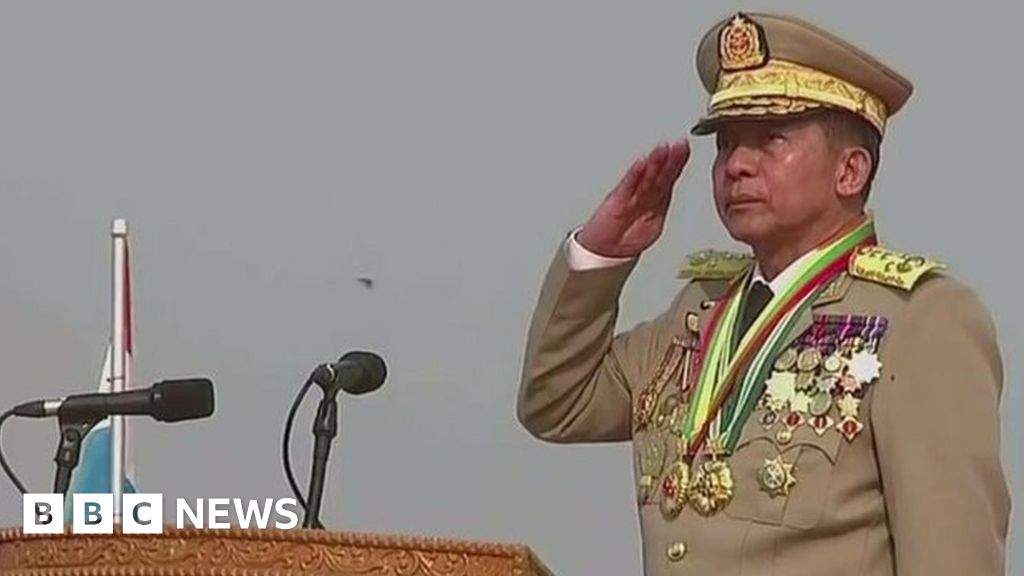
Myanmar's military ruler Senior General Min Aung Hlaing announced his resignation as commander-in-chief of the armed forces, a move widely interpreted by analysts as a transition toward a civilian-style presidency that would give the junta's governance a veneer of constitutional legitimacy while preserving his hold on actual power.
The move, announced through state media on Sunday, follows years of armed conflict between the military, which seized power in a February 2021 coup, and a broad coalition of resistance forces including ethnic armed organizations and the People's Defence Force aligned with the shadow National Unity Government. The military, known as the Tatmadaw, has suffered its most significant territorial losses since the coup, with resistance forces controlling large areas of Shan, Kayah, Rakhine, and Sagaing states.
Under the arrangement, Min Aung Hlaing is expected to be appointed president by the military-aligned parliament, known as the Pyidaungsu Hluttaw, which reconvened in February after years of suspension. His successor as commander-in-chief has not been publicly named, though senior generals General Mya Tun Oo and General Soe Htut have been mentioned as potential candidates in diplomatic cables reviewed by analysts.
The National Unity Government, which operates from exile and from liberated areas within Myanmar, rejected the transition as cosmetic. Its acting president, Duwa Lashi La, said in a statement that changing Min Aung Hlaing's title did not change his criminal responsibility for the killings of thousands of civilians, the forced displacement of more than two million people, and what the NUG and international rights organizations have called genocide against the Rohingya and other ethnic minorities.
The United Nations Special Adviser on Myanmar said the office was monitoring the transition closely and urged all parties to prioritize civilian protection. The Association of Southeast Asian Nations, which has repeatedly failed to implement its own Five-Point Consensus peace framework for Myanmar, issued a statement calling for restraint and dialogue. Human rights groups noted that the constitutional framework Min Aung Hlaing is expected to operate under was drafted by the military itself and guarantees the Tatmadaw 25 percent of parliamentary seats and control over the defense, border affairs, and home affairs ministries regardless of election outcomes.