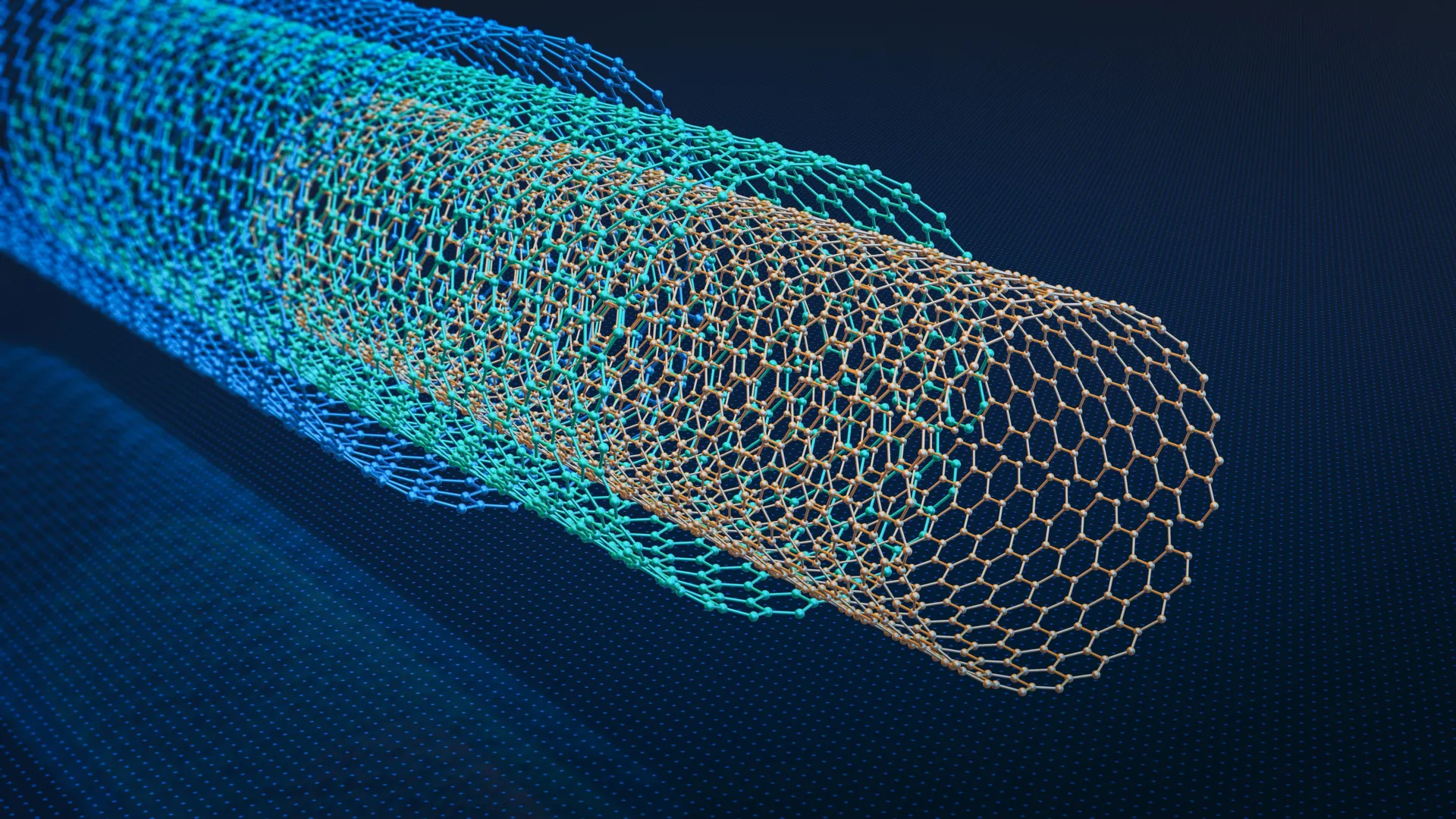
MXene Breakthrough Boosts Conductivity 160x Through Perfect Atomic Order
Scientists develop revolutionary molten salt synthesis method that creates ultra-precise atomic surfaces for advanced energy applications.
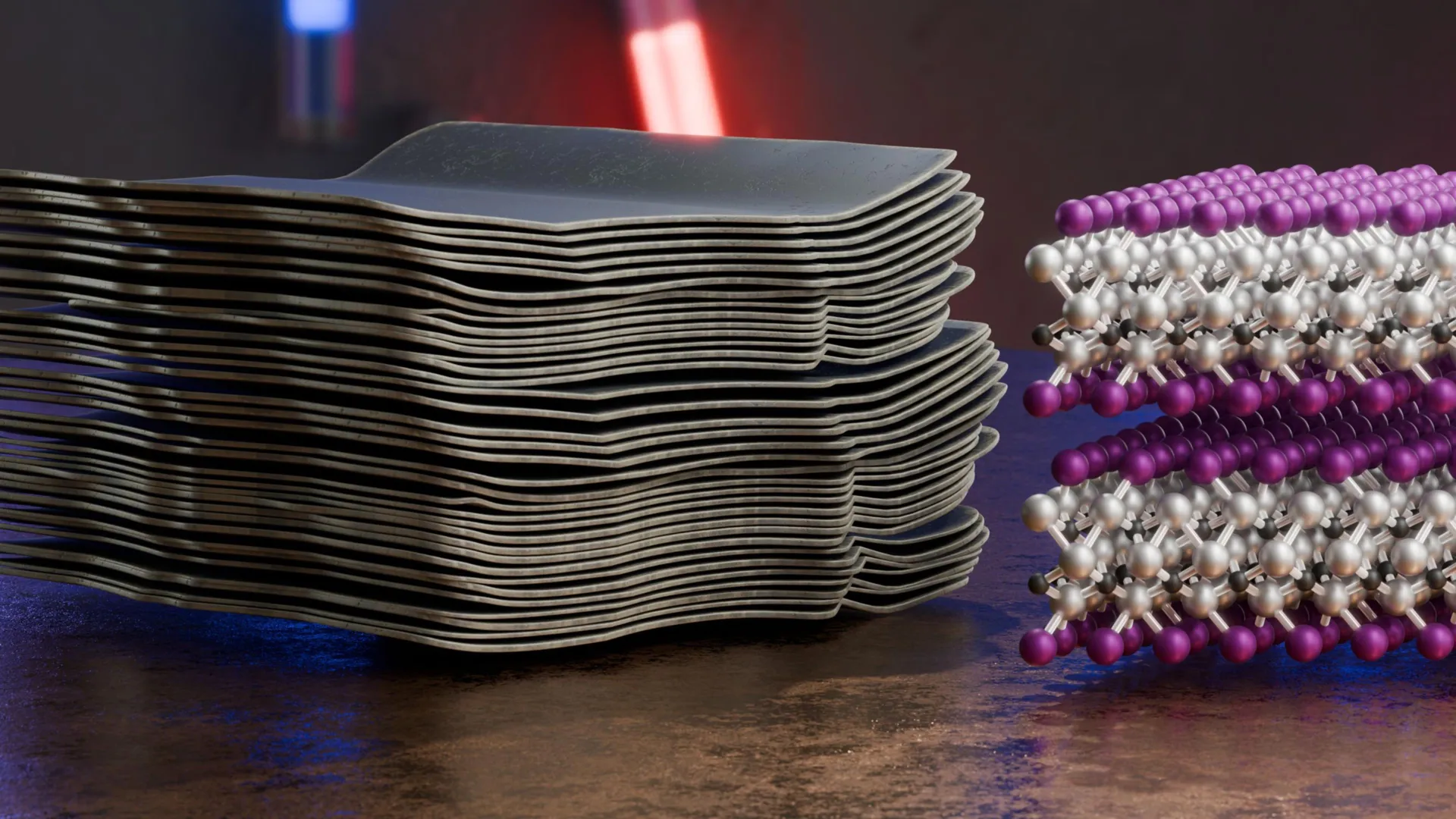
Scientists have achieved a revolutionary breakthrough in MXene technology, developing a new synthesis method that boosts electrical conductivity by up to 160 times through perfectly ordered atomic surfaces. The advancement, led by researchers from the Helmholtz-Zentrum Dresden-Rossendorf (HZDR) and TU Dresden, represents a dramatic improvement over traditional chemical etching methods that have limited these promising materials since their discovery in 2011. By using molten salts and iodine vapor instead of harsh chemical processes, the team has created MXenes with unprecedented precision and performance.
MXenes are ultra-thin inorganic materials composed of stacked layers of transition metals combined with carbon or nitrogen, with surface atoms that play a crucial role in determining the material's properties. Dr. Mahdi Ghorbani-Asl from HZDR's Institute of Ion Beam Physics and Materials Research explained that surface atoms "strongly influence how electrons move through the material, how stable it is, and how it interacts with light, heat, and chemical environments." Traditional synthesis methods using chemical etching leave a random mixture of surface atoms such as oxygen, fluorine, or chlorine scattered across the material, creating atomic disorder that severely limits performance.
The new Glass-Like Solid (GLS) synthesis method takes a fundamentally different approach, starting with solid MAX phases and using molten salts combined with iodine vapor to form MXene sheets. This process allows researchers to precisely control which halogen atoms attach to the surface, creating uniform and highly ordered atomic arrangements while dramatically reducing unwanted impurities. The team successfully demonstrated the versatility of their approach by producing high-quality MXenes from eight different MAX phases, each with precisely controlled surface terminations.
Dr. Dongqi Li from TU Dresden described the impact of atomic disorder on performance: "This atomic disorder limits performance because it traps and scatters electrons, much like potholes slowing traffic on a highway." The GLS method eliminates these "potholes" by creating smooth, uniform surfaces that allow electrons to flow with remarkable efficiency. When applied to titanium carbide MXene Ti3C2, the most widely studied example, the new method produced Ti3C2Cl2 with only chlorine atoms in a clean, ordered structure and no detectable impurities.
The performance improvements are striking and have immediate implications for energy storage and electronics applications. The chlorine-terminated MXene variant showed a 160-fold increase in macroscopic conductivity and a 13-fold enhancement in terahertz conductivity compared to conventionally produced material. Additionally, researchers observed a nearly fourfold increase in charge carrier mobility, a critical measurement for electronic device performance. These dramatic improvements, combined with the method's ability to create tailored surface properties, open new possibilities for advanced batteries, supercapacitors, electromagnetic shielding, and quantum electronics applications.