Historic Flash Floods Swamp Missouri, Prompting More Than 200 Rescues and the Evacuation of a Children's Camp
Gov. Mike Kehoe declared a state of emergency after up to a foot of rain fell in under a day, as the National Guard airlifted 202 children and counselors to safety and at least one woman was found dead.
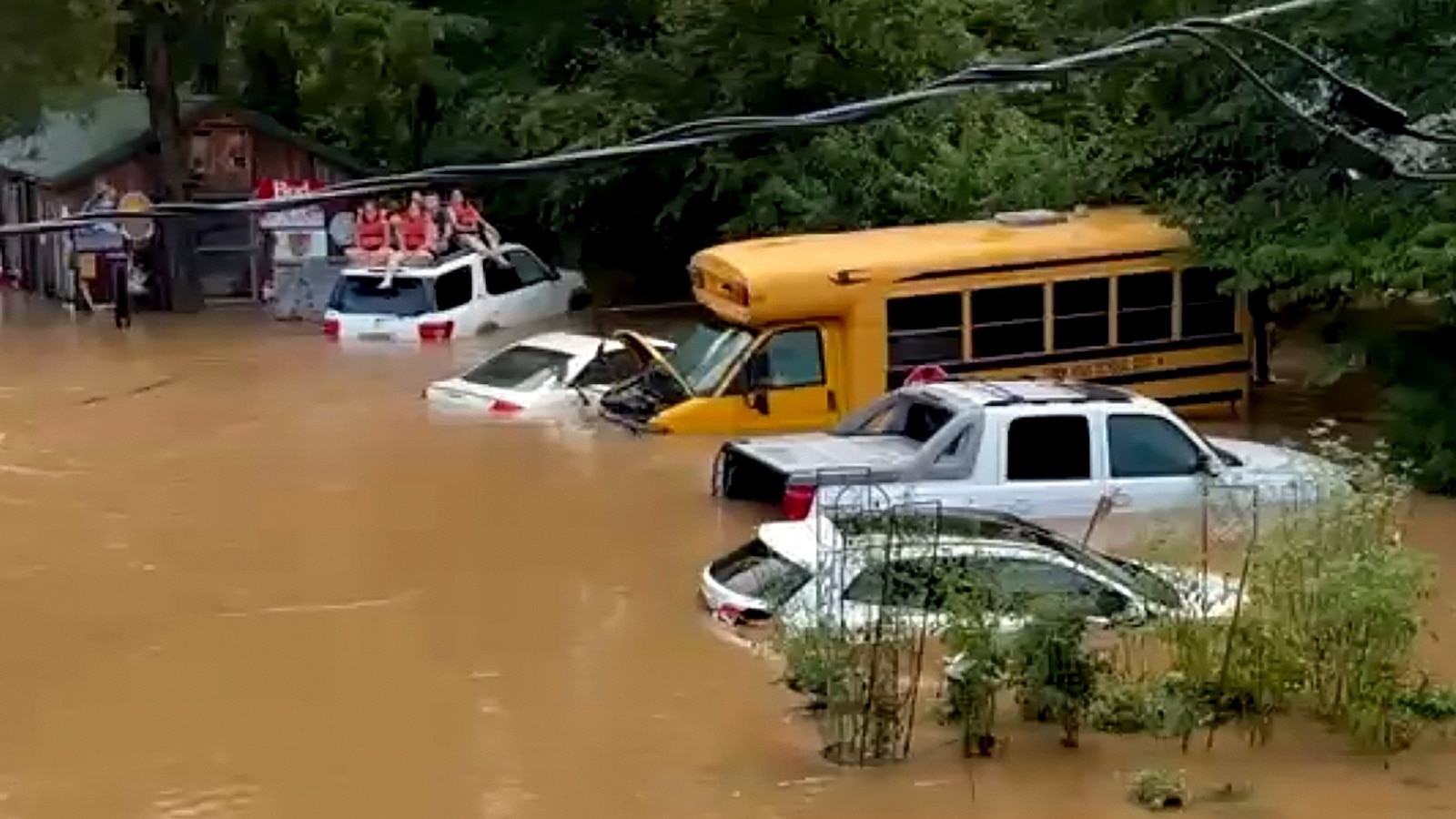
Historic flash flooding swept across central and southeastern Missouri over the weekend, prompting more than 200 water rescues, the airlift evacuation of a children's summer camp and at least one confirmed death, after torrential rain overwhelmed rivers and roads in a matter of hours.
Gov. Mike Kehoe declared a state of emergency on Friday as storms dumped between six and 12 inches of rain in less than 24 hours over parts of the state. The deluge sent creeks and rivers over their banks with little warning, cutting off communities, submerging highways and trapping residents in homes and vehicles across a swath of the Ozarks.
The Missouri State Highway Patrol and local first responders reported more than 200 water rescues overnight Friday into Saturday, concentrated in Crawford, Iron, Madison, Reynolds and Wayne counties. In one of the most dramatic operations, Missouri National Guard crews evacuated 202 children and camp counselors from a summer camp near Lesterville after rising floodwaters cut off road access to the area, ferrying them out as the water continued to climb.
The flooding turned deadly in Crawford County, where a missing woman identified as Faith Gregory was found dead on Saturday roughly two miles downstream from her home along Huzzah Creek. Emergency officials warned that the number of casualties could grow as crews reach isolated areas and account for people reported missing during the height of the storms.
The rescues stretched local resources to the breaking point. In several hard-hit towns, dispatchers fielded a steady stream of calls from residents stranded on rooftops and in attics as water rose through the night, while boat crews navigated debris-choked streets in the dark. Kehoe's emergency declaration freed up state resources and National Guard personnel, and it opened the door to federal assistance should damage estimates warrant a formal disaster request. Shelters opened across the affected counties for families driven from their homes, many of whom escaped with little more than the clothes they were wearing.
The catastrophe echoes a string of deadly flash floods that have battered the central United States this year as unusually heavy rain events collide with saturated ground. Forecasters cautioned that additional rounds of heavy rain were expected across the weekend, keeping rivers dangerously high, and the flash-flood threat was forecast to shift south and east toward Tennessee, the Gulf Coast and Florida in the days ahead.
State officials urged residents to avoid flooded roadways, repeating the warning that most flood deaths occur when drivers attempt to cross water-covered roads. "Turn around, don't drown," emergency managers said, as swift-water rescue teams from neighboring states moved in to reinforce exhausted local crews. Damage assessments were expected to begin once the water recedes, with early reports of washed-out bridges, collapsed roadways and a campground building that gave way into the floodwaters at the peak of the surge.