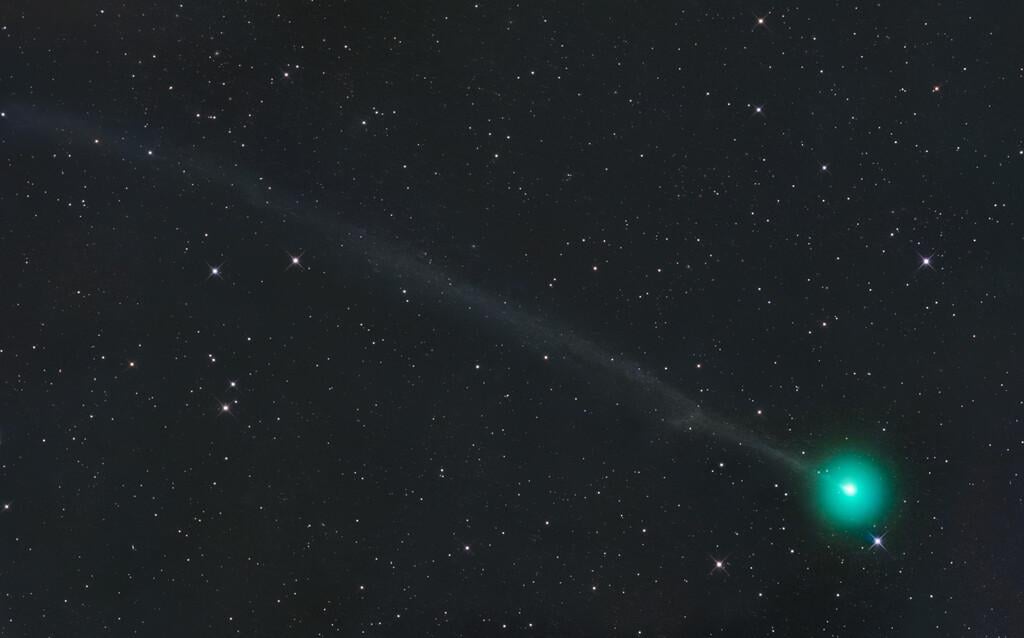
Medieval Monk May Have Recognized 'Halley's Comet' Nearly 700 Years Before Edmond Halley, Study Argues
New research published in the Journal for the History of Astronomy says Eilmer of Malmesbury saw the same comet in 989 and 1066 — and explicitly noted it was the very same object.
For nearly three centuries, the most famous periodic comet in the night sky has carried the name of Edmond Halley, the English astronomer who, in 1705, predicted that the comet sightings of 1531, 1607 and 1682 were a single object returning every 76 years. But a paper published this week in the Journal for the History of Astronomy makes the case that the credit may belong to a medieval Benedictine monk, Eilmer of Malmesbury, who appears to have explicitly recognized the comet's recurrence almost seven centuries earlier — in the spring of 1066, as he gazed up at the same comet he had watched as a boy in 989.
The case for Eilmer rests on a passage in the chronicles of the 12th-century historian William of Malmesbury, who recorded that the elderly monk, "trembling and bent with age," stepped out into the Wiltshire abbey garden in April 1066 and exclaimed, upon seeing the comet, "Thou art come! A matter of lamentation to many a mother art thou; I have seen thee before; but now I behold thee much more terrible, threatening to hurl destruction upon this country." Researchers say the precise wording — particularly the phrase "I have seen thee before" — represents the earliest unambiguous identification on record of a comet as a periodic and returning body.
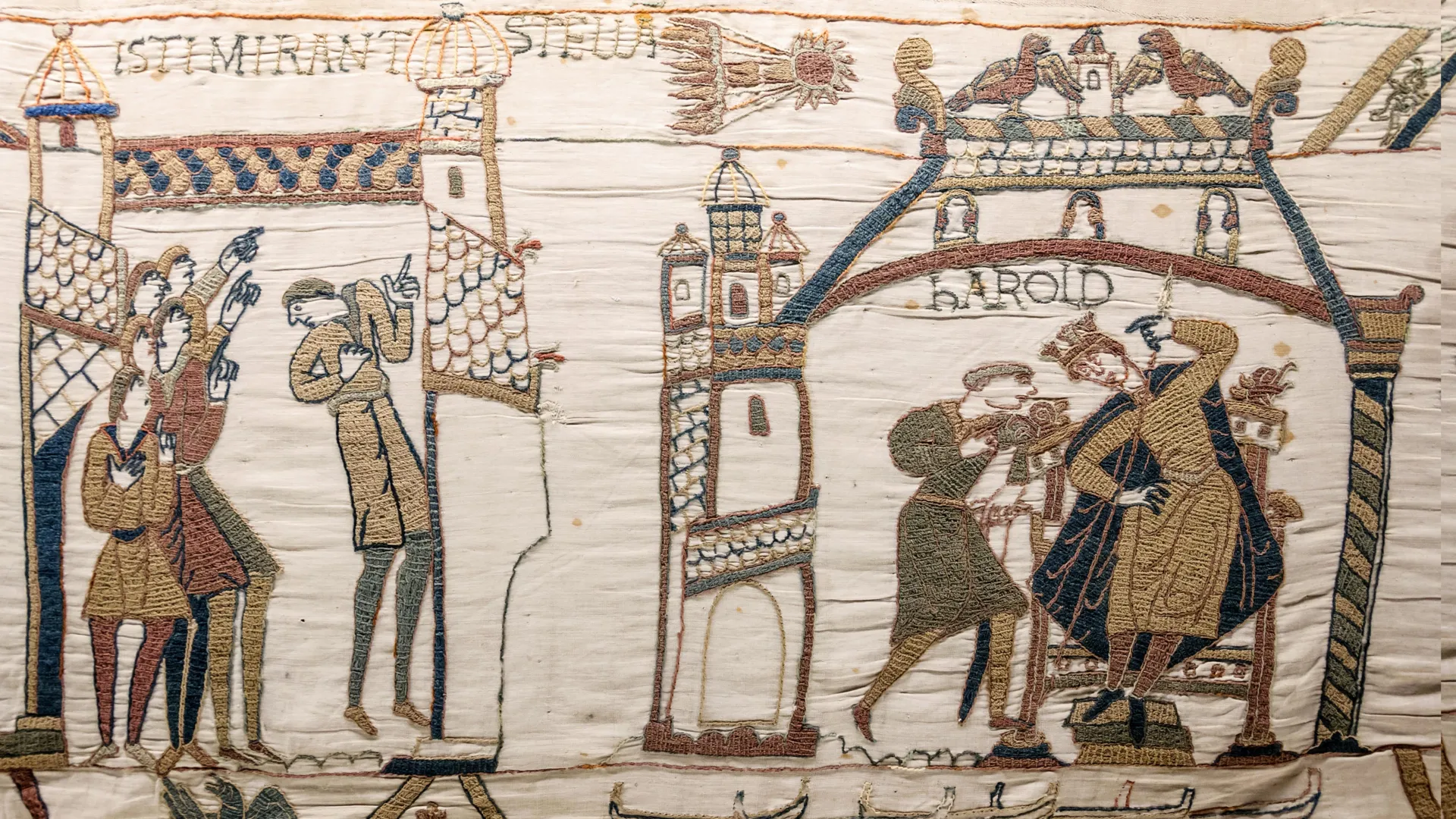
The new analysis, led by historian of astronomy Marek Wojciechowski of Adam Mickiewicz University in Poland, draws on a fresh translation of William's Gesta regum Anglorum and on a re-examination of monastic records from Malmesbury Abbey, Glastonbury and Winchester. Although scholars have long quoted William's account, Wojciechowski argues that previous translations underplayed the significance of Eilmer's recognition. The 989 apparition would have been the comet's appearance during the reign of Æthelred the Unready; the 1066 sighting famously preceded the Norman Conquest and is depicted as a star-tailed omen on the Bayeux Tapestry.
Eilmer of Malmesbury is already a celebrated figure in the history of science, having attempted, around the year 1010, what may be Europe's earliest documented heavier-than-air flight by gliding from a tower at the abbey wearing wings — an undertaking that ended in a broken leg and lifelong limp, but no apparent loss of curiosity. According to William, Eilmer attributed the failure to his having forgotten to fit a tail to his contraption. Modern aerospace historians have used the description to argue that he understood, however imperfectly, the role of aerodynamic stability.
Wojciechowski stops short of urging that the comet be officially renamed but suggests that astronomical nomenclature should reflect the longer human history of observation. The International Astronomical Union has not commented on the paper, which has already drawn supportive write-ups in Live Science and Universe Today. Outside scholars, including Dr. Helen King of the Royal Astronomical Society, called the case "compelling but not yet conclusive," noting that earlier Chinese, Korean and Babylonian observers also recorded apparitions of the comet — and may, in principle, have inferred its periodicity even before Eilmer. The comet's next return is forecast for July 2061.