Scientists Read Majorana Qubits for the First Time, Opening Path to Inherently Error-Resistant Quantum Computers
Researchers at CSIC Madrid and Delft University used quantum capacitance measurements to read information stored in topological Majorana states with millisecond coherence times — independently validating the approach Microsoft has bet its quantum program on.

Scientists have successfully read quantum information stored inside a Majorana qubit for the first time, a milestone that physicists have pursued for nearly two decades and that could open the path to fault-tolerant quantum computers that are inherently resistant to the errors that currently limit quantum machines. The result, published in the journal Nature, was achieved by researchers at Spain's CSIC Institute of Materials Science in Madrid working with colleagues at Delft University of Technology in the Netherlands, using a device called a Kitaev minimal chain.
Majorana qubits derive their theoretical appeal from a fundamental property of quantum mechanics: they store information not in a single location but distributed across two spatially separated, entangled quantum states. Because the information is spread out, local noise — the vibrations, electromagnetic fluctuations, and stray fields that constantly disturb conventional qubits — cannot corrupt the data without affecting both locations simultaneously. This inherent topological protection is the reason Microsoft has staked its entire quantum computing roadmap on Majorana-based hardware, unveiling its Majorana 1 chip last year. But experimental confirmation that Majorana states could actually be read and used as functioning qubits remained elusive until now.
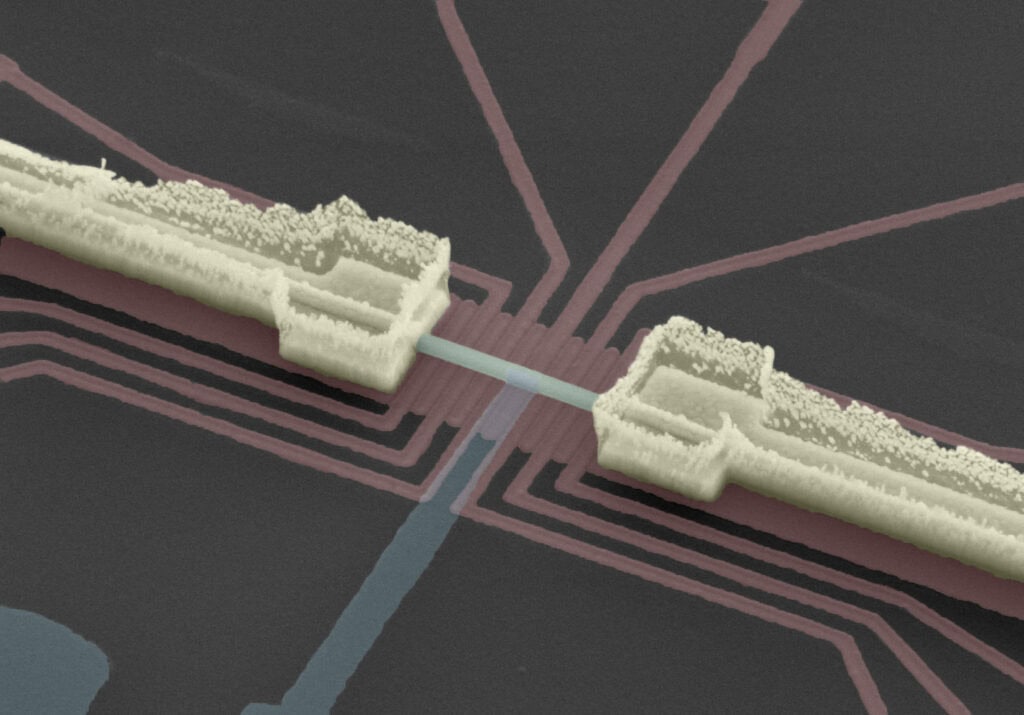
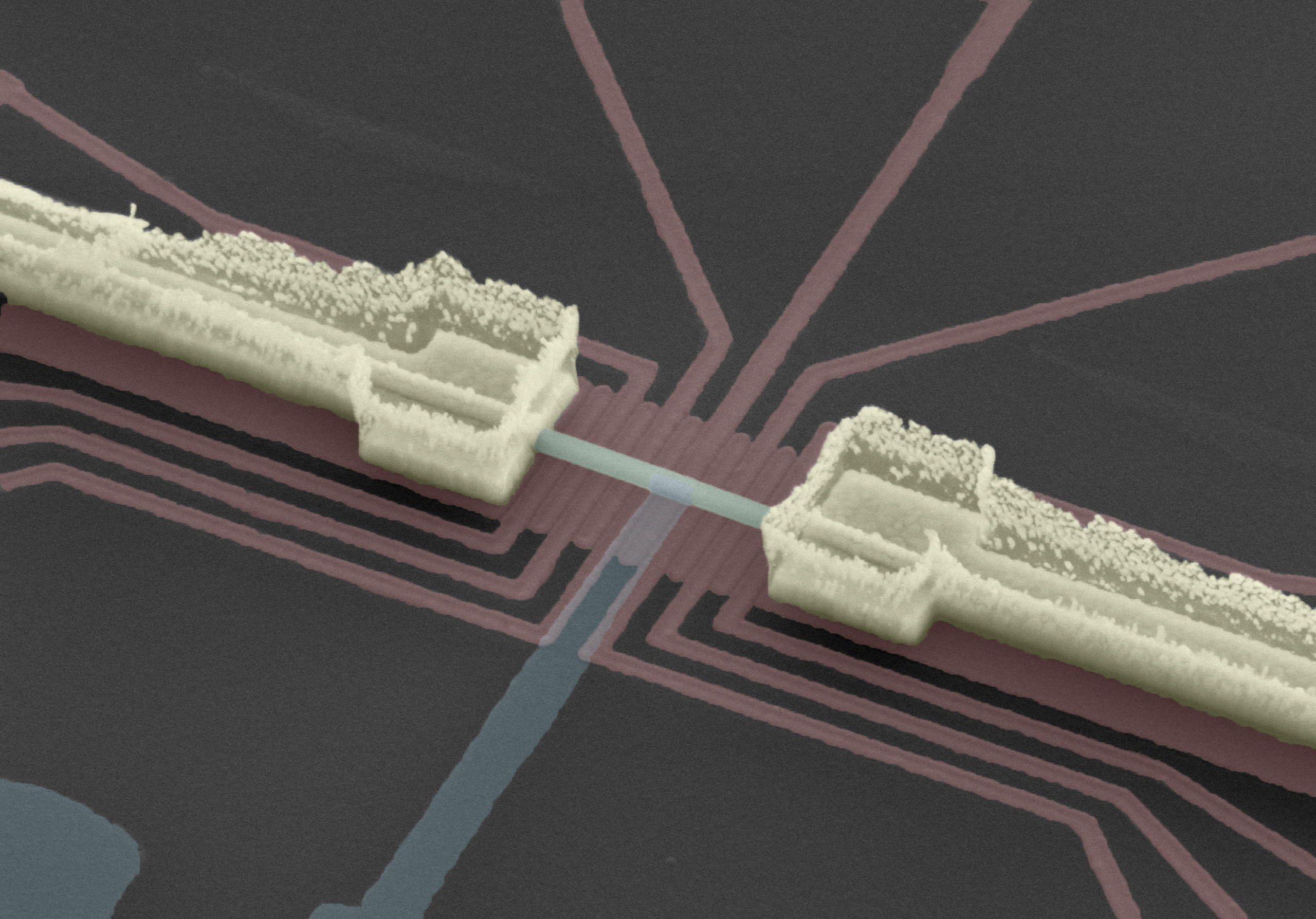
The CSIC team built their Kitaev minimal chain from two semiconductor quantum dots connected through a superconductor, then developed a quantum capacitance measurement technique to read the qubit state without destroying the fragile quantum information. The team demonstrated coherence times — the duration for which quantum information remains intact — on the millisecond scale, a critical threshold for implementing quantum error correction protocols. "This is a crucial advance," said Ramón Aguado of CSIC, describing topological qubits as "like safe boxes for quantum information" because their distributed structure shields data from local interference.
The central challenge in quantum computing is not simply building qubits — today's superconducting quantum computers from IBM, Google, and others already contain hundreds to thousands of physical qubits — but building qubits reliable enough to perform useful computations without accumulating errors faster than those errors can be corrected. Current machines require roughly a thousand physical qubits to encode a single error-corrected logical qubit, making the hardware requirements for practically useful quantum computers enormous. Majorana qubits, if they behave as theory predicts, would require far fewer physical qubits per logical qubit — potentially reducing the hardware requirements by an order of magnitude or more.
The result is a significant independent confirmation of the Majorana approach. Microsoft has conducted its own internal experiments and reports progress, but independent peer-reviewed results from a different research group using different materials and measurement techniques carry particular scientific weight. Researchers caution that building a full-scale topological quantum computer from Majorana qubits will require years of additional work — scaling from a single readable qubit to the thousands required for a practical machine involves a host of engineering challenges that remain unsolved. But having confirmed that Majorana states can be created, controlled, and read, physicists now have a solid experimental foundation on which to build toward the first genuinely fault-tolerant quantum computer.